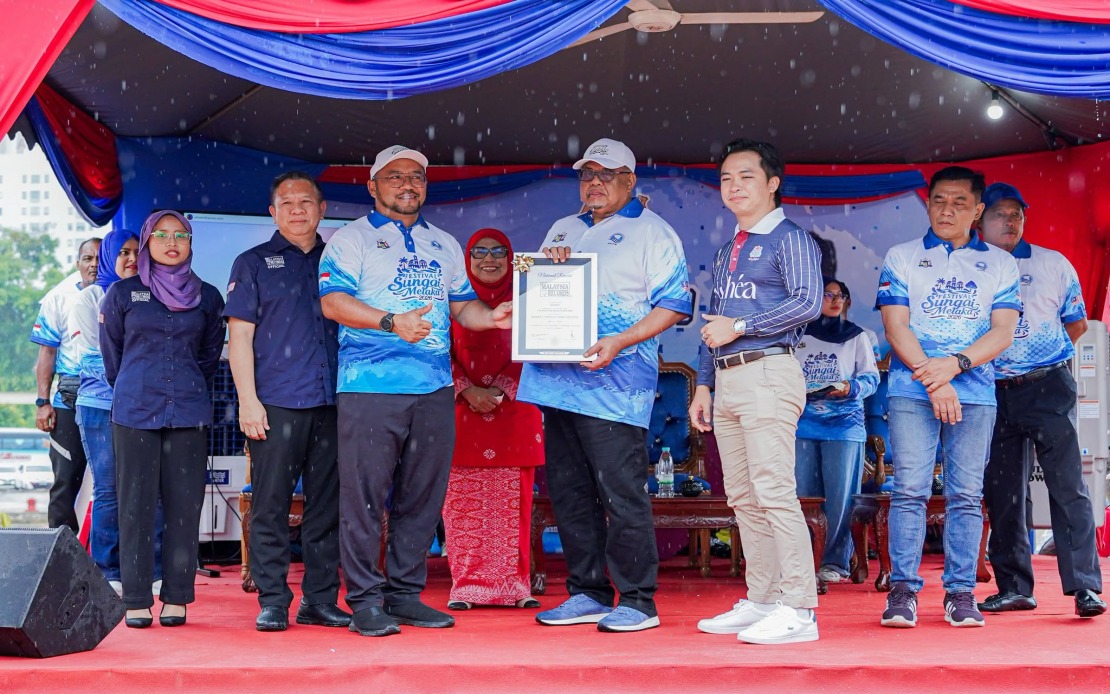
Melaka's tourism sector has reached a remarkable milestone, securing its fourth Malaysia Book of Records (MBOR) title in just three years, underscoring the state's growing reputation as a destination for distinctive, innovation-driven attractions. Chief Minister Ab Rauf Yusoh announced the latest recognition at a ceremony honouring the achievement, framing it as evidence of Melaka's commitment to pushing creative boundaries in how it packages and promotes itself to regional and international visitors.
The succession of MBOR accolades reflects a deliberate strategy by Melaka's administration to differentiate its tourism offerings through record-breaking initiatives rather than relying solely on its well-established heritage assets. This approach acknowledges the intensifying competition among Malaysian states vying for visitor spending and extended stay periods, a critical metric for measuring tourism success. By systematically pursuing record-breaking projects, Melaka positions itself as a destination willing to invest in bold, high-visibility attractions that capture media attention and generate organic interest beyond traditional marketing channels.
However, Ab Rauf's remarks at the Dataran Pengkalan Rama ceremony revealed an underlying concern about translating accolades into substantive economic outcomes. His explicit warning against allowing certificates to become merely decorative wall fixtures speaks to a frequent challenge in destination marketing: the gap between symbolic recognition and visitor conversion. The Chief Minister's emphasis suggests that previous records, while validating Melaka's creativity, may not have optimally translated into extended tourist stays or proportional spending increases.
The Sungai Melaka Festival 2026 exemplifies Melaka's strategy of activating its natural and cultural assets through large-scale community engagement. As the event's 17th iteration, the festival represents years of accumulated experience in programming and logistics, now being leveraged to attract both domestic and regional participants. By structuring the festival across all three districts and organising over 30 distinct programmes, the state is attempting to distribute tourism economic benefits more equitably across its geography rather than concentrating activity in heritage-heavy areas like the historic city centre.
The freshwater fishing competition component demonstrates innovative thinking about niche tourism development. With RM30,000 in total prize money—including a substantial RM10,000 first-place award—the competition successfully attracted 1,123 participants from Melaka and beyond, indicating untapped demand for recreational fishing experiences. This response rate validates a broader principle: specialised tourism products addressing specific interest communities often generate higher engagement and loyalty than generalised attractions, particularly among adventure and outdoor-oriented travellers.
The involvement of the Melaka River and Beach Development Corporation (PPSPM), represented at the ceremony by chief executive Shaharul Azuar Idris, signals institutional commitment to transforming Sungai Melaka from a historical footnote into an active tourism asset. River revitalisation projects across Southeast Asia have demonstrated significant multiplier effects when combined with authentic community programming. Unlike superficial beautification efforts, integrating local communities as both stakeholders and attraction anchors creates sustainable economic opportunities.
Ab Rauf's articulation of plans to develop the fishing competition into a larger-scale tourism product addresses a critical gap in Melaka's portfolio. Malaysia's fishing heritage runs deep, yet fishing tourism remains underdeveloped compared to regional competitors like Thailand and Indonesia. By coupling competitive fishing events with cultural narratives about traditional fishing communities and culinary traditions, Melaka could develop a distinctive offering that appeals to experiential travellers seeking authenticity beyond urban heritage tourism.
The scale of participation in the 2026 fishing competition—1,123 anglers mobilised through what appears to be primarily word-of-mouth and community networks—suggests significant organic capacity for expansion. Scaling the prize pool, extending competition duration, and creating tournament circuits could position Melaka as a competitive fishing destination, attracting specialist tourism from regional neighbours. This model parallels successful niche tourism developments elsewhere in Malaysia, such as diving destinations in Sabah and Sarawak.
For Malaysian policymakers observing Melaka's approach, the state offers valuable lessons about tourism diversification beyond heritage preservation. As urbanisation and modernisation transform visitor expectations, destinations relying exclusively on historical authenticity face declining novelty value. Melaka's pivot toward innovation-based attractions—captured in MBOR recognitions—demonstrates pragmatic adaptation to shifting demand patterns. The state is essentially competing on multiple tourism dimensions simultaneously: heritage (established strength), events and festivals (community engagement), and experiential activities (fishing, water-based tourism).
The broader regional context matters significantly for Melaka's tourism trajectory. With increased affluence across Southeast Asia and rising domestic tourism from Indonesia, Thailand, and Singapore, Melaka's proximity to these markets positions it advantageously for short-break and weekend visitors. Festival programming and specialised competitions extending across three districts create multiple entry points for visitor engagement, reducing geographical concentration risks and spreading economic distribution.
Challenges remain, however, in converting recognition into sustained visitation growth. MBOR titles generate initial media coverage and awareness, but maintaining visitor interest requires continuous product innovation and quality assurance. The state's ambition to expand the fishing competition suggests awareness of this dynamic—early success demands immediate scaling to prevent novelty depreciation. Similarly, integrating tourism activities with local community economic participation ensures political support for continued investment and prevents tourism from becoming a contentious development issue.
Moving forward, Melaka's strategy hinges on execution discipline. The state must ensure that expanded festival programming maintains quality standards, that prize money translates into genuine competitive value, and that infrastructure supporting tourism activities keeps pace with demand growth. Regional tourism observers will watch closely whether Melaka can sustain multiple record-breaking initiatives simultaneously or whether resource constraints force prioritisation decisions that reveal actual strategic preferences beneath expansive public rhetoric.

