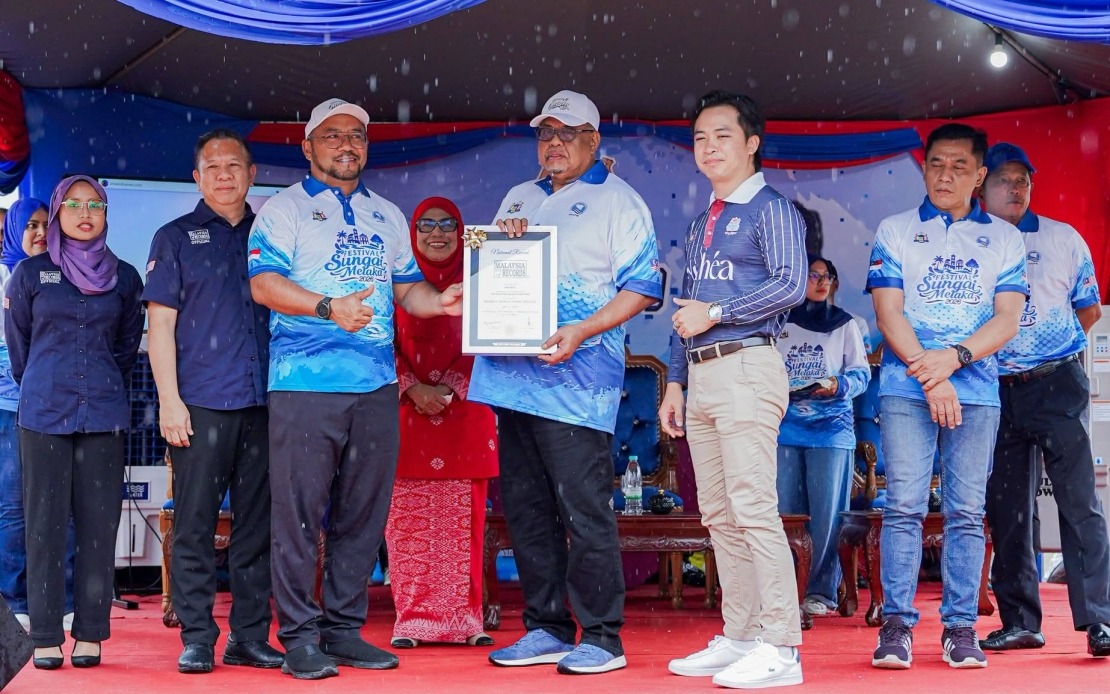
Perbadanan Pembangunan Sungai dan Pantai Melaka (PPSPM) has set its sights on ferrying one million passengers aboard the Melaka River Cruise (MRC) before the calendar year closes, a projection that reflects the state's growing confidence in water-based tourism as an economic driver. The statutory body overseeing the river's development released this target during ceremonies at Dataran Pengkalan Rama, where Chief Minister Datuk Seri Ab Rauf Yusoh presided over the distribution of Malaysia Book of Records certificates.
Progress toward the milestone is already substantial. By the end of June, the cruise operator had transported approximately 350,000 passengers along the historic waterway, meaning roughly 60 per cent of the annual target remains to be achieved in the final six months. This pacing suggests PPSPM must accelerate bookings significantly in the second half of the year to meet its ambition, a challenge that officials appear willing to pursue through aggressive marketing and competitive pricing tactics.
According to PPSPM chief executive officer Shaharul Azuar Idris, the organisation is deploying a multi-pronged strategy to convert remaining capacity into paid journeys. The approach centres on introducing special pricing packages and intensified promotional campaigns directed both at domestic audiences within Malaysia and international markets further afield. The messaging emphasises positioning the Melaka River Cruise as an indispensable experience for visitors to the state, elevating it from a pleasant diversion to a must-do attraction in Melaka's tourism portfolio.
The tourism significance of such efforts extends beyond simple visitor statistics. Melaka, as a UNESCO World Heritage Site and established destination, relies heavily on tourism receipts to support its service economy. Cruise operations represent a high-margin revenue stream with relatively stable demand compared to accommodation or dining, making the sector strategically important for state finances. The one million passenger target reflects not merely operational ambition but genuine economic policy embedded in state planning.
The existing fleet infrastructure provides a foundation for these ambitions. PPSPM currently operates 60 vessels in total, with 30 dedicated to Melaka River Cruise operations and the remaining 30 serving the Eco Cruise experience at Tasik Chinchin. This distributed capacity allows the organisation to manage peak-season congestion while maintaining service quality across multiple product lines. However, Shaharul Azuar acknowledged that proposals for introducing new boats equipped with contemporary technology remain under evaluation, suggesting the operator recognises capacity constraints may emerge if demand accelerates.
Beyond raw passenger numbers, PPSPM is investing in service quality enhancements designed to justify premium pricing and encourage repeat visitation. Premium vessels including the 'Everlasting Love Boat' and 'Tun Khalil Cruise' have undergone recent upgrades, and the organisation is packaging these vessels with dining experiences to create comprehensive tourism products rather than simple point-to-point transportation. Such service differentiation appeals to higher-spending visitor segments and distinguishes the offering from competing riverine attractions elsewhere in Southeast Asia.
Prom a regional perspective, Melaka's river tourism competes for visitor attention within a crowded landscape of water-based attractions across Malaysia and the broader ASEAN region. Competing attractions range from the Petronas Twin Towers Lake Symphony in Kuala Lumpur to comparable river experiences in Thailand and Vietnam. The emphasis on technological modernisation and experiential packaging reflects PPSPM's understanding that contemporary travellers increasingly expect value beyond the physical journey itself, particularly among international clientele.
The state government is simultaneously leveraging river cruises as a vehicle for public engagement and social cohesion. Under the Melaka Sayang Rakyat initiative, more than 5,000 local residents are expected to receive complimentary cruise rides during National Day celebrations on August 31. This strategy serves dual purposes: it builds grassroots support for state tourism policies among constituents while utilising available capacity during what might otherwise be lower-demand periods. Such initiatives blur the traditional boundary between commercial tourism and public amenity provision.
Operational readiness constitutes another dimension of PPSPM's planning. Shaharul Azuar explicitly acknowledged that meeting the one million passenger target requires meticulous attention to staff deployment and vessel availability, with explicit recognition that queue times and boarding delays represent friction points that discourage repeat visitation and damage brand perception. The National Day campaign will effectively serve as a capacity stress test, revealing whether current operational protocols can accommodate rapid passenger throughput without service degradation.
Looking forward, Melaka's river tourism ambitions must navigate several broader currents affecting Malaysian travel patterns. Domestic tourism has demonstrated resilience following pandemic disruptions, particularly among family groups and organised tour operators targeting heritage destinations. However, international visitor recovery remains uneven, with source markets in neighbouring Singapore and Thailand proving stronger than distant long-haul markets. PPSPM's dual promotional focus on local and overseas markets suggests awareness of this uneven recovery landscape.
The river cruise sector also reflects a wider Malaysian strategy to diversify tourism products beyond beach and resort experiences. As a compact urban heritage destination, Melaka possesses limited capacity for large-scale beachfront development but substantial existing cultural and historical assets. Water-based tourism activates these assets efficiently, generating employment and revenue without requiring major new infrastructure investments. This model holds implications for other Malaysian cities seeking to enhance tourism competitiveness.
Sustainability considerations, while not explicitly foregrounded in current statements, loom implicitly behind expansion plans. The Melaka River itself remains subject to environmental pressures from urbanisation and development, and intensive tourism use could exacerbate water quality or ecological concerns if not carefully managed. Future passenger growth will likely necessitate environmental impact assessments and management protocols that balance commercial ambitions with river health preservation.

