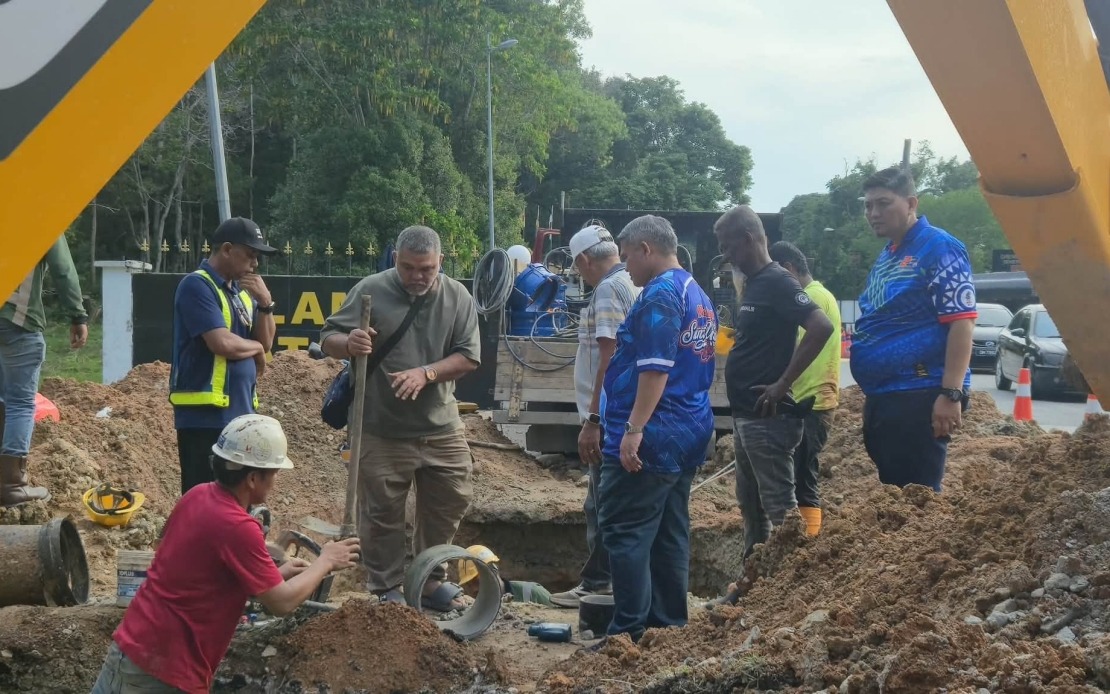
The Melaka state government is moving to tackle a water supply crisis at Kem Terendak, one of the country's largest military installations, by proposing the construction of a temporary holding tank as an interim solution. The initiative, coordinated through Syarikat Air Melaka Berhad (SAMB), represents an urgent response to repeated supply interruptions that have disrupted life at the Sungai Udang camp for military personnel, their families, and civilians living within the compound.
Datuk Rais Yasin, the state executive councillor overseeing housing, local government, drainage, climate change and disaster management, framed the temporary tank as a bridging measure while the military base awaits completion of a comprehensive water infrastructure upgrade project. The Development and Upgrade of the Water Reticulation System project at Kem Terendak is scheduled for completion in April 2028, meaning residents and military families will need interim solutions for at least the next several years. Rais, who also represents the Sungai Udang state assembly seat, acknowledged that securing approval from the Ministry of Defence remains a critical hurdle before the state can proceed with construction.
The water crisis came to a head following a major pipeline rupture along Jalan Kampung Payasum in Sungai Udang, which cut off supply across the military base. Initial repair work was expected to conclude within a single day, though officials cautioned that complete restoration of normal pressure and flow would require an additional one to two days. This timeline underscores how dependent the base's population remains on ageing infrastructure vulnerable to sudden failure.
The scale of the disruption is significant. Approximately 2,000 military personnel, their household members, and five educational institutions within the camp—including a MARA Junior Science College—went without adequate water supply for five consecutive days. For a military establishment, such shortages carry operational implications beyond ordinary civilian inconvenience, potentially affecting training schedules, hygiene protocols, and institutional functions. The presence of a junior science college means hundreds of students were also caught in the disruption, forcing school authorities to adapt daily routines.
In response to the immediate crisis, SAMB mobilised emergency water distribution across the base using a fleet of tanker lorries. The state water company committed to supplying 25,000 gallons daily through 25 tanker vehicles, a deployment that began the day after disruptions commenced. However, officials conceded that this emergency measure, while substantial, remained inadequate to fully meet demand across a population of 2,000 people and multiple institutions. The shortfall highlighted the operational strain of managing military and civilian water needs through emergency logistics rather than stable piped supply.
The state also provided water storage containers specifically for school use, ensuring that educational activities could continue despite supply disruptions. This intervention demonstrates awareness that extended water shortages create cascading impacts across institutional functions. Schools require consistent water for sanitation, food preparation, and routine operations, and without dedicated storage capacity, supply crises can force closure or serious operational degradation.
Rais emphasised that responsibility for the water system technically lies with the Public Works Department and Ministry of Defence, as Kem Terendak falls under federal military jurisdiction rather than direct state control. Nevertheless, he affirmed that the Melaka government views assisting affected residents and military families as a shared responsibility. This collaborative posture suggests coordination between state and federal authorities, though the proposal for a permanent solution necessarily requires Defence Ministry approval before the state can commit resources to construction. The fact that approval remains pending indicates bureaucratic processes that could delay even temporary fixes.
The handover of two 5,000-litre water tanks from SAMB to Kem Terendak represented a symbolic step toward addressing storage capacity constraints. The ceremony, attended by the Terendak Garrison Headquarters commanding officer Lt Col Annuar Kaliman and SAMB chief executive officer Datuk Mohd Saleh Jusman, reinforced a visible commitment to the military installation. Yet these tanks—totalling 10,000 litres—would supply less than one day's worth of the emergency 25,000-gallon daily distribution, indicating that temporary tank capacity must expand substantially to provide meaningful relief.
For Malaysian readers, this situation illustrates broader vulnerabilities in infrastructure serving critical institutions. Military bases provide essential national security functions, and water supply disruptions can have cascading effects on readiness and operations. The four-year wait until April 2028 for infrastructure completion means the temporary tank proposal, if approved, must sustain the base through multiple years of potential future disruptions. This timeline also reflects how development projects in Malaysia often face extended implementation periods, leaving populations vulnerable during interim phases.
The proposal to deploy mobile water tankers alongside a permanent temporary tank suggests a layered resilience approach. Rather than relying on a single fix, the state proposes combining stationary storage capacity with flexible emergency logistics. This dual strategy acknowledges that even a temporary tank requires time to fill and distribute water, making mobile tankers essential for rapid response to future crises. For a military installation where operational continuity matters, this redundancy provides important backup capacity.
The Kem Terendak situation also reflects broader patterns of aging infrastructure across Malaysia, where many systems installed decades ago now require replacement. The 2028 completion date for the comprehensive upgrade project suggests that planned work will address root causes rather than merely treating symptoms. However, the multi-year timeline before that upgrade is complete means the military base and its civilian residents remain exposed to the types of supply disruptions now evidently common at the installation.
Rais's public apology to affected residents and his assurance of continued state support signal awareness of political expectations around service delivery. Military families and educational institutions enjoy particular social prominence, and water supply failures affecting them attract official attention in ways that might not occur elsewhere. This political sensitivity ensures that the temporary tank proposal will likely advance, though the requirement for Defence Ministry sign-off introduces uncertainty about implementation timelines and specifications.
Moving forward, the success of both the temporary tank proposal and the longer-term infrastructure upgrade will determine whether Kem Terendak achieves reliable water supply. For the broader region, this case demonstrates how even strategically important military installations can face basic service delivery challenges, and how resolving such challenges requires coordination between state utilities, federal authorities, and defence departments. The outcome may offer lessons applicable to other critical infrastructure serving both civilian and military populations across Malaysia.

