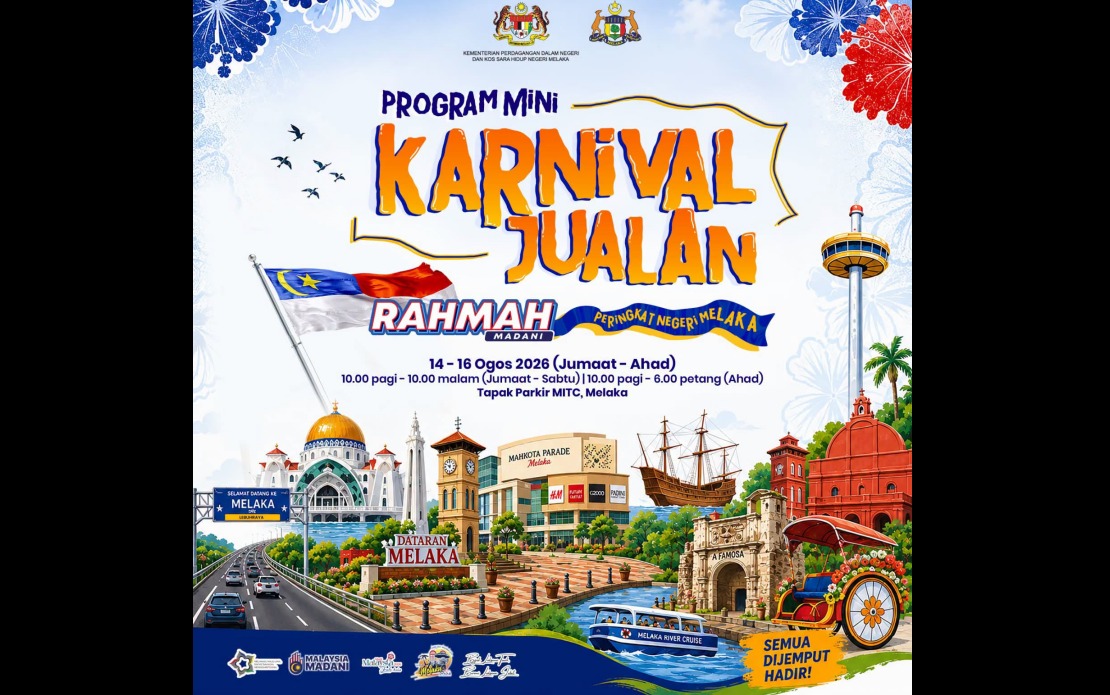
The Melaka Domestic Trade and Cost of Living (KPDN) Mini Carnival will swing open its doors tomorrow at the Melaka International Trade Centre (MITC), with organisers projecting that more than 10,000 members of the public will participate over the three-day run. The event represents a deliberate strategy by the ministry to localise its work and make its services more visible and accessible to ordinary Malaysians grappling with household budgeting challenges.
Deputy Minister Senator Datuk Dr. Fuziah Salleh framed the carnival as a natural extension of the ministry's broader commitment to reconnecting with communities in a manner that prioritises engagement over formality. Rather than confining information to office counters or bureaucratic channels, the KPDN has opted to create a relaxed, interactive environment where residents can learn about government programmes, ask questions, and sample initiatives designed to lighten the financial load on families. This approach reflects an acknowledgment that cost-of-living anxieties remain a pressing concern for Malaysian households, particularly in states like Melaka where small and medium-sized businesses form the backbone of local economic activity.
The centrepiece of the carnival is the MADANI Rahmah Sales Programme (PJRM), which will offer everyday essentials—from food staples to household items—at prices substantially below typical retail levels. For shoppers, this translates to tangible savings on goods they purchase regularly, directly reducing the monthly household bill. The programme exemplifies the government's approach to inflation relief, using direct price controls and bulk purchasing power to make necessities affordable rather than relying solely on subsidies or cash transfers. By bringing this scheme into a carnival setting, the KPDN effectively demonstrates its function as an agent that works to stabilise consumer prices across the nation.
Beyond the shopping element, the carnival functions as an educational platform where the ministry can explain its role in monitoring prices, protecting consumer rights, and enforcing regulations against unfair trading practices. Many Malaysians may be unaware of the breadth of KPDN's mandate or the specific mechanisms through which it influences market behaviour. The carnival provides a low-pressure opportunity for citizens to understand what the agency does, why it matters to their wallets, and how they can lodge complaints if they encounter price gouging or unethical business conduct. This public education dimension is particularly valuable in a region where consumer awareness varies widely and trust in government institutions can be inconsistent.
The event schedule spans three days, running from 10 am to 10 pm on Friday and Saturday, then 10 am to 6 pm on Sunday, ensuring that working families and students have multiple windows to visit. The extended hours acknowledge the reality that many Malaysians juggle employment and household responsibilities and cannot attend midweek daytime events. This scheduling flexibility signals that the carnival is genuinely designed with public convenience in mind, not merely as a tick-box exercise for the ministry.
Accompanying the PJRM stalls and information booths is an eclectic mix of attractions intended to broaden the carnival's appeal beyond price-conscious shoppers. An e-sports tournament organised in collaboration with Todak will draw younger visitors, while Menu Rahmah food truck vendors will serve affordable meals throughout the day. A children's colouring competition, live performances by musicians and entertainers, and an exhibition of antique vehicles and classic motorcycles create a festival atmosphere that transforms a consumer protection initiative into genuine family entertainment. This diversification strategy recognises that effective public outreach requires offering something for every demographic, from toddlers to retirees.
The business matching sessions represent another layer of value, potentially connecting local entrepreneurs and traders with government support programmes or each other. Melaka's economy, while historically significant, faces ongoing challenges in modernisation and competitiveness. Platforms that facilitate business networking and information sharing about government schemes can catalyse small enterprise growth and encourage formalisation of informal traders. The KPDN's inclusion of these sessions signals awareness that cost-of-living relief extends beyond consumer pricing to encompassing economic opportunities for small business operators struggling with margins and operational costs.
From a broader policy perspective, the carnival reflects the ministry's attempt to rebuild public confidence in government institutions through accessibility and tangible benefit delivery. In an era when citizens increasingly expect government to be responsive and present in their daily lives, events like this serve a dual purpose: they provide immediate utility through affordable goods and information, while simultaneously generating positive public sentiment toward the administering agency. For the KPDN specifically, establishing itself as a helpful, approachable ministry rather than a distant regulatory body may improve voluntary compliance with price monitoring directives and consumer protection rules.
Melaka's selection as a host location is strategically sound. The state's large urban population in Melaka City, combined with a substantial number of daily commuters from surrounding districts, ensures strong foot traffic potential. Additionally, Melaka has historically been positioned as a tourism and commercial hub, making the MITC venue an appropriate and accessible gathering point. A successful carnival here may encourage the ministry to replicate the model in other states, creating a nationwide rolling series of engagement events that bring cost-of-living support initiatives into communities beyond Kuala Lumpur's federal reach.
The timing of the carnival also merits attention. Held in mid-August, it coincides with a period when many households are managing back-to-school expenses and planning household budgets for the final months of the year. Offering access to discounted essentials at this juncture provides genuine relief to families managing multiple financial obligations. The ministry has evidently timed the initiative to maximise relevance and impact, ensuring that the carnival addresses felt needs rather than launching a campaign in a economic lull.
Deputy Minister Fuziah's explicit invitation to residents underscores the ministry's expectation that high attendance will validate this community-focused approach and potentially lead to expansion of such initiatives. Strong turnout would also generate positive media coverage and demonstrate public appetite for government-sponsored affordability programmes. Conversely, low attendance might signal that the format, timing, or promotion requires adjustment. For Malaysian policymakers observing the carnival's success, it will offer lessons about how centralised cost-of-living interventions can be delivered at local scale without sacrificing effectiveness or public accessibility.

