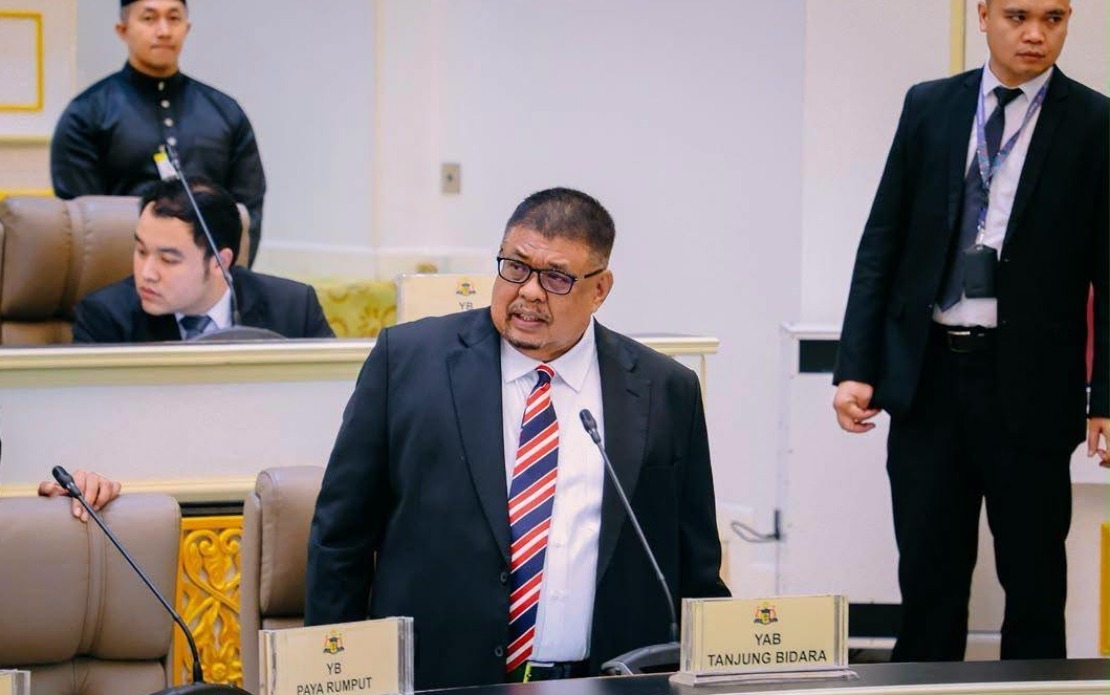
The Melaka state government intends to proceed without interruption in its governance and development agenda despite the Democratic Action Party's unexpected departure from the ruling coalition, according to Chief Minister Datuk Seri Ab Rauf Yusoh. Speaking at the Seri Negeri Complex in Ayer Keroh on July 15, he sought to calm concerns among public servants, the business sector, and potential investors about the implications of the DAP's sudden exit, which removed four state assemblymen from the administration.
Ab Rauf emphasised that the capacity to deliver basic services, drive state development initiatives, and maintain administrative efficiency would remain intact regardless of the reduced coalition support. His statement came in response to the four DAP representatives—Allex Seah Shoo Chin, Low Chee Leong, Leng Chau Yen, and Kerk Chee Yee—who formally announced their resignations following the State Legislative Assembly's approval of constitutional amendments allowing assemblymen appointments. The party's decision to quit was finalised when resignation letters were submitted immediately after a press conference, effectively closing the door to further negotiation.
The timing of the DAP's withdrawal reflects deeper tensions within the coalition over constitutional reform. The amendment permitting appointments to the assembly was the catalyst, though it signals broader disagreements about governance direction and power-sharing arrangements in Melaka. From a regional governance perspective, this development underscores the fragility of multi-party coalitions in Malaysian states, where constitutional manoeuvres and party principles can rapidly destabilise administrations. The episode illustrates how competing ideological positions—particularly regarding institutional design and democratic representation—can override coalition discipline, even when parties share a common opposition history.
Ab Rauf adopted a notably conciliatory tone toward his former partners, acknowledging their contributions during the period of joint governance and declining to escalate the situation through recriminations. He stated that while the coalition partnership has ended, this need not translate into antagonism, particularly on matters affecting Melaka's development and the welfare of its residents. This rhetorical positioning appears calculated to minimise political friction and preserve the possibility of future cooperation on specific issues, even absent formal coalition ties. The measured response contrasts with the often acrimonious breakups of state coalitions elsewhere in the country.
Prime Minister Datuk Seri Anwar Ibrahim had called for negotiations to forestall the DAP's departure, seeking to preserve the coalition arrangement on the same day the party announced its decision. However, the swift submission of resignation letters made such dialogue moot. Ab Rauf noted that once formal notice had been given, the window for negotiation had effectively closed. This sequence suggests that the DAP's leadership had resolved on the course of action before public announcements, limiting room for mediation by federal-level figures. The episode raises questions about how much authority the Prime Minister can exercise over state-level coalition decisions, particularly when parties have already made their positions public.
Regarding the vacant executive councillor position left by the DAP's departure, the Melaka government has opted not to appoint an immediate replacement. Instead, existing administrative members will assume the duties temporarily. This approach buys time while the political landscape settles and may signal openness to further changes in the coalition composition. It also avoids the optics of hastily installing a replacement from another party, which could provoke additional friction. The decision reflects pragmatism about the government's capacity to function with reduced exco numbers, though it leaves questions about medium-term administrative arrangements unresolved.
The state government has reiterated its commitment to maintaining cordial relations with the federal administration, positioning Melaka as a stable partner for Kuala Lumpur's development agenda. This emphasis on federal-state cooperation is particularly significant for attracting investment and securing funding for infrastructure and economic projects. Any perception of political instability can deter businesses and complicate long-term planning. By maintaining dialogue with the federal level while absorbing the coalition shock at state level, Ab Rauf appears intent on protecting Melaka's economic interests even as its political configuration shifts.
For Malaysian observers, the Melaka situation encapsulates broader challenges facing coalition governance in the post-2018 era. State administrations formed from multi-party alliances, whether under Pakatan Harapan or other configurations, have repeatedly faced tensions between maintaining unity and responding to party-specific directives from headquarters. The DAP's decision prioritises its institutional concerns about democratic representation over coalition stability, reflecting an assessment that the constitutional amendment represents a threshold issue that justifies breaking ranks. This suggests that Malaysian coalition governments remain vulnerable to splitting when fundamental governance questions arise.
The withdrawal also highlights the limited tools available to ruling coalitions for managing disputes between partners. Without mechanisms for binding arbitration or compromise protocols embedded in coalition agreements, parties can exit relatively swiftly when disagreements reach critical points. The DAP's four assemblymen represented meaningful representation in a state assembly of modest size, and their departure noticeably weakens the government's parliamentary position. Whether the Melaka administration can sustain its agenda with reduced numbers, and whether further defections or coalition rearrangements might follow, remains an open question as the state enters a period of political uncertainty despite Ab Rauf's reassurances of continuity.

