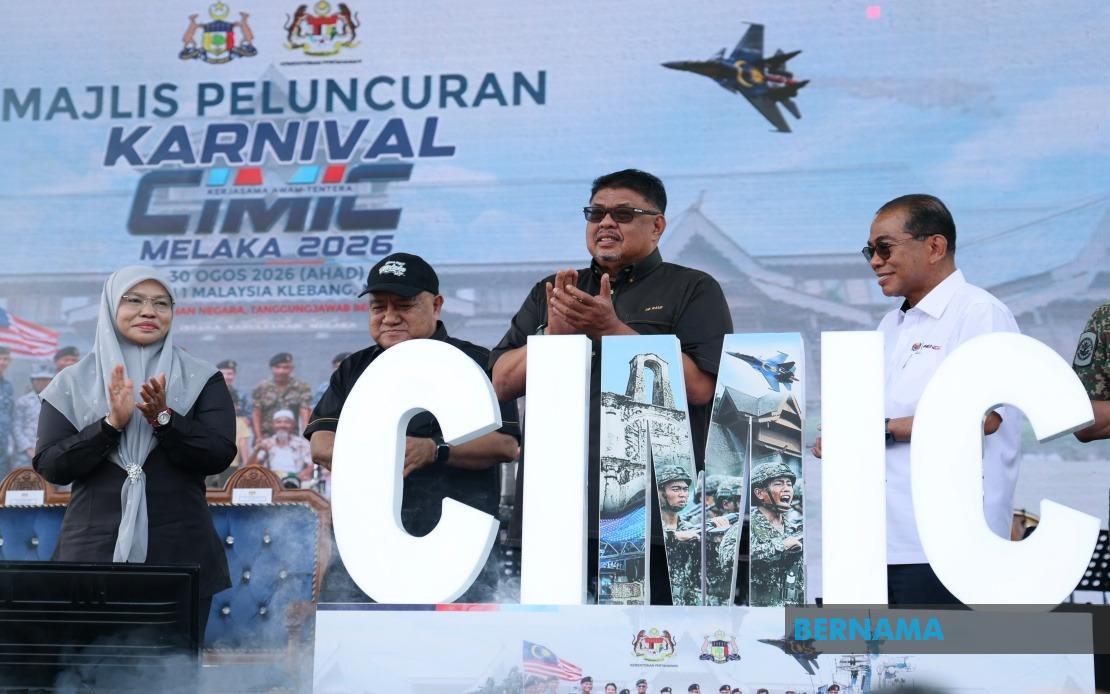
The Malaysian government is seriously examining whether Melaka could replace Langkawi as the future home of the prestigious Langkawi International Maritime and Aerospace Exhibition (LIMA), according to Defence Minister Datuk Seri Mohamed Khaled Nordin. Speaking at an event in Melaka last week, the minister indicated that the biennial showcase—one of Asia's premier maritime and defence industry events—could be relocated to the state if strategic infrastructure improvements are undertaken. The proposal signals a notable shift in how federal authorities view the exhibition's optimal location, reflecting broader considerations about venue accessibility and national participation.
The Klebang area of Melaka has emerged as the tentative location for such a relocation. Mohamed Khaled highlighted the site's inherent advantages, noting its proximity to Batu Berendam Airport and its capacity to accommodate maritime vessels at berthing facilities. These geographic attributes would theoretically enable the exhibition to function effectively without requiring entirely new infrastructure from scratch. The minister's assessment suggests that Melaka possesses the foundational elements necessary for hosting a world-class maritime and aerospace exhibition, though considerable capital investment would remain essential to meet international standards and operational requirements.
One compelling rationale driving the exploration involves expanding public participation beyond current levels. The Defence Minister acknowledged that Langkawi's remote location, despite its strategic coastal positioning, has historically limited attendance and visitor engagement from other regions of Malaysia. By contrast, Melaka's more central location and superior transportation connectivity would theoretically allow professionals, military personnel, defence contractors, and the general public from Kuala Lumpur, Selangor, and other peninsular states to attend with considerably less travel burden. This democratisation of access represents a significant consideration for organisers seeking to maximise the exhibition's domestic impact and education value.
The genesis of this proposal stems partly from the successful deployment of six Royal Malaysian Navy vessels during this year's National Day celebrations in Melaka. That display demonstrated both the operational capability of the RMN and the feasibility of coordinating large naval assets in Melakan waters. The positive reception to military participation in these celebrations appeared to spark broader thinking about what other defence-related international events the state might accommodate. Such experiences often provide government planners with practical insights into whether complex logistical undertakings can be executed successfully at alternative locations.
Melaka Chief Minister Datuk Seri Ab Rauf Yusoh adopted a more cautious stance, emphasising that any decision would require thorough evaluation of state capacity and economic benefits. The chief minister's measured response reflects prudent governance, as hosting an exhibition of LIMA's calibre demands substantial coordination across multiple agencies, sectors, and infrastructure providers. His comments suggest that while the state government welcomes the federal proposal, officials wish to conduct proper due diligence before committing resources. The chief minister indicated that detailed discussions would occur at the federal level, implying a collaborative process between Putrajaya and state authorities rather than an imposed mandate.
The financial dimensions of such a relocation remain substantial. Mohamed Khaled explicitly stated that hosting LIMA in Melaka would necessitate considerable government investment to develop supporting infrastructure adequately. This includes not merely the exhibition grounds themselves but also accommodation facilities, transport links, security systems, and various ancillary services required for an international event attracting thousands of defence industry professionals, government delegations, and military personnel. The quantum of such investment would likely influence whether the proposal ultimately progresses from exploratory discussion to concrete planning.
From a strategic perspective, relocating LIMA from Langkawi would represent a significant reorientation of Malaysia's defence and aerospace diplomacy. Langkawi has hosted the exhibition since its inception, establishing strong international branding and institutional continuity. Shifting to Melaka would require rebuilding such relationships and demonstrating equivalent capability to attract the same calibre of international exhibitors and official participants. However, the historical significance of Melaka and its status as a UNESCO World Heritage Site could paradoxically enhance the exhibition's prestige and cultural context, potentially positioning it as a showcase merging contemporary defence technology with Malaysia's heritage.
Regional implications deserve consideration as well. Southeast Asian neighbours regard LIMA as an important indicator of Malaysia's defence industrial ambitions and technological capabilities. Moving the venue could signal either enhanced commitment to the exhibition through improved facilities or, conversely, uncertainty about long-term hosting capacity in its traditional location. The diplomatic dimension would require careful management to ensure that international partners view any relocation as a demonstration of confidence rather than a retrenchment.
The timing of this exploration also reflects broader patterns of infrastructure development in Malaysia. Melaka has undergone significant investment in recent years, including port modernisation and transport connectivity improvements. These existing or planned projects provide a foundation upon which LIMA's requirements could potentially be layered, making the location incrementally more viable than it might have been previously. Policymakers appear to be examining whether ongoing development trajectories create opportunities for hosting prestigious international events that were previously constrained by infrastructure deficiencies.
The proposal ultimately hinges on whether federal and state governments conclude that the benefits justify the investment. Improved accessibility for Malaysian participants, diversification of exhibition venues across Malaysia's geography, and demonstration of national capability beyond the traditional Langkawi location represent compelling arguments in favour. Conversely, the costs of venue development, the institutional challenges of relocating an established exhibition, and the complexities of international coordination must be weighed against these potential gains. The exploratory phase now underway will likely determine whether this remains aspirational or evolves into concrete development planning.

