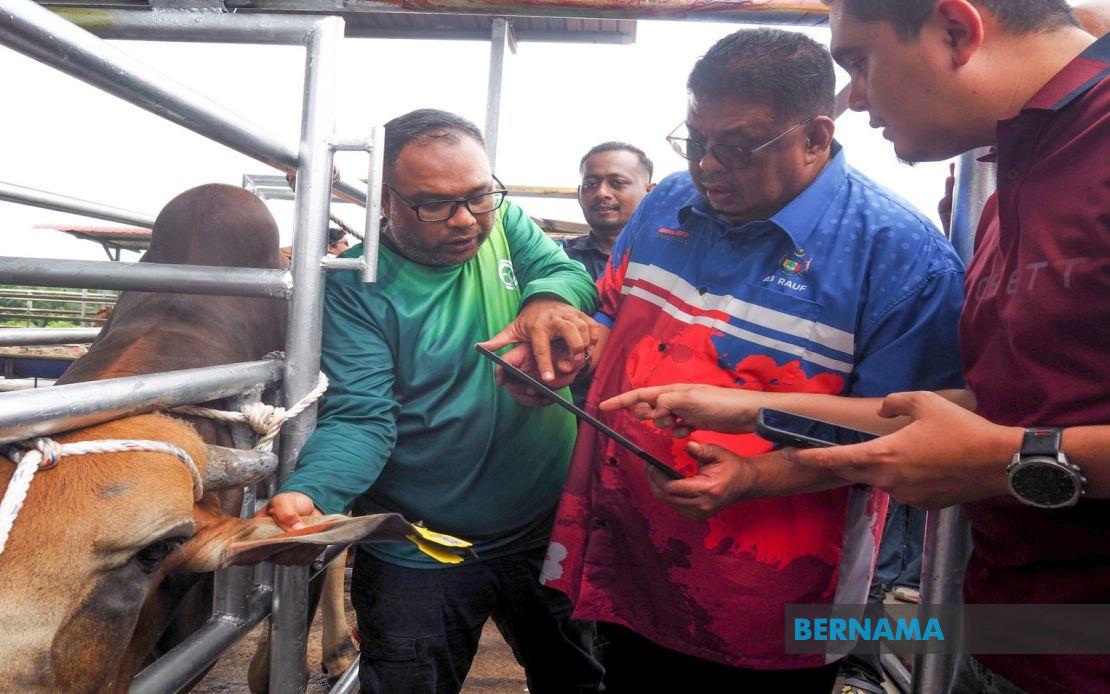
Melaka is rolling out an ambitious digital identification system for livestock, equipping animals with QR-enabled tags to revolutionise how the state monitors and manages its farming communities. The Livestock QR Tag initiative, launched by the state government through the Melaka Veterinary Services Department, represents a practical application of technology to address longstanding challenges in rural livestock management and public safety across the region.
The system emerged from Chief Minister Datuk Seri Ab Rauf Yusoh's vision to modernise Melaka's agricultural sector as part of broader digitalisation efforts. According to Mahathir Mustafa, chief assistant secretary of the Chief Minister's Department's Local Government Unit, the scheme transforms how authorities respond to livestock-related incidents by enabling instant owner identification through smartphone scanning. Each tag contains a unique QR code linking to the breeder's name, premises ID, and farm location—information previously difficult to retrieve during emergencies or enforcement actions.
The rollout has already progressed significantly, with 2,000 livestock fitted with tags by early June. The state government is pursuing comprehensive coverage of Melaka's registered cattle and buffalo population, estimated at over 32,000 animals. This phased approach allows authorities to manage implementation logistics while demonstrating the system's effectiveness to farmers hesitant about new technologies. The ambitious scale reflects confidence that digital tracking will deliver measurable improvements in animal welfare, ownership accountability, and public protection.
Stray livestock incidents have become an escalating problem for Melaka's communities and road users. Since 2023, the state recorded 835 accidents involving livestock and more than 50 formal complaints about stray animals endangering public safety. These figures underscore why traditional identification methods have proven inadequate. When wandering cattle cause traffic accidents or property damage, farmers often deny ownership or cannot be located quickly, leaving authorities frustrated and victims uncompensated. The QR system directly addresses this enforcement gap by making owner identification instantaneous rather than investigative.
The tagging mechanism functions as a permanent livestock identity document, remaining attached throughout the animal's lifetime regardless of sales or transfers. This design prevents the gaming of ownership records that plague systems relying on paper documentation or self-reporting. When livestock change hands, new owners simply update their information in the eVetPermit Malaysia system rather than obtaining new tags. This hybrid approach—durable physical identification paired with centralised digital records—creates accountability without imposing unreasonable administrative burdens on farmers managing livestock transitions.
Melaka has strategically subsidised adoption to accelerate participation. Until the end of 2024, the state government absorbs the RM6.50 installation cost per animal, making tag registration free for participating breeders. This period effectively functions as an extended trial during which reluctant farmers can observe peers benefiting from the system before costs transfer to users. From 2027 onwards, replacement and new installations will cost RM5 per head—a modest fee that encourages responsible ownership while remaining affordable for small-scale operations.
The farming community's early response has been surprisingly positive. Breeders recognise that transparent ownership records protect their interests against liability claims and theft. A farmer whose tagged animal causes damage can demonstrate proper care and containment practices, potentially reducing legal exposure. Conversely, the system deters neighbours from falsely blaming distant farms for stray animals. This mutual benefit has generated farmer buy-in that top-down enforcement mandates might not achieve. Industry leaders view the initiative as a means to rehabilitate livestock farming's public image following years of friction over stray animals and accident costs.
Implementation success depends heavily on coordination between multiple agencies. The Chief Minister's Department, Melaka Veterinary Services Department, and local authorities must function as integrated partners rather than siloed bureaucracies. Training frontline staff to use smartphone scanning equipment, maintaining the underlying digital database, and ensuring rapid information access during emergencies all require sustained institutional commitment. The system's effectiveness ultimately hinges on whether responding police officers, veterinary inspectors, and municipal enforcers actually utilise QR scanning during incidents rather than reverting to traditional slow identification methods.
For Southeast Asia's agricultural sector, Melaka's initiative offers a replicable model balancing digital innovation with farmer-friendly implementation. Many regional states grapple with similar stray livestock problems and enforcement gaps, yet lack coherent identification frameworks. By combining subsidised hardware, smartphone-based access, and centralised digital records, Melaka demonstrates that rural digitalisation need not be complex or inaccessible. The approach could particularly benefit Sarawak, Sabah, and Peninsular Malaysia's less developed livestock regions, where stray animal incidents regularly disrupt transport networks and farming livelihoods.
The system also positions Melaka as a technology-forward agricultural jurisdiction. As the state pursues its vision of becoming a smart and livable state, practical innovations in farming modernisation attract agribusiness investment and skilled agricultural workers. The QR tagging scheme complements broader state government digitalisation spanning local government services, transport infrastructure, and business licensing. This integrated approach suggests Melaka's leadership views technology not as an end itself but as a tool for solving specific, chronic problems that traditional governance systems have failed to address.
Longer-term implications extend beyond Melaka. As the system matures and delivers documented improvements in accident reduction and owner accountability, neighbouring states will face pressure to adopt similar frameworks. This could eventually standardise livestock identification across Malaysia, enabling interstate movement tracking and disease control coordination. The project therefore represents a potential precursor to more sophisticated national agricultural governance infrastructure, even as Melaka initially pursues localised benefits.
Farmers now registering livestock face low-risk participation, with state subsidisation and documented benefits from improved safety and liability protection. The question is whether momentum persists beyond the 2024 subsidy period, when adoption costs shift to users. If farmers embrace the system's practical advantages sufficiently, the transition to user-financed operations should proceed smoothly. Alternatively, if adoption proves superficial during the free registration phase, participation could decline sharply once charges apply. Melaka's success in transitioning from subsidised pilot to sustainable self-funded operation will ultimately determine whether this livestock identification innovation becomes a regional standard or remains a localised experiment.

