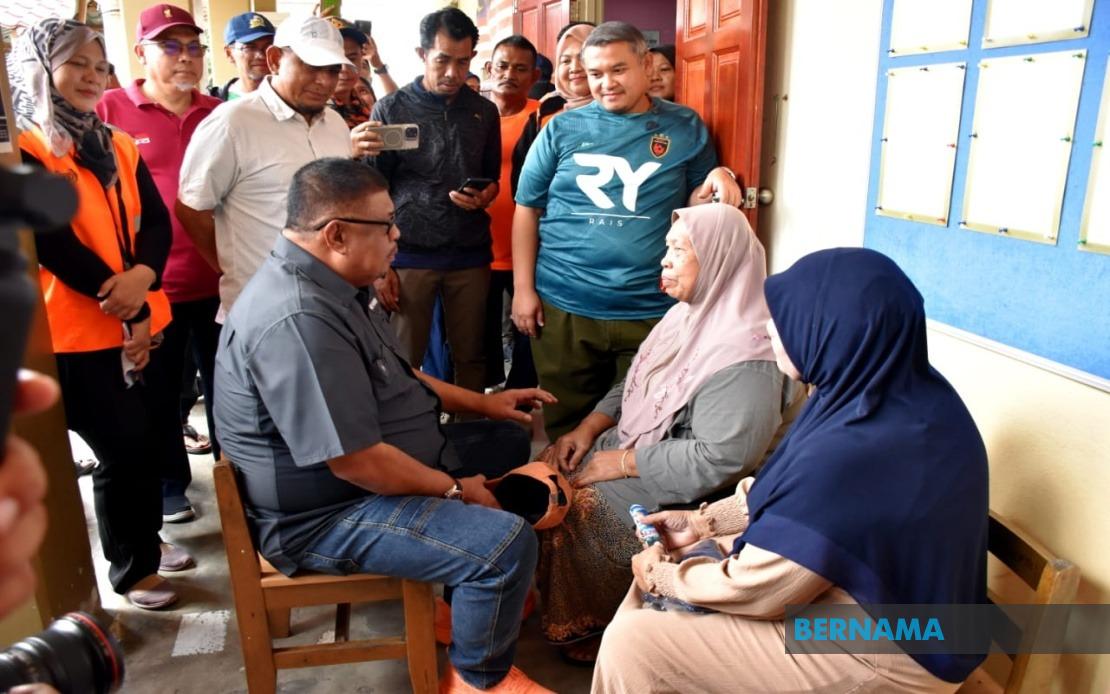
Melaka Chief Minister Datuk Seri Ab Rauf Yusoh has committed to ending the chronic flooding crisis that has disrupted life in Tanjung Minyak for more than 30 years, vowing to implement lasting solutions after unprecedented rainfall forced the evacuation of hundreds of residents this week. Speaking during a visit to displaced families sheltering at Sekolah Kebangsaan Tanjung Minyak 2, the Chief Minister outlined an approach centred on reviewing all proposals and recommendations from relevant government agencies to develop effective long-term strategies for the flood-prone settlement.
The flooding episode that prompted the Chief Minister's commitment represents an exceptional weather event by local standards. Authorities recorded cumulative rainfall exceeding 100 millimetres in both Melaka Tengah and Alor Gajah districts by mid-afternoon, surpassing precipitation levels experienced during Tropical Storm Senyar late last year. The intensity of the downpour overwhelmed existing water retention infrastructure, causing systems designed to manage ordinary rainfall to spill excess water directly into residential neighbourhoods. For residents already familiar with decades of periodic flooding, this latest inundation underscores the inadequacy of current drainage and water management mechanisms.
The human toll of the current crisis is substantial. More than 900 evacuees drawn from approximately 300 families have been accommodated across multiple relief centres throughout Melaka state. The scale of displacement reflects both the geographical extent of flooding and the vulnerability of affected communities. The Melaka Social Welfare Department, under director Halyjah Muhamad, coordinates assistance efforts alongside state Senior Housing, Local Government, Drainage, Climate Change and Disaster Management Committee chairman Datuk Rais Yasin, with the Chief Minister emphasising that welfare provisions will remain prioritised until living conditions stabilise.
The Chief Minister's statement acknowledges what residents of Tanjung Minyak have endured for three decades: a persistent problem requiring structural intervention rather than temporary relief measures. By framing the issue as a challenge dragging across multiple generations, Ab Rauf recognises both the frustration of affected communities and the political urgency of demonstrating concrete action. His commitment to determine the most appropriate methodology for resolving the problem suggests recognition that previous approaches have proven insufficient.
The emphasis on coordinating responses through the District Office and state government channels indicates an effort to establish more efficient delivery of aid to flood victims. All relevant agencies have been placed on heightened alert status to enable swift response protocols. This institutional mobilisation appears designed to demonstrate that the state government takes both immediate relief and longer-term planning seriously, addressing both the humanitarian imperative of helping displaced families and the governance challenge of preventing recurring disasters.
For Malaysia's broader flood management context, the Tanjung Minyak situation illustrates persistent challenges facing urban and semi-urban drainage systems. Climate patterns appear to be producing rainfall events of increasing intensity, with the Chief Minister noting that this week's precipitation represented the heaviest recorded in more than two decades. Such meteorological trends complicate planning for fixed infrastructure designed around historical rainfall norms, creating a growing mismatch between design capacity and emerging weather patterns.
The 30-year history of flooding in Tanjung Minyak raises questions about how similar chronic drainage problems have been addressed or neglected in other Malaysian localities. Many settlements throughout the Peninsula and East Malaysia face comparable cycles of seasonal or unpredictable inundation. The visibility and political attention now focused on Tanjung Minyak may create pressure to examine whether comparable affected areas receive adequate government priority.
The involvement of the Melaka Irrigation and Drainage Department in providing technical analysis of rainfall and flood causation suggests that solutions will likely involve engineering interventions in drainage capacity, water retention infrastructure, or both. However, the Chief Minister's reference to examining "methods and suggestions from relevant agencies" indicates openness to considering multiple approaches, potentially encompassing land-use planning, improved early warning systems, or community-based resilience measures alongside conventional infrastructure upgrades.
The political dimensions of the Chief Minister's commitment merit attention. Pledging to resolve a three-decade problem positions the current administration as capable of delivering outcomes where predecessors apparently could not. Successfully implementing a long-term solution would constitute a tangible achievement demonstrating responsive governance. Conversely, failure to translate the commitment into substantive progress would reinforce public frustration with perennial delays.
For residents of Tanjung Minyak currently sheltering in relief centres, the Chief Minister's pledge represents a moment of potential turning point. Whether this commitment translates into the comprehensive, multi-year engineering and planning effort required to genuinely resolve chronic flooding will depend on sustained political will, adequate budget allocation, and technical competence in executing complex drainage solutions. The coming months and years will reveal whether this week's disruption catalyses genuine change or becomes merely the latest iteration of a recurring crisis.

