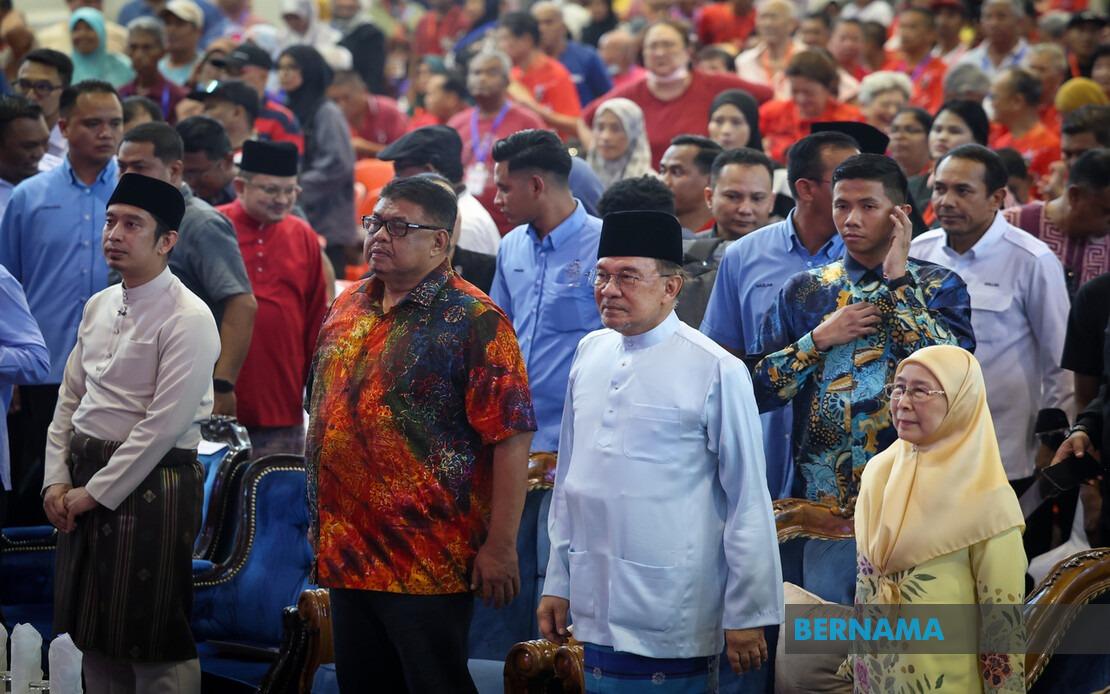
Melaka is positioning itself as a leader in sustainable urban development by combining legal protections, digital innovation, and major infrastructure investment to transform how Malaysian states manage their natural heritage and public spaces. Chief Minister Datuk Seri Ab Rauf Yusoh outlined the integrated approach during the National Landscape Day 2026 celebration, which drew Prime Minister Datuk Seri Anwar Ibrahim and Housing and Local Government Minister Nga Kor Ming, signalling federal alignment on environmental priorities.
The state's framework rests on three pillars. First, the Tree Preservation Order enforced under the Town and Country Planning Act 1976 creates legal safeguards for significant trees, treating them as protected assets rather than obstacles to development. This regulatory foundation matters particularly in Melaka, where rapid urbanisation has historically competed with heritage preservation. The statute gives local authorities and state government concrete tools to resist pressure from developers seeking quick clearance of mature vegetation, establishing that high-value trees merit the same consideration as heritage buildings.
Second, and more innovatively, Melaka launched the MyTrees@Melaka system—a state-led digital platform that transforms tree management from ad-hoc paper records into a systematic database. Since 2017, the system has compiled records on 70,753 individual trees across Melaka's four local authorities in partnership with the state Forestry Department. This granular inventory approach allows planners to track tree health, location, species composition, and maintenance history, enabling evidence-based decisions about where to prioritise conservation, supplementary planting, or urban renewal. For Malaysian local authorities often struggling with capacity and fragmented data, the system offers a replicable model for other states seeking to modernise environmental management.
The third element combines statutory guidance with implementation targets. Melaka's 2022 State Landscape Guidelines provide a comprehensive rulebook for developers, agencies, and planners, ensuring that new projects incorporate landscape quality and distinctive character rather than treating greenery as an afterthought. To back this framework with action, Melaka has planted 10,588 trees as of June 2026—a measurable commitment that every new tree enters the digital registry and monitoring cycle. This requirement that planted trees be recorded, monitored, and maintained based on data elevates tree-planting from symbolic gestures to genuine asset management.
Beyond tree counting, Melaka is leveraging landscape development as an economic and cultural strategy. The proposed Aspiring Melaka Geopark project links geological heritage, biodiversity, and local culture into an integrated narrative that distinguishes Melaka's identity. Rather than treating conservation and economic development as opposing forces, the state intends to position its natural and historical assets as anchors for education-focused and nature-based tourism ventures that generate revenue for local communities while protecting the ecosystem. This approach aligns with broader Southeast Asian trends toward regenerative tourism, where visitors pay to experience and fund environmental preservation.
Recent and planned recreation park projects demonstrate this philosophy in practice. Three major projects completed last year—SDG Park @ Sungai Melaka, Kampung Felda Air Kangkung Recreation Park, and Taman Kejiranan Pulai Indah—created accessible public spaces that serve residents while showcasing landscape quality. Three additional MADANI Recreational Park projects now underway will upgrade Dataran Sejarah Ayer Keroh, the Ayer Keroh Art Lanai, and Bukit Beringin Masjid Tanah, expanding the network of multipurpose green zones. Ab Rauf explicitly framed these investments as measures of progress that extend beyond physical infrastructure: they reflect the state's ability to balance development with ecosystem preservation and quality-of-life improvements for residents.
The National Landscape Day 2026 event itself—a four-day gathering drawing nearly 3,000 participants from across Malaysia—served as both celebration and knowledge-sharing platform. The gathering brought together landscape architects, local authority officials, industry players, academics, and enthusiasts, creating a rare space for cross-sector dialogue. The twelve pavilions showcasing local authority landscapes highlighted regional diversity in how different PBTs approach sustainability, offering concrete examples and best practices. For a sector often fragmented between competing priorities and limited inter-agency coordination, such forums build professional networks and knowledge exchange that accelerate innovation diffusion across the country.
Melaka's approach carries broader implications for Malaysian urban planning and environmental governance. As cities grapple with balancing growth, livability, and ecological resilience, states that systematise tree and landscape management gain competitive advantages in attracting quality investments, retaining talent, and building community attachment. The MyTrees@Melaka system, for instance, reduces the opaque, personality-dependent nature of planning decisions—a persistent challenge in Malaysian governance—by anchoring choices to verifiable data. When a developer proposes tree removal, decision-makers can consult the digital inventory to assess ecological value, neighbourhood context, and maintenance history, raising the standard of justification required for tree clearance.
The emphasis on statutory frameworks and systemic implementation also addresses a perennial weakness in Malaysian environmental policy: the gap between declared intentions and actual enforcement. Many states have adopted landscape guidelines or tree preservation orders on paper, only to see them weakly enforced or overridden by competing development pressures. By embedding digital monitoring, regular planting targets, and community-visible recreation parks, Melaka creates accountability mechanisms that are harder to ignore. Residents can visit upgraded parks, track tree inventories online, and hold authorities to stated commitments.
Furthermore, the integration of landscape management with heritage and tourism strategies positions Melaka's efforts within the economic logic that state governments understand. By demonstrating that investment in green infrastructure and natural heritage conservation generates tourism revenue, attracts skilled workers, and enhances property values, Melaka makes the case for environmental stewardship as a development strategy rather than a constraint. This framing may prove persuasive in convincing other Malaysian states and private investors that landscaping deserves equivalent priority to roads, commercial towers, and industrial parks.
The state's digitalisation push also acknowledges a global trend: data-driven governance increasingly influences investment decisions, insurance assessments, and corporate environmental strategies. Cities and regions with comprehensive, transparent data on their environmental assets—trees, water quality, air pollution, biodiversity—position themselves advantageously in attracting ESG-conscious investments and attracting international recognition. Melaka's MyTrees@Melaka system, by generating publicly available tree inventory data, positions the state as environmentally transparent and professionally managed.
Looking forward, Melaka's strategy will require sustained commitment and resource allocation. Digitalising landscape management demands ongoing maintenance of the database, regular field audits, and staff training across multiple agencies. Ensuring that planted trees survive and thrive requires long-term horticultural expertise, which many local authorities lack. Recreation parks, once built, need continuous maintenance to remain attractive and safe. These are not one-time initiatives but durable institutional commitments. Whether Melaka sustains this momentum will reveal how deeply landscape sustainability has been embedded in state governance versus how much it depends on current leadership enthusiasm.

