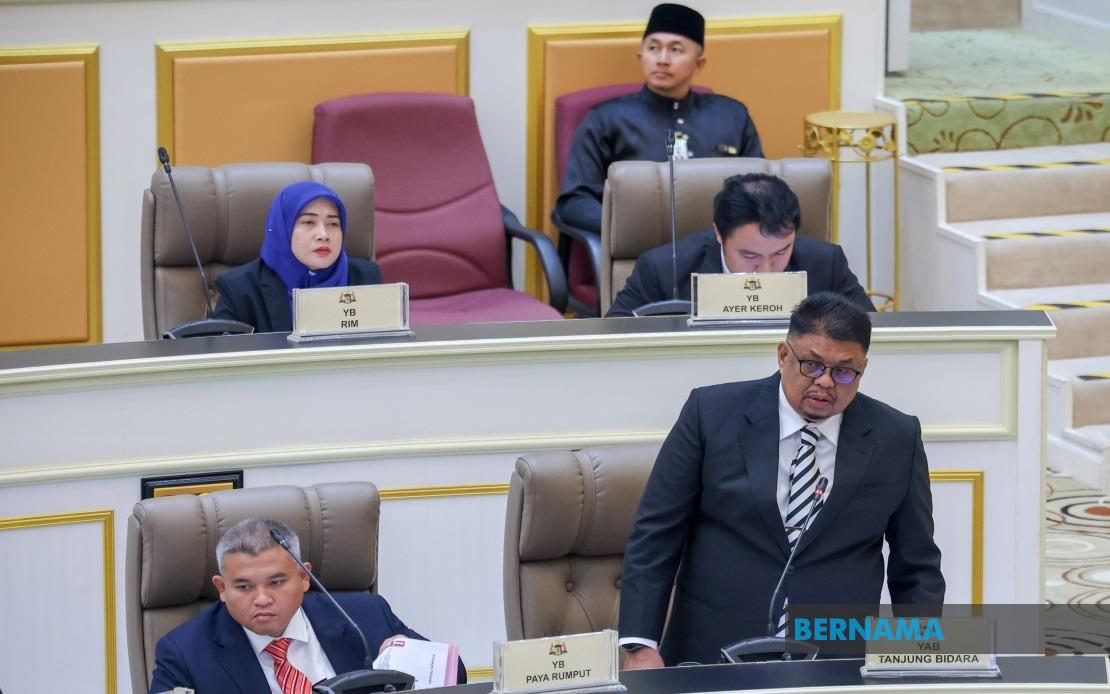
The Melaka State Legislative Assembly has cleared the way for a significant shift in the composition of the chamber by approving a constitutional amendment on July 14 that would introduce appointed members into the 36-seat house. The Melaka State Constitution (Amendment) Bill 2026 secured backing from 23 legislators, with five members opposing the measure, signalling majority support for what proponents describe as an institutional modernisation initiative.
The initiative originates from the Barisan Nasional government's 2021 state election platform, where expansion of legislative representation through non-electoral channels featured as a key commitment under its political stability agenda. Chief Minister Datuk Seri Ab Rauf Yusoh championed the proposal, contending that the appointment mechanism would draw individuals possessing specialist knowledge in crucial sectors including law, economics, education, investment, technology and regional development. His framing emphasises capability and technical competence rather than electoral popularity as the criterion for legislative participation.
A central pillar of the government's rationale involves broadening participation among constituencies unlikely to secure representation through conventional voting. Women, young professionals, Orang Asli representatives, minority communities and business leaders could gain direct influence over state policy deliberation under this framework. This represents an acknowledgement that electoral systems, whilst democratically legitimate, may inadvertently exclude qualified voices whose expertise could enhance governance outcomes. The government presents the mechanism as complementary rather than competitive with democratic processes.
Improving the calibre of legislative discourse represents another justification offered by the administration. Officials argue that appointed members operating outside electoral cycles can offer more detached, technically informed commentary on complex policy matters, administrative efficiency and legislative bills. This perspective assumes that independence from electoral pressures enables more objective evaluation of government proposals and enhanced scrutiny capabilities. The mechanism theoretically strengthens parliamentary oversight by introducing members specifically selected for analytical rigour rather than constituent service obligations.
The debate within the chamber revealed surprising cross-party positioning. The opposition leader, Dr Mohd Yadzil Yaakub, endorsed the constitutional amendment, drawing parallels with federal-level practices. He cited the Dewan Negara appointment system as precedent, where specialists and individuals with documented national contributions sit alongside elected senators. This analogy suggests that appointed house components operate successfully within Malaysia's existing constitutional architecture, reducing concerns about institutional deviation from democratic norms.
Opposition support, conditional upon transparent implementation mechanisms prioritising public interest, indicates recognition that institutional design questions transcend simple partisan divides. The threshold issue for sceptics appears centred on procedural safeguards ensuring appointments serve stated policy objectives rather than becoming vehicles for political patronage. This distinction between legitimate specialised representation and corruption through covert power distribution frames the substantive debate underlying constitutional reform.
Melaka's reform sits within a broader Southeast Asian and Malaysian context of evolving legislative structures. Appointed chambers and partly-elected systems operate across the region with varying success rates. Malaysia's own Dewan Negara demonstrates that non-elected upper house components can function within Westminster-derived systems, though ongoing debates about institutional relevance persist. The question of whether appointment-based chambers genuinely enhance governance or accumulate political sinecures remains contested among scholars and practitioners.
For Malaysian readers, the Melaka precedent carries significance beyond state boundaries. If the appointed component successfully incorporates overlooked constituencies and strengthens policy analysis, comparable proposals may emerge in other state assemblies or even federal parliament. Conversely, if appointments become perceived as rewards for political loyalists, the model could trigger critical examination of democratic deficit tradeoffs. The actual implementation will substantially influence whether this constitutional innovation becomes replicable best practice or cautionary example.
The appointment of up to seven members would constitute approximately one-fifth of the Melaka legislature, a substantial bloc capable of influencing voting patterns and debate outcomes. This scale distinguishes the reform from purely advisory chambers, positioning appointed members as genuine legislative participants rather than consultative additions. The specification of expertise domains—law, economics, technology, investment—signals intention to address identified knowledge gaps in current membership rather than general political purposes.
Transparency mechanisms in the appointment process will prove crucial for legitimacy. Establishing visible, merit-based selection criteria and publishing reasons for individual appointments would substantiate claims about expertise-driven selection versus concealed factional advantage. Melaka's government has opportunity to establish benchmarks for responsible appointment governance that could inform debates elsewhere in Malaysia about complementing electoral democracy with competence-based representation, provided the implementation demonstrates fidelity to stated principles rather than circumventing democratic accountability through bureaucratic discretion.

