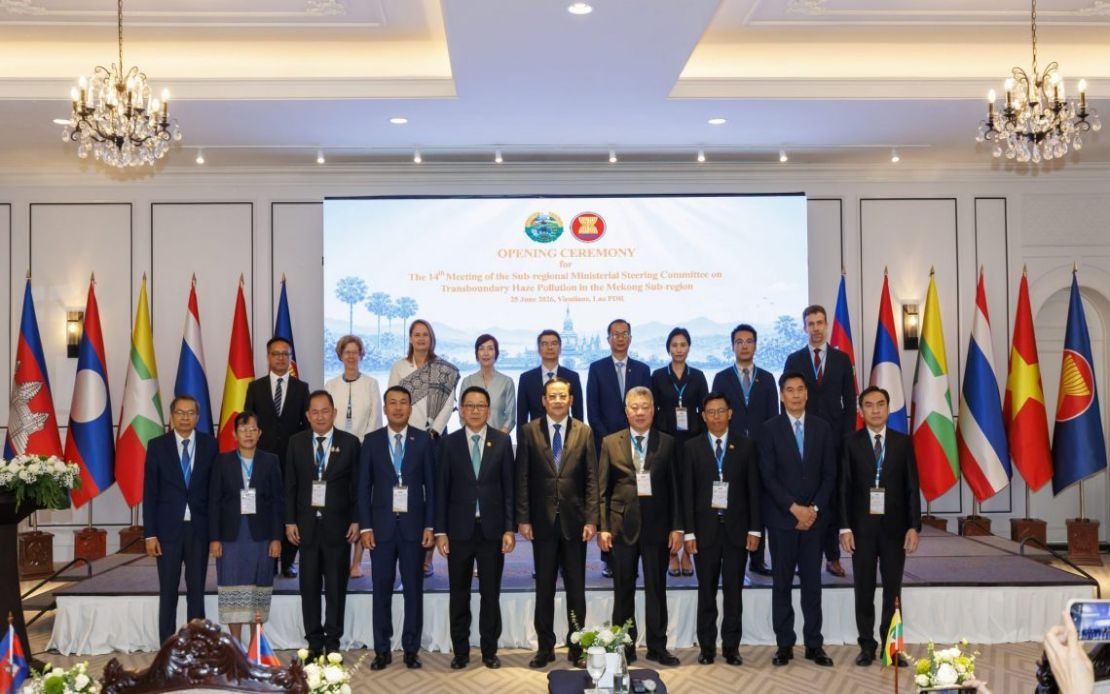
Mekong region nations are bracing for intensified air pollution as climate patterns and rising heat create ideal conditions for widespread forest and peatland fires. At the 14th Meeting of the Sub-Regional Ministerial Steering Committee on Transboundary Haze Pollution in the Mekong Sub-Region held in Vientiane, Laos on June 25, government representatives acknowledged the escalating threat posed by transboundary haze and committed to strengthened cross-border cooperation to prevent another devastating episode.
The timing of these discussions reflects genuine concern across Southeast Asia. Rising temperatures in major urban centres from Bangkok to Ho Chi Minh City underscore how climate change is reshaping the region's environmental challenges. Weather patterns have become increasingly erratic, with the monsoon season failing to deliver adequate rainfall in parts of the Mekong region, leaving forests and agricultural areas dangerously dry despite the nominal arrival of wetter months.
Lao Prime Minister Sonexay Siphandone articulated the stakes plainly during the meeting, describing forest fires and transboundary air pollution as major threats to the Greater Mekong Subregion. The consequences extend far beyond environmental degradation; these phenomena have decimated biodiversity across borders, triggered public health crises affecting millions, and inflicted substantial economic losses on multiple nations simultaneously. This interconnected impact explains why addressing transboundary haze requires genuine multilateral coordination rather than unilateral action.
Recent data from the meeting statement, posted on the ASEAN Secretariat website, reveals a troubling trend. Between December 2025 and May 2026, recorded hotspots increased by approximately eight per cent compared to the equivalent period the previous year. This upward trajectory suggests that existing prevention strategies require enhancement, and that natural conditions are becoming more conducive to fire initiation and spread across the subregion.
The meteorological outlook amplifies these concerns substantially. Scientists have warned of a possible Super El Niño event developing this year, a phenomenon that would further elevate regional temperatures and disrupt rainfall patterns. The Lao Ministry of Agriculture and Environment has issued specific projections, predicting temperatures in certain areas could reach 35 to 38 degrees Celsius during the coming months, accompanied by irregular rainfall distribution, extended dry spells, and diminished water availability in vulnerable zones. Such conditions create cascading risks extending well beyond fire hazards.
The agricultural sector faces particular vulnerability to this combination of factors. Prolonged dry spells and reduced water levels threaten crop yields and livestock productivity across the subregion, potentially undermining food security and rural livelihoods. Water shortages would constrain not only farming activities but also hydroelectric power generation, which several Mekong nations depend upon for electricity supply. The prospect of widespread drought therefore carries implications for energy stability and economic production across multiple sectors simultaneously.
Current conditions already reflect these emerging pressures. Ho Chi Minh City is enduring an intense heatwave despite entering what should be its cooler, wetter season, while Bangkok continues suffering from acute heat stress. These phenomena result from accelerating climate change combined with El Niño atmospheric patterns, according to weather scientists monitoring regional conditions. The fact that major metropolitan areas are experiencing such extreme conditions during months traditionally associated with moderation suggests that baseline climate conditions are shifting in concerning directions.
At the Vientiane meeting, ASEAN member states pledged concrete action to reduce fire hotspots and contain transboundary haze pollution throughout the Mekong Sub-Region during upcoming dry seasons. However, pledges require substantive implementation backed by adequate resources, technological capacity, and genuine political commitment across borders. The challenge lies partly in coordination mechanics; fires ignited in one nation spread across multiple jurisdictions, requiring real-time information sharing, joint monitoring protocols, and rapid mutual assistance frameworks to contain effectively.
For Malaysian policymakers and regional observers, these developments carry significance beyond the immediate Mekong geography. Transboundary haze episodes historically affect broader Southeast Asia, including Malaysia and Singapore. The experience of 2015 and 2016, when severe haze disrupted life across the region, demonstrated how air pollution originating from distant forest fires can paralyse economies, strain healthcare systems, and impose substantial costs on trading partners far from the fire source. Strengthened prevention efforts in the Mekong region therefore represent enlightened self-interest for all Southeast Asian nations.
The intensity of current regional coordination efforts suggests governments have absorbed lessons from past haze crises. The establishment of ministerial steering committees and regular transnational meetings indicates structural commitment to addressing this recurrent challenge. Yet success ultimately depends on whether funding allocates adequately to fire prevention, whether early warning systems function reliably across borders, and whether agricultural practices shift toward fire-resistant approaches that reduce tinder-dry vegetation accumulation in forests and peatlands.
Looking ahead, the prospect of Super El Niño conditions elevates stakes considerably. Historical El Niño episodes coincided with some of Southeast Asia's worst haze years, suggesting that the current convergence of multiple risk factors warrants heightened vigilance. National governments across the Mekong region face pressure to demonstrate that institutional coordination mechanisms can actually deliver improved outcomes, rather than serving merely as forums for diplomatic expressions of concern.
The underlying challenge extends beyond immediate haze management toward fundamental climate adaptation across the subregion. Rising temperatures, altered precipitation patterns, and intensified weather variability will characterise Southeast Asia's climate future regardless of near-term emissions reduction efforts. Building resilience therefore requires investments in drought-resistant agriculture, water storage infrastructure, early warning systems, and cross-border emergency management capacity. The current alarm about transboundary haze reflects broader recognition that environmental challenges increasingly operate across borders and demand integrated regional responses.

