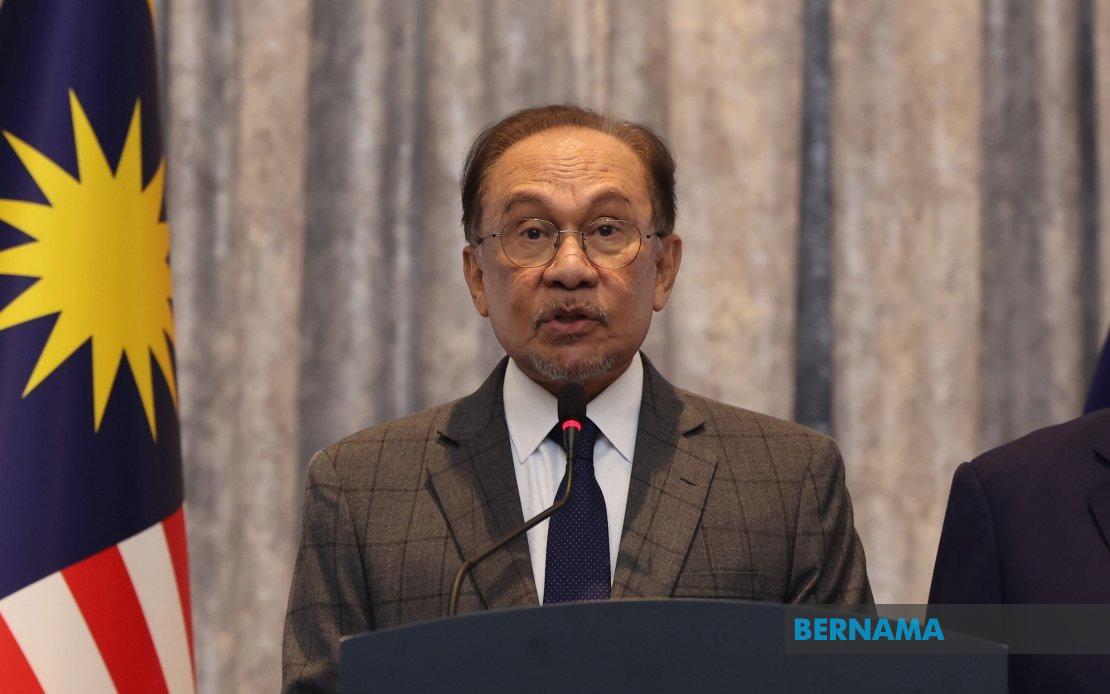
Prime Minister Datuk Seri Anwar Ibrahim has issued a pointed call for Malaysia's media industry to navigate the digital revolution without abandoning the ethical foundations and national values that underpin responsible journalism. Speaking at the Malaysian Press Night 2025 and Malaysian Press Institute-PETRONAS Journalism Awards 2026 in Kuala Lumpur on July 17, Anwar cautioned that rapid technological change poses genuine risks if the country fails to remain steadfast in its principles. The government, he emphasised, shares responsibility with media organisations to ensure that innovation serves the public good rather than undermining it.
The prime minister's remarks reflect growing concern across Southeast Asia about the dual-edged nature of digital transformation. While artificial intelligence, data analytics, and automated publishing tools offer newsrooms unprecedented efficiency and reach, these same technologies can amplify misinformation, erode editorial standards, and concentrate power in the hands of tech platforms rather than professional journalists. Anwar's intervention suggests the Malaysian government recognises that leaving media companies to fend for themselves in a tech-driven landscape could produce outcomes contrary to democratic principles and social cohesion.
Central to Anwar's argument is the notion that technological freedom—whether in information systems, digital infrastructure, or algorithmic decision-making—must be exercised within a framework of values. He did not elaborate on which specific values he considered paramount, but the context implies concern about maintaining editorial independence, factual accuracy, and resistance to manipulation. This framing challenges a Western Silicon Valley narrative that treats technological innovation as inherently neutral and beneficial, regardless of how it is deployed or by whom.
The prime minister drew an explicit parallel between historical Western media dominance and contemporary technological hegemony. During the Cold War and post-colonial era, he noted, industrialised nations shaped global narratives through their control of broadcast networks and news agencies. Today, the mechanism has shifted: control of technology platforms and algorithms substitutes for control of printing presses and transmitters, allowing ideological narratives—often reflecting values foreign to local societies—to permeate domestic discourse without formal editorial gatekeeping. This observation resonates throughout Southeast Asia, where governments and civil society groups increasingly grapple with the outsized influence of American and Chinese tech corporations on public opinion.
Particular weight attaches to Anwar's invocation of the concept of the "captive mind," a term historically used to describe populations whose thinking was constrained by colonial or authoritarian political systems. By extending this concept to the digital realm, the prime minister repositions technological dependency as a form of cognitive capture comparable to political subjugation. He suggested that as nations compete to master emerging technologies, they simultaneously risk surrendering intellectual autonomy to foreign technological systems and the interests embedded within them. This framing has direct implications for Malaysia's digital economy strategy and its technology partnerships with major powers.
Communications Minister Datuk Seri Fahmi Fadzil and the Malaysian Communications and Multimedia Commission (MCMC) feature prominently in Anwar's vision for media governance. The prime minister indicated that these institutions must play an active role in supporting media organisations as they modernise, moving beyond their traditional regulatory function to become enablers of responsible innovation. This suggests potential policy shifts: tighter collaboration between government and media on digital standards, perhaps capacity-building initiatives for newsrooms, or frameworks governing algorithmic transparency and data protection that go beyond current regulations.
Anwar's statement that the country cannot afford division on this issue underscores the stakes. Media fragmentation, polarisation, and the breakdown of shared factual consensus represent existential threats to democratic governance and social stability. Malaysia's diverse religious and ethnic composition makes it particularly vulnerable to divisive narratives amplified through algorithmic feeds that prioritise engagement over accuracy. By calling for unity on technology governance, Anwar implicitly acknowledges that media reform is not a partisan or sectional concern but a national security matter.
The praise extended to the Malaysian Press Institute, supported by PETRONAS, and the Malaysian Media Council reflects government recognition that industry-led reform initiatives may succeed where top-down mandates could falter. These organisations have credibility within the journalism profession and can shape standards from within rather than imposing them externally. PETRONAS's sponsorship also signals that Malaysia's corporate sector has a stake in maintaining media integrity, suggesting alignment between business interests and democratic values.
Anwar's appreciation for journalists' commitment to press freedom and constructive criticism appears carefully calibrated. He endorsed both the freedom to report and the responsibility to offer reasoned critique, a formulation that avoids appearing to attack press independence while still signalling that media accountability and professional ethics matter. This nuance matters in Malaysia's context, where periodic tensions between government and media have raised concerns about press freedom, and where striking the right rhetorical balance is essential for maintaining public trust in both institutions.
For Malaysian newsrooms specifically, Anwar's remarks suggest several imperatives. Outlets must invest in digital literacy and ethical frameworks for AI use, ensuring that algorithmic tools enhance rather than undermine editorial judgment. They should scrutinise the business models and data practices of technology partners, particularly social media platforms distributing their content. And they must resist the temptation to prioritise viral engagement over accuracy, a trap that digital economics often encourages. The columnists and opinion writers he mentioned need to grapple seriously with how technology is reshaping society, not merely chronicle new gadgets and applications.
The broader Southeast Asian context adds urgency to these issues. Thailand, Indonesia, the Philippines, and Vietnam have all experienced social disruption amplified by digital platforms spreading false information and inciting communal violence. Malaysia, with its history of managing religious and ethnic sensitivities, cannot assume it is immune to such dynamics. Anwar's speech implicitly acknowledges that media reform is not a luxury but a necessity for regional stability, particularly as technology companies headquartered thousands of kilometres away wield growing influence over local public discourse.
Looking forward, the government's willingness to frame technology governance as a shared responsibility rather than an adversarial relationship may facilitate more constructive dialogue between officials, journalists, and tech companies. However, translating Anwar's principles into concrete policy and industry practice will require detailed consultation, sustained investment, and perhaps international coordination with other Southeast Asian nations facing similar challenges. The journalism awards ceremony at which Anwar spoke can serve as an annual checkpoint for progress on these commitments.

