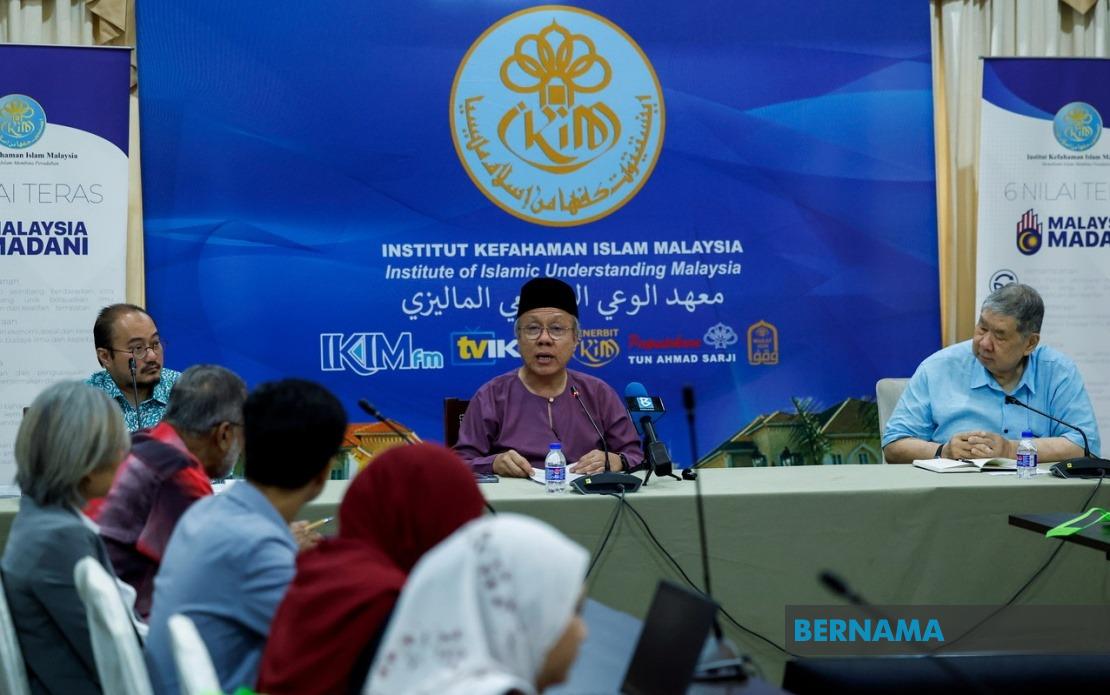
Three major Malaysian institutions came together to tackle one of the nation's most sensitive financial governance issues through a targeted media engagement exercise. The Malaysian Press Institute, working alongside the Institute of Islamic Understanding Malaysia and Tabung Haji, convened a specialist briefing session in Kuala Lumpur designed to deepen journalists' grasp of the circumstances surrounding the Tabung Haji Royal Commission of Inquiry. The initiative represents a deliberate effort to shape how the media communicates complex institutional matters to the broader Malaysian public, particularly regarding an organisation that holds profound significance for Muslim Malaysians managing their pilgrimage savings.
The closed-door session brought together senior institutional figures with representatives from the country's news media. Mustakim Mohamad, who leads Tabung Haji as Group Managing Director and Chief Executive Officer, took the opportunity to walk journalists through the inquiry's findings whilst responding to specific questions about coverage approaches. His presence signalled the fund's commitment to direct engagement with media gatekeepers rather than relying solely on public statements. Alongside him sat Datuk Yong Soo Heong, heading the Malaysian Press Institute, and Associate Professor Datuk Dr Mohamed Azam Mohamed Adil representing IKIM's leadership. The gathering attracted more than twenty working journalists, suggesting meaningful newsroom interest in understanding an issue that touches millions of Malaysian depositors.
Yong characterised the nearly two-hour engagement as providing journalists with a crucial opportunity to access authoritative information about Tabung Haji's restoration initiatives. He emphasised that the collaboration between the press institute and IKIM opened pathways for reporters to obtain granular detail on measures designed to rebuild investor and depositor trust in the institution. Beyond the immediate session, Yong indicated ambitions to expand this model geographically, suggesting comparable programmes could unfold across Malaysian states through town hall formats or structured dialogues. This suggests recognition that media understanding at the national level must eventually filter down into regional reporting ecosystems, particularly in states where Tabung Haji maintains significant depositor populations.
The framing adopted by Mohamed Azam proves instructive for understanding how institutional actors seek to reshape narratives around contentious matters. He explicitly cautioned against interpreting the Tabung Haji RCI through prisms of religious or racial controversy, instead positioning it squarely within governance and accountability frameworks. By redirecting discourse toward concepts of institutional integrity and management responsibility, IKIM's leadership attempted to depoliticise an inherently sensitive topic. He further invoked the theological dimension of depositor trust, noting that Tabung Haji functions as a unique Islamic financial instrument entrusted with the fifth pillar of Islam. This dual appeal—simultaneously to professional governance standards and Islamic institutional values—seeks common ground across potentially divergent audience segments.
The emphasis on restoring public confidence reflects tangible anxieties about Tabung Haji's standing among its core constituency. For millions of Malaysian Muslims, the fund represents far more than a financial instrument; it embodies trust in institutional stewardship of savings dedicated to fulfilling a fundamental Islamic obligation. When such institutions encounter governance difficulties warranting formal inquiry, the reputational damage extends beyond financial metrics into questions of institutional legitimacy and religious responsibility. The media literacy initiative tacitly acknowledges this heightened sensitivity by positioning journalists as crucial intermediaries capable of either amplifying or tempering public concern depending on how comprehensively they grasp underlying institutional realities.
The confidential nature of the briefing raises interesting questions about media relations strategy in high-sensitivity contexts. By conducting the session behind closed doors rather than through public forums, organisers ensured frank exchanges without immediate public scrutiny or social media amplification of raw statements. This approach suggests institutional confidence that journalists, when briefed directly with authoritative information, will exercise more balanced judgment than might result from defensive public posturing or speculation-driven coverage. It also reflects pragmatic recognition that the media landscape, particularly its digital dimensions, can rapidly transform incomplete statements into narratives requiring constant clarification.
Tabung Haji's governance challenges have created a complex communications environment for Malaysian institutional media relations. The institution must simultaneously address legitimate questions about management practices whilst rebuilding confidence among depositors whose financial interests remain directly at stake. Public scepticism about official narratives around institutional failures runs high in Malaysia, particularly following high-profile corporate governance controversies. Media practitioners thus occupy genuinely important positions as potential credibility brokers capable of explaining complex institutional reforms and remediation efforts to depositor communities. Investing in journalist education about specific institutional contexts can yield dividends in terms of nuanced, informed reporting that serves both institutional and public interests.
The involvement of IKIM adds an interesting dimension to this engagement. As Malaysia's premier institute dedicated to Islamic understanding, IKIM's participation positions the RCI matter as an issue touching upon religious institutional governance rather than purely technical financial management. This framing permits introduction of Islamic governance principles and stewardship ethics into journalistic frameworks for interpreting Tabung Haji's situation. Mohamed Azam's insistence that journalists communicate confidence-building narratives reflects IKIM's institutional role in shaping discourse around Islam-related governance matters within Malaysia's pluralistic public sphere. The collaborative model itself demonstrates how Malaysian institutions coordinate across sectors to manage sensitive public communication challenges.
For Southeast Asian readers observing Malaysian institutional dynamics, this initiative illuminates broader questions about trust and institutional legitimacy in the region. Tabung Haji's challenges mirror difficulties that Islamic financial institutions across Southeast Asia occasionally confront as they scale operations and navigate complex regulatory environments. The media literacy approach reflects sophisticated institutional thinking about reputation management in societies where religious dimensions of governance carry particular weight. It also suggests that Malaysian institutions recognise how incomplete public understanding of technical governance matters can rapidly crystallise into generalised institutional distrust, particularly among populations for whom the institution carries religious significance beyond conventional financial relationships.

