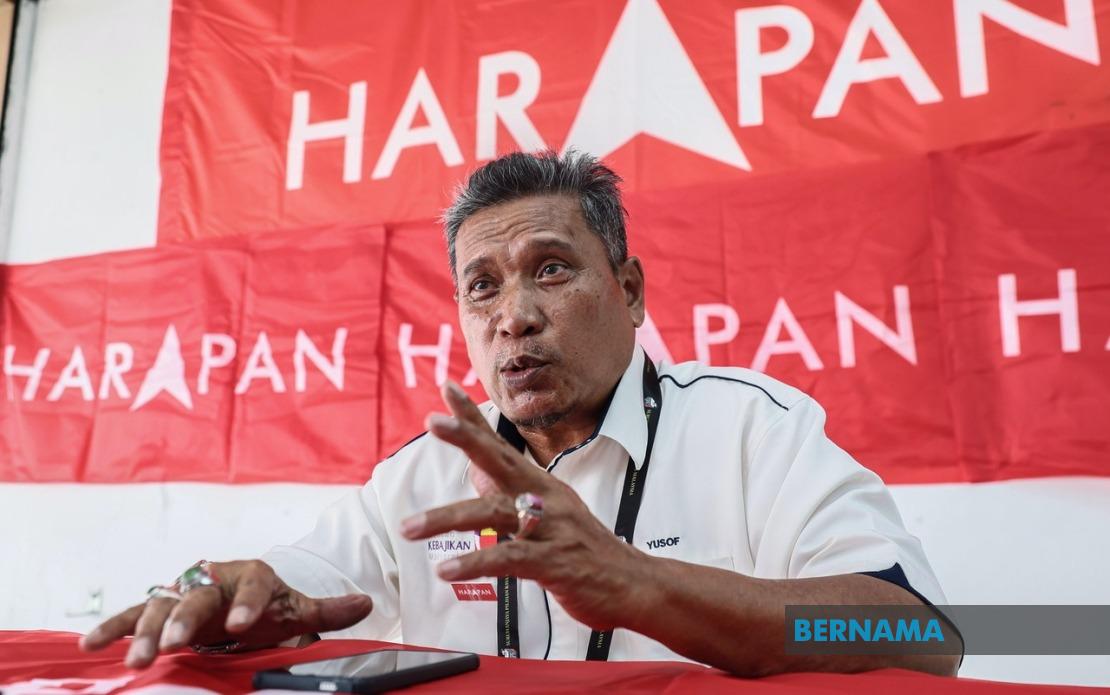
Md Yusof Dawam, the 64-year-old Pakatan Harapan candidate vying for the Tenggaroh state seat in the Johor election, has placed rural settlement sustainability and community-driven economic growth at the centre of his campaign platform. The retired educator, who has made Mersing his home for four decades, argues that addressing the housing crisis affecting the children of original Felda settlers and breathing new life into the local economy represent the most pressing challenges facing the constituency heading into the July 11 polling day.
The housing predicament in Tenggaroh Felda scheme, according to Md Yusof, stems from the absence of coherent planning for a second generation of settlers seeking to establish their own households. Young adults raised within the scheme increasingly find themselves trapped between two unpalatable choices: either remain dependent on ageing parents due to unaffordable housing costs, or abandon their roots altogether for employment and accommodation opportunities in major urban centres. This demographic drift poses a genuine threat to the long-term viability of the Felda community structure, undermining the social fabric that has historically bound these settlements together.
During his grassroots campaign interactions, Md Yusof has consistently encountered this housing anxiety as a recurring grievance among the settler community's younger members. In response, he has formulated a concrete proposal to present to the state government: the creation of a purposefully designed second-generation settlement occupying between 10 to 20 acres of dedicated land within or near the existing Tenggaroh scheme. The proposal reflects an understanding that the issue transcends mere residential accommodation; it fundamentally concerns the preservation of family-managed agricultural assets, particularly the oil palm plantations that have long constituted the economic backbone of Felda communities throughout the country.
Without systematic housing provision for inheriting generations, these productive family holdings face the prospect of deterioration, neglect, or forced transfer to outside commercial entities—outcomes that would fundamentally alter the character and ownership structure of the settlement. By facilitating the establishment of new residential areas specifically designed for younger settlers, Md Yusof contends that the government can simultaneously solve an acute housing shortage while safeguarding the intergenerational transmission of agricultural knowledge and asset management within Felda communities.
The retail landscape within the Tenggaroh Felda scheme represents another area ripe for transformation, in Md Yusof's assessment. The commercial infrastructure, he argues, has essentially stagnated since the 1980s, failing to evolve to meet contemporary consumer expectations or to generate adequate economic activity. His proposed remedy involves encouraging the systematic development of modern commercial premises through temporary land grants, creating a revitalized "small town" commercial hub that would serve the settlement's residents without requiring them to undertake lengthy journeys to distant urban centres.
The practical implications of this vision extend beyond mere convenience. Currently, residents seeking everyday items like fresh keropok lekor—a quintessentially Malaysian coastal delicacy—must drive the approximately 70 kilometres to Mersing town. By establishing a vibrant, properly planned retail precinct within Tenggaroh itself, Md Yusof believes the economic cycle that currently leaks away to distant commercial centres would remain circulating within the Felda community, multiplying its benefits throughout the local population and strengthening the settlement's broader economic resilience.
Tourism represents the third pillar of his development vision, focusing particularly on maximising the economic potential of Mersing's celebrated island destinations: Pulau Besar, Pulau Tinggi, and Pulau Aur. These islands have increasingly attracted attention from international film production companies seeking exotic filming locations, yet the substantial economic benefits generated by this activity have largely bypassed local residents. Md Yusof identifies a critical missing link in the tourism value chain: the absence of locally-owned and youth-operated tourism enterprises and maritime transport services that could capture direct economic benefit from these opportunities.
The underutilisation of tourism potential in this region mirrors a broader Southeast Asian challenge where natural and cultural assets attract external investment while local communities remain peripheral beneficiaries. Md Yusof's approach suggests that merely possessing attractive assets proves insufficient; communities require entrepreneurial capacity and supportive governance frameworks to translate tourism activity into sustainable local income and employment. His candidacy thus presents voters with a vision of economic agency rather than passive spectatorship.
Md Yusof's campaign methodology reflects his background and temperament. Rather than conducting large public rallies, he has opted for intimate small-group meetings and door-to-door engagement, seeking to understand the specific aspirations and concerns of individual families within Tenggaroh. This "personal touch" strategy leverages his distinctive positioning as a long-term community resident and retired educator with 16 years' experience teaching in Felda Nitar, giving him credibility as someone genuinely embedded in Felda culture and dynamics rather than an external political operative.
The 16th Johor state election has attracted a substantial field of 172 candidates competing for 56 state seats, reflecting the competitive intensity that characterises contemporary Malaysian state-level politics. In this crowded contest, Md Yusof's focus on locally-rooted, economically-substantive proposals potentially distinguishes him from candidates offering more generic political messaging. His emphasis on second-generation Felda sustainability and grass-roots economic activation speaks to material concerns affecting thousands of Felda residents across the state, issues that transcend Tenggaroh itself and carry broader resonance throughout Johor's substantial Felda communities.
The election campaign occurs amid broader national conversations regarding rural economic development, internal migration, and the viability of settlement schemes designed decades earlier for a different economic landscape. Md Yusof's candidacy thus intersects with larger structural questions about how Malaysia can retain young talent in rural communities, facilitate entrepreneurship within agricultural settlements, and ensure that Federal Land Development Authority schemes remain economically robust and socially cohesive enterprises. His platform, while focused on constituency-specific challenges, implicitly argues for reimagining Felda's role in contemporary Malaysia's economic architecture.

