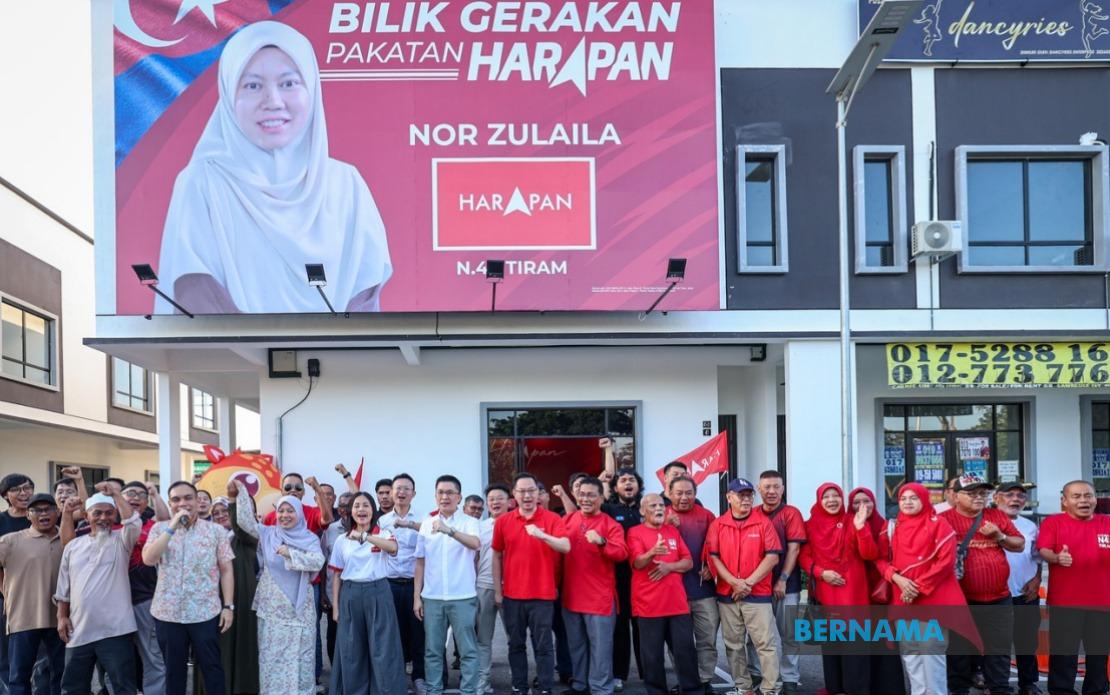
The Malaysian Communications and Multimedia Commission will deploy enhanced monitoring measures to guarantee dependable internet access throughout the Johor state election campaign, with particular focus on venues anticipated to draw substantial crowds. Deputy Communications Minister Teo Nie Ching outlined the directive during a campaign event in Pasir Gudang, underscoring the critical role digital infrastructure plays in modern political engagement and information dissemination to the electorate.
Teo stressed that seamless connectivity underpins the logistical success of campaign rallies and ensures voters receive timely, accurate information during the election period. The emphasis on infrastructure readiness reflects the increasingly digital nature of Malaysian political campaigns, where online platforms complement traditional grassroots outreach and broadcasting. This proactive approach addresses potential disruptions that could hamper campaign operations or disadvantage candidates unable to utilise digital channels effectively during the voting period.
The directive carries particular significance for Johor, Malaysia's southernmost peninsular state and a demographic and economic powerhouse. Inconsistent internet coverage in rural or developing areas could disenfranchise voters reliant on digital communication and disadvantage candidates competing across geographically dispersed constituencies. By prioritising connectivity in high-traffic locations, the MCMC aims to level the electoral playing field and facilitate voter participation across demographic groups.
Teo, who serves as Johor DAP chief, indicated that Pakatan Harapan has encountered overwhelmingly positive reception during on-ground mobilisation efforts. She noted observable enthusiasm among the electorate to discharge their civic duty, including residents currently residing outside their home constituencies who express intent to return for polling day. This pattern suggests robust voter engagement and potentially elevated turnout, outcomes that depend substantially on effective information dissemination through both conventional and digital channels.
The Democratic Action Party's campaign strategy prioritises uniform resource allocation across all 17 seats it contests in the state election, deliberately avoiding any designation of constituencies as politically secure. Teo explained that classification of seats as "safe" risks cultivating organisational complacency and undermining targeted campaign efforts in specific areas. Instead, the party framework emphasises tailored approaches acknowledging distinct challenges within individual constituencies, whether demographic composition, voter sentiment, or infrastructural needs.
This strategic approach reflects broader patterns in Malaysian electoral politics, where apparent safe seats have occasionally produced unexpected outcomes due to shifting voter sentiment or insufficient ground mobilisation. By maintaining consistent campaign intensity across all contested seats, Pakatan Harapan seeks to maximise seat gain while minimising vulnerability to surprise losses. The uniform focus strategy also addresses the reality that voter behaviour becomes increasingly unpredictable as elections approach, particularly when economic conditions or political developments generate late campaign momentum.
The election timeline remains tightly compressed, with nomination submissions scheduled immediately following the announcement, early voting designated for July 7, and election day set for July 11. This accelerated schedule demands that campaigns operate at peak efficiency, with digital tools and reliable internet infrastructure becoming essential rather than supplementary assets. Political parties unable to exploit digital platforms during such condensed campaigns face genuine disadvantages in reaching dispersed voter bases and coordinating volunteer operations.
Johor's electoral significance transcends state-level politics, representing a testing ground for broader national political trends. The state commands the second-largest state assembly in Malaysia with 56 seats, and historically swings between Barisan Nasional and opposition-aligned governments. Results from Johor frequently foreshadow broader patterns in subsequent federal elections, making campaign execution quality particularly consequential. Infrastructure investment by the MCMC thus carries implications extending beyond immediate state-level outcomes.
The emphasis on internet connectivity also reflects lessons learned from previous campaigns where digital divides translated into political advantage for candidates with superior campaign technology and digital marketing capabilities. By ensuring uniform baseline connectivity, the MCMC creates conditions where campaign effectiveness depends more directly on messaging quality and ground organisation rather than technological access disparities. This democratisation of campaign infrastructure aligns with principles of competitive fairness inherent in democratic electoral systems.
Packers Harapan's visible presence in Pasir Gudang, demonstrated through the launch of the operations room for the Tiram constituency with multiple federal and state leaders attending, underscores the coalition's resource mobilisation and perceived importance of the Johor contest. The attendance of Deputy Education Minister Wong Kah Woh, Bangi MP Syahredzan Johan, and Tebrau MP Jimmy Puah Wee Tse signals coalition-wide coordination and commitment to consolidating opposition gains in the state.
The regulatory attention to campaign infrastructure reflects evolving standards in Malaysian elections, recognising that modern electoral participation inherently depends on digital access and reliable telecommunications. As voter registration increasingly moves online and campaign information dissemination expands across digital platforms, communication infrastructure becomes as fundamental to electoral operations as polling station locations and ballot distribution. MCMC's proactive monitoring represents acknowledgment of this infrastructure-as-foundation principle shaping contemporary elections.

