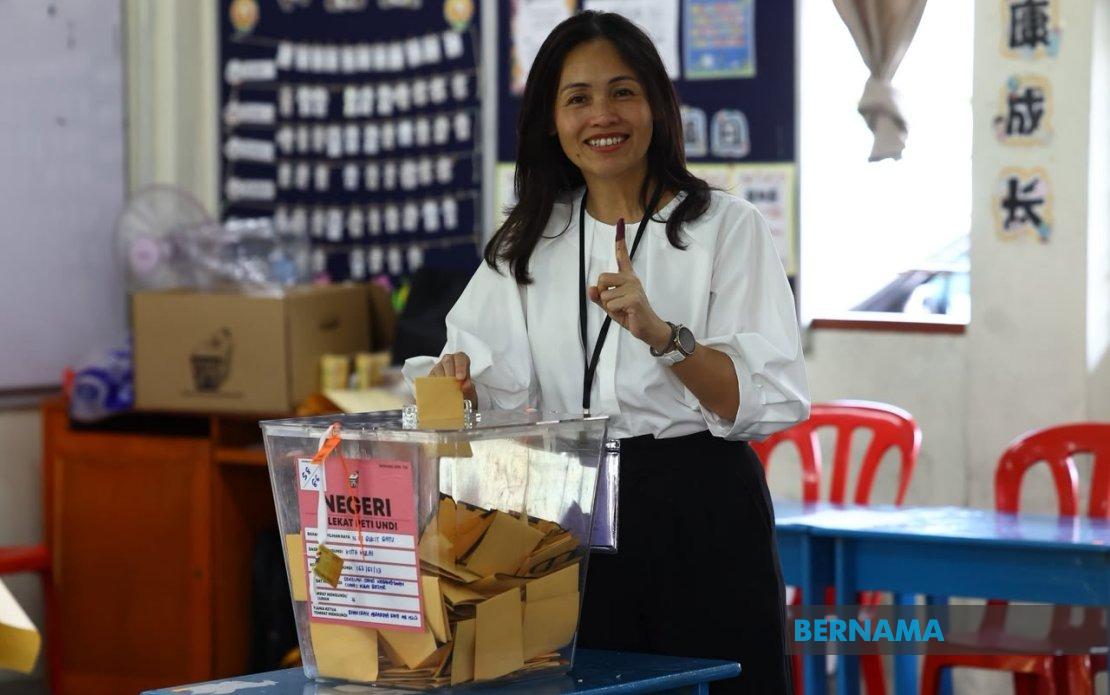
The Malaysian Communications and Multimedia Commission fielded 29 complaints centred on problematic online content during the campaign period leading up to the 16th Johor state election, Deputy Communications Minister Teo Nie Ching revealed on the polling day itself. The complaints spanned a troubling spectrum of digital misconduct including fabricated information, inflammatory speech targeting protected categories, and fraudulent schemes designed to deceive voters at a critical moment in the electoral process.
Breaking down the complaints, Teo indicated that nearly three-fifths involved fake news—17 cases in total—demonstrating that misinformation remained the dominant concern occupying the commission's attention. Eleven complaints centred on hate speech delivered through digital platforms, while a single case addressed the creation of fraudulent accounts and impersonation tactics. The numbers underscore the persistent challenge election authorities face in policing an expansive digital landscape where misleading narratives can reach millions within hours.
Within the hate speech category, the majority of infractions—nine cases—involved content exploiting racial sensitivities, a particularly acute concern in Malaysia's diverse society where communal tensions can be inflamed by unverified claims. One additional case each involved religious content and material disrespecting the monarchy, classifications that fall within the nation's established framework of sensitive 3R (race, religion and royalty) content. This breakdown reveals how bad-faith actors deliberately weaponise identity-based grievances to sow discord during electoral contests when public attention is heightened and political divisions are most pronounced.
Teo used the occasion of casting her own ballot at SJK (C) Kulai Besar to amplify warnings about the corrosive effects of unverified information on democratic processes. She cautioned voters against uncritically absorbing fake news circulating through social media channels and other unmoderated digital spaces, emphasising the responsibility citizens bear to scrutinise sources and demand evidence before accepting and sharing claims. Her remarks reflected growing official anxiety about how false narratives can distort voter preferences and undermine the legitimacy of electoral outcomes.
The deputy minister framed digital literacy as integral to exercising voting rights responsibly, encouraging Malaysians to develop the critical thinking skills necessary to distinguish between credible reporting and fabrication. This emphasis on voter education represents an implicit acknowledgement that regulatory bodies alone cannot seal off the digital commons from misinformation—citizens themselves must become active guardians against deception. The exhortation to become "digitally literate netizens and voters" suggests a longer-term institutional and societal reckoning with how democracies can remain robust when information integrity is under constant assault.
The election itself involved considerable scale and stakes, with 172 candidates vying for 56 State Legislative Assembly seats across the state. More than 2.6 million registered voters were eligible to participate, making the contest a significant referendum on state governance and party performance. The volume of online complaints—29 cases—must be contextualised against this vast electorate, raising questions about whether such figures represent isolated incidents or merely the detectible tip of a much larger iceberg of digital misconduct that evades regulatory scrutiny.
Teo's parallel expression of gratitude to election personnel highlights the distinction between on-the-ground logistical challenges and the less visible but equally consequential struggle to maintain information integrity. While polling officers ensured smooth voting procedures at polling stations, MCMC and law enforcement agencies worked to counter digital threats that operate across borders and jurisdictions, immune to traditional oversight mechanisms. The simultaneous management of both dimensions—physical and digital election security—reflects the multifaceted nature of defending democratic processes in the internet age.
The Johor election occurred within Malaysia's broader context of escalating concerns about online harmful content. State elections serve as important testing grounds for strategies that may later be deployed in federal contests, making the patterns observed during Johor particularly significant for national-level policymakers. The predominance of fake news and hate speech complaints suggests that electoral campaigns activate dormant networks of coordinated disinformation, with bad actors seeking to exploit the heightened political intensity and polarised sentiment characteristic of voting periods.
The 3R classification system referenced by Teo reflects Malaysia's constitutional protections for Islam, Malay-Muslim interests, and the institution of the monarchy, categories that intersect with electoral politics in complex ways. Content breaching these boundaries can trigger not merely civil complaints but criminal investigations, yet the digital environment's anonymity and speed of propagation make enforcement challenging. During election campaigns, when emotions run particularly high and political operatives may be tempted to cross ethical lines for competitive advantage, the MCMC faces intensified pressure to respond swiftly to violations.
Looking beyond the immediate election cycle, the 29 complaints illustrate the infrastructure and institutional capacity requirements for managing information environments during sensitive political moments. Malaysia's approach—relying on a dedicated commission to receive and investigate complaints—represents one model among several employed globally. However, questions persist about whether such reactive complaint-based systems can adequately address the asymmetric speed and scale advantages enjoyed by actors spreading misinformation compared to authorities attempting to debunk or remove it.
The incident also highlights broader Southeast Asian challenges with election-related online harms, as neighbouring countries face analogous struggles with fake news and hate speech during polls. Thailand, Indonesia, and the Philippines have all grappled with similar dynamics, suggesting that regional cooperation and knowledge-sharing about best practices might yield benefits. Malaysian experiences can inform understanding of how different regulatory approaches, levels of platform cooperation, and citizen awareness campaigns affect the prevalence and impact of harmful online content during critical democratic moments.

