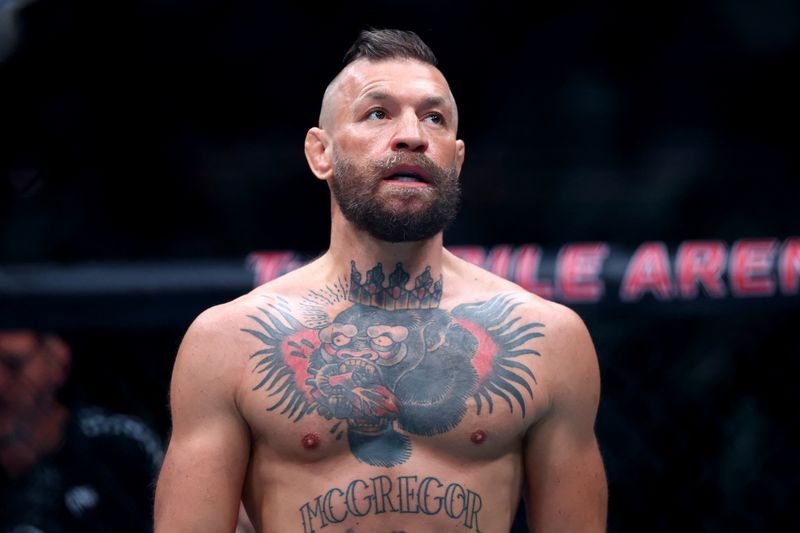
Conor McGregor's carefully orchestrated return to competitive mixed martial arts fell apart almost immediately on Saturday night, with a catastrophic knee injury cutting short his UFC 329 bout against Max Holloway in Las Vegas. The Irishman fighter managed only 61 seconds of action before signalling to the referee that he could not continue, bringing a premature end to one of the most heavily promoted comebacks in recent combat sports history.
The setback occurred during an aggressive opening gambit when McGregor attempted a flying kick to establish momentum early in the opening round. The execution went wrong, however, as he landed awkwardly and visibly struggled to regain his footing. Within moments, it became apparent that a significant injury had occurred. Rather than risk further damage by attempting to soldier on, McGregor made the pragmatic decision to withdraw from the contest, acknowledging to officials that continuing would be futile.
This latest injury represents another frustrating chapter in a career increasingly defined by misfortune outside the octagon. McGregor's previous fight came nearly three years earlier when he suffered a broken leg during his July 2021 encounter with Dustin Poirier. In the intervening period, the 37-year-old combatant has endured a litany of setbacks that have prevented any return to competition. A scheduled matchup with Michael Chandler that was arranged for June 2024 fell through after McGregor sustained a broken toe while training, a seemingly minor injury that nonetheless proved sufficient to derail those plans.
Beyond physical ailments, McGregor has faced substantial legal and administrative obstacles. An Irish civil court determined in 2024 that he bore liability in a civil case involving alleged misconduct, adding another complication to his public standing. Most recently, combat sports authorities imposed an 18-month suspension for whereabouts failures, stemming from his inability to cooperate with three separate biological sampling attempts conducted by the Combat Sports Anti-Doping agency during 2024. Although that ban was technically backdated and officially expired in March, it underscored the broader complications surrounding his standing in the sport.
Holloway, the former featherweight champion, approached the situation with grace despite the anticlimactic conclusion to their rematch. The Hawaiian fighter indicated his willingness to face McGregor again once recovery is complete, recognizing that the massive promotional investment and public interest surrounding their clash deserve a more conclusive resolution. During his post-fight remarks, Holloway stated his intention to discuss rescheduling options with UFC officials, framing another encounter as inevitable rather than speculative. Their prior meeting in 2013 saw McGregor prevail by unanimous decision, setting the stage for what was intended as a significant rematch.
For Southeast Asian fight fans, McGregor's predicament carries broader significance in understanding the unpredictability of elite combat sports. The region has cultivated a substantial following for mixed martial arts, particularly through the rise of regional promotions and homegrown competitors. McGregor's struggles illustrate how even the sport's biggest stars remain vulnerable to the toll that injuries and extended layoffs exact on professional athletes, a cautionary narrative for younger competitors building their careers.
The injury also raises questions about fight preparation and risk management at the highest levels of the sport. McGregor's decision to attempt an aggressive, high-risk technique in the opening moments of his first fight in three years suggests either overconfidence or pressure to deliver an immediately compelling performance for paying audiences and broadcasters. Whether tactical misjudgment or simple misfortune played the larger role remains debatable, but the result was unmistakable.
The co-main event on the same card provided sharper drama when Britain's Paddy Pimblett dispatched Frenchman Benoit Saint-Denis with even greater efficiency. Pimblett required less than 60 seconds to secure a submission victory in their lightweight encounter, subduing his opponent through a chokehold at the T-Mobile Arena. This result offered fans at least one genuinely decisive finishing sequence, compensating somewhat for the disappointment of McGregor's premature withdrawal.
Looking ahead, McGregor faces an uncertain timeline for recovery and future competition. Knee injuries in combat sports are notoriously complex, often requiring extensive rehabilitation and raising questions about whether athletes can return to their previous performance levels. At 37 years old, McGregor's ability to bounce back from such significant physical setbacks becomes increasingly precarious. The combination of advancing age, accumulated injuries, and the extended time away from competition creates a challenging scenario for any athlete attempting a professional return.
The incident reinforces a broader pattern affecting McGregor's career trajectory over the past five years. What was envisioned as a triumphant comeback became instead another frustration in a sequence of disappointments. Whether he can overcome this latest obstacle to mount yet another comeback attempt remains to be seen, but the window for meaningful competition at the sport's highest levels appears to be closing.

