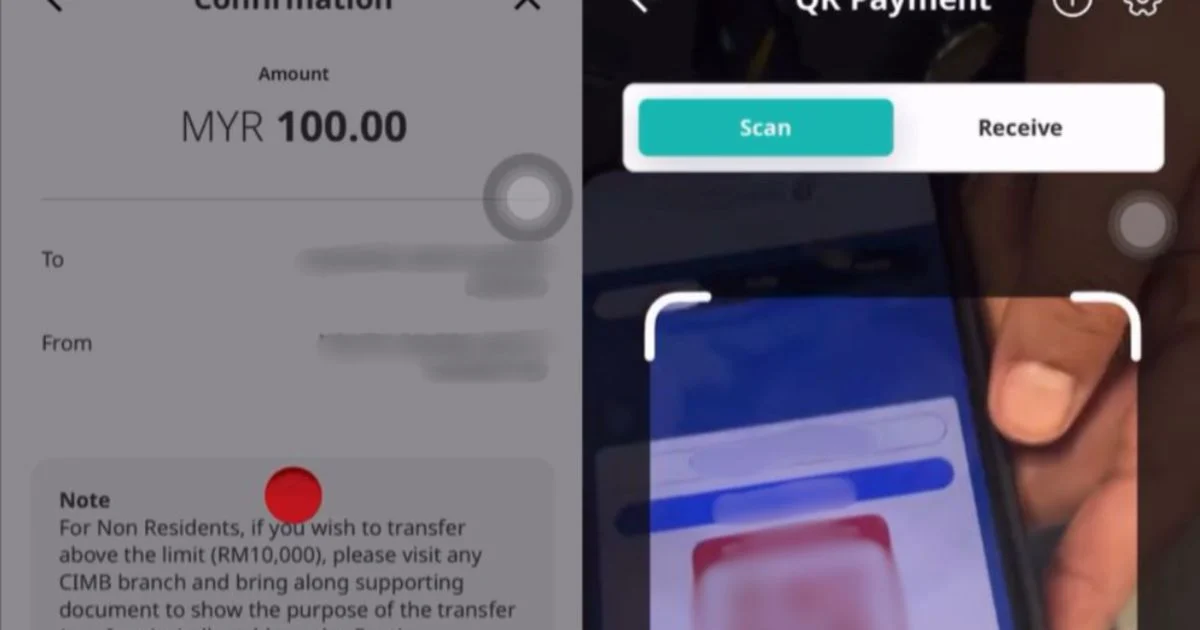
The Malaysian Border Control and Protection Agency (MCBA) has initiated a formal internal inquiry following allegations that one of its officers stationed at Kuala Lumpur International Airport Terminal 2 accepted a RM100 payment through a personal quick-response code transaction. The case represents another instance of suspected misconduct within Malaysia's airport border operations and highlights the persistence of informal payment collection practices, even as authorities attempt to modernise checkpoint procedures across the country's major entry points.
The alleged incident at KLIA Terminal 2—Malaysia's busiest international gateway—draws particular scrutiny because the airport processes hundreds of thousands of travellers monthly and serves as a primary fulcrum for the nation's travel and trade credentials. Any suggestion that uniformed personnel are leveraging their authority to extract personal payments undermines public confidence in the institution's integrity and potentially compromises the smooth operation of border clearance procedures that millions of Malaysian and foreign travellers depend upon annually.
The use of QR codes for the alleged transaction introduces a modern dimension to what remains an age-old problem. Rather than conventional methods of informal payment collection, the officer reportedly utilised a digital payment mechanism, which suggests a calculated approach to circumvent detection and create minimal paper trails. This adaptation of technology to facilitate misconduct points to the sophisticated ways in which corrupt practices evolve alongside legitimate digitisation efforts across government agencies.
The MCBA's decision to launch an investigation acknowledges the seriousness with which such allegations are being treated at organisational level. Internal investigations serve not only to establish factual culpability but also to signal to the broader workforce that improper conduct carries real consequences. However, the effectiveness of such inquiries depends largely on the transparency of investigative processes and the willingness of the agency to make findings and disciplinary outcomes public, thereby demonstrating genuine commitment to accountability rather than internal damage control.
The incident arrives amid broader regional concerns about corruption at international checkpoints. Throughout Southeast Asia, instances of informal payment demands by border officials have periodically surfaced, damaging reputations of otherwise professional institutions and creating friction between governments and their counterparts on enforcement standards. Malaysia, which positions itself as a global business hub and tourist destination, bears particular responsibility for maintaining spotless credentials at entry points where first impressions shape international perceptions of the nation's governance standards.
Digital payment systems, when properly regulated and transparent, should theoretically reduce opportunities for illicit transactions. Yet the apparent misuse of personal QR codes suggests that technological adoption has outpaced institutional safeguards. Government agencies implementing digital solutions must simultaneously establish robust oversight mechanisms, audit trails, and clear protocols governing which payment methods are permissible and under what circumstances. Without such complementary measures, technology becomes merely another tool for misconduct rather than a corruption-mitigation device.
The timing of the investigation also warrants consideration within the context of Malaysia's broader anti-corruption agenda. The Malaysian Anti-Corruption Commission (MACC) and various government agencies have repeatedly emphasised their commitment to weeding out graft. Cases that emerge publicly often trigger institutional responses designed to demonstrate responsiveness and enforcement credibility. However, critics argue that without systemic reforms addressing root causes—inadequate remuneration, insufficient training, weak oversight infrastructure—isolated investigations represent merely cosmetic interventions that fail to alter underlying behavioural incentives.
From a traveller's perspective, particularly for business people and tourists whose experience at KLIA shapes their broader perception of Malaysia, such incidents carry reputational weight beyond the immediate circumstances. A single officer's misconduct, if left unaddressed, potentially encourages similar behaviour among colleagues and erodes the professional standards that distinguish major international airports from their regional counterparts. Conversely, a visible and transparent investigation process can reassure both domestic and international stakeholders that institutional mechanisms exist to maintain professional conduct.
The investigation into this KLIA Terminal 2 allegation must be accompanied by broader examination of whether similar practices exist elsewhere within the MCBA's operational footprint. Single incidents often mask systemic vulnerabilities that extend beyond individual bad actors. A comprehensive audit of payment collection procedures, training standards, and supervisory oversight at all MCBA checkpoints would provide greater assurance that isolated instances of misconduct do not reflect wider institutional rot that remains hidden beneath the surface of routine operations.
Moving forward, the MCBA should consider implementing enhanced transparency measures including mandatory body cameras for officers conducting passenger screening, regularised third-party audits of checkpoint operations, and clear whistleblower protection mechanisms encouraging reporting of suspected misconduct. Technology solutions such as blockchain-based transaction verification or centralised digital payment systems with full audit capability could simultaneously modernise operations while substantially reducing opportunities for informal payment collection to occur undetected or unreported.

