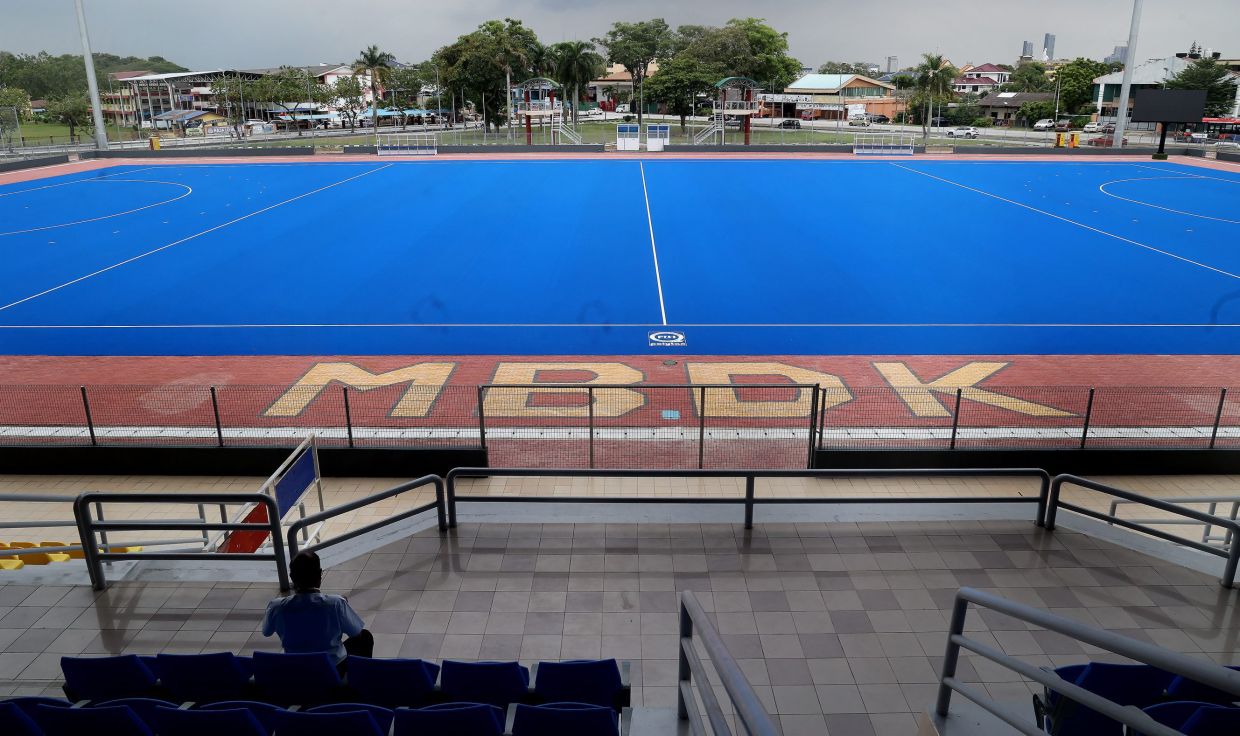
The Klang Royal City Council (MBDK) is advancing a partnership with the Selangor Hockey Association to oversee day-to-day management and operations of the recently upgraded Pandamaran Hockey Stadium, marking a shift towards professional stewardship of what the local authority describes as a critical public infrastructure asset. Datuk Abd Hamid Hussain, Klang's mayor, framed the arrangement as essential to ensuring the facility operates with the rigour, competence and forward-looking sustainability required of a modern sporting venue. The council views the assignment of operational duties to SHA as a logical extension of the association's track record and institutional knowledge within the sport, positioning the hockey governing body as the lead tenant and manager rather than MBDK directly overseeing its day-to-day affairs.
The Pandamaran facility, situated at the intersection of Jalan Sukma and Jalan Raja Lumu in the Port Klang area, underwent comprehensive renovation works totalling approximately RM9 million, funded entirely by the municipal authority. A soft launch ceremony commenced at 5pm on the announcement date, accompanied by a test match designed to evaluate the stadium's readiness for forthcoming major competitions. The timing of the reopening aligns strategically with Selangor's dual hosting responsibilities for the 22nd Sukma, scheduled to run from August 15 to 24, 2026, and the subsequent Para Sukma from September 5 to 10.
Beyond its immediate function as a venue for athletic competition, Abd Hamid characterised the stadium investment as a calculated economic decision rather than merely a sporting expense. He articulated a vision where the refurbished facility catalyses broader development across multiple domains: grassroots sports participation and athlete development, enhanced community access to world-class amenities, and measurable economic stimulus flowing through local hospitality, transportation and retail sectors. This framing reflects a broader strategic calculus wherein sporting infrastructure is understood as a multiplier effect across municipal wellbeing and business activity.
MBDK has committed to establishing a dedicated administrative unit responsible for the full spectrum of stadium operations, encompassing maintenance protocols, security arrangements, marketing activities and booking systems. Abd Hamid emphasised the importance of structured, hierarchical oversight to ensure nothing falls through administrative cracks. The operational remit extends to preservation of specialised components: the synthetic hockey pitch surface, subsurface drainage infrastructure critical to pitch performance, high-intensity floodlighting systems enabling evening matches, electronic scoreboard technology, athlete facilities including change rooms, and auxiliary structures supporting spectators and media.
A particularly significant milestone underpinning the stadium's credibility is its certification by the International Hockey Federation (FIH), a designation valid through July 2, 2029. This accreditation reflects compliance with exacting global technical and safety standards, certifying that Pandamaran meets specifications required for elite international competition and permitting live global television transmission. The certification was characterised by the mayor as a crowning achievement reflecting the collective commitment of multiple stakeholders across the planning, design and construction phases.
The international validation carries profound implications for Klang's positioning within global sporting hierarchies. Abd Hamid contended that FIH recognition transforms Pandamaran from a merely domestic venue into a credible destination for world-class competitions, capable of attracting top international teams and generating broadcast revenues. This status elevation has downstream effects: the facility becomes a genuine draw for sports tourism, with visiting delegations, media contingents and supporting personnel generating accommodation, catering and transportation demand. The recognition simultaneously serves as a soft-power asset, anchoring Klang's identity as a serious sporting centre on international maps.
For Malaysia and Southeast Asia more broadly, the Pandamaran upgrade reflects broader infrastructure maturation within the region. Hockey, whilst niche globally, commands significant participation and investment across South and Southeast Asia. The facility's FIH certification places it within a select tier of venues genuinely capable of hosting international fixtures, a distinction that remains relatively uncommon across the broader region. Malaysian cities possess limited numbers of internationally certified hockey stadiums, making Pandamaran a strategic national asset beyond Selangor's immediate jurisdiction.
The engagement of the Selangor Hockey Association as primary manager represents an attempt to navigate the enduring challenge of municipal sports facility governance. Public facilities frequently suffer from operational inefficiency, inadequate maintenance scheduling, and underutilisation resulting from bureaucratic inflexibility. By delegating to a specialist sporting body rather than housing operations within municipal departments, MBDK may achieve greater operational nimbleness, more sophisticated understanding of elite sporting requirements, and enhanced ability to generate revenue through tournament hosting and facility rental.
The stadium's readiness for Sukma 2026 carries particular significance, as mega-regional multi-sport games represent high-visibility opportunities for venue performance and local hospitality quality to be evaluated by national media and international observers. A smoothly executed hosting reflects positively on Selangor's governance capacity and enhances the state's credentials for future sporting bids. Conversely, operational stumbles during Sukma create lasting impressions that persist among decision-makers allocating future tournament hosting rights across the region.
Looking forward, the partnership model MBDK has adopted may offer instructive lessons for other Malaysian municipal authorities managing aging or newly constructed sporting infrastructure. The explicit outsourcing of operational responsibility to specialist governing bodies, coupled with MBDK's retained ownership and strategic oversight role, represents a pragmatic middle path between full privatisation and cumbersome direct municipal administration. Success at Pandamaran could encourage replication across other council-owned facilities, incrementally improving the overall quality and sustainability of public sporting infrastructure nationwide.
The Sukma 2026 games themselves represent a significant moment for Malaysian sports infrastructure broadly, with multiple new and upgraded venues across Selangor coming online. Pandamaran's role as the designated hockey venue positions it centrally within this multi-facility ecosystem. The collective quality and readiness of Sukma venues will shape perceptions of Malaysian sports administration sophistication among sporting bodies and potential future host bidders, carrying implications extending well beyond individual facilities into broader national sporting governance credibility.

