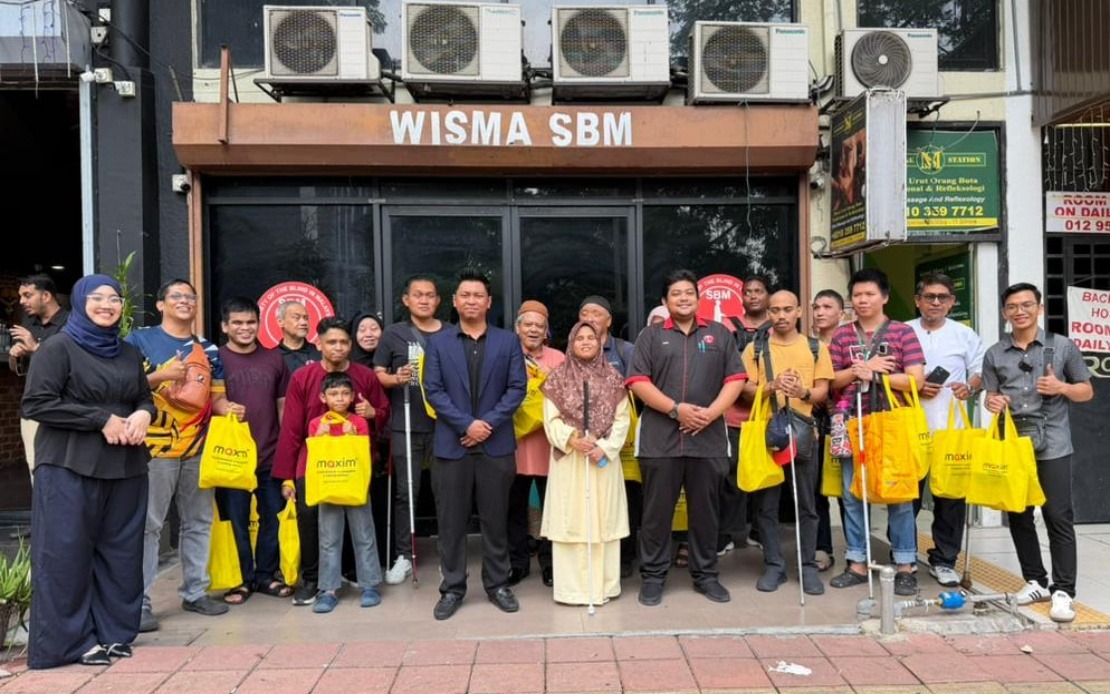
E-hailing operator Maxim is intensifying its drive to dismantle transportation obstacles confronting disabled persons, senior citizens, lower-income households, and other marginalised populations across Malaysia through a combination of reduced-cost services, technology-enabled solutions, and collaborative partnerships with community organisations.
Syed Abdul Syarif Syed Peiaru, the platform's Kuala Lumpur division chief, underscored the company's overarching vision that no Malaysians should experience exclusion from essential mobility infrastructure based on socioeconomic status, physical capability, or demographic background. The executive framed transport not merely as a logistical necessity but as a fundamental enabler of personal agency, allowing individuals to navigate educational pathways, pursue employment opportunities, obtain medical interventions, and participate meaningfully in civic and social spheres. This framing aligns with global development perspectives that recognise transport equity as foundational to inclusive economic participation.
The strategic rationale underpinning Maxim's initiatives reflects growing recognition across Southeast Asia that transportation systems designed without disability-inclusive considerations inadvertently perpetuate systemic disadvantage. By positioning affordable and accessible mobility as a social imperative rather than a commercial afterthought, Maxim is responding to demographic realities: Malaysia's disabled population numbers approximately 700,000 registered individuals, while informal estimates suggest considerably higher prevalence. Similarly, an ageing population and persistent rural-urban economic disparities create substantial transportation demand among lower-income segments.
Centrally, Maxim has operationalised the Mesra OKU service, a specialised offering incorporating extended driver-passenger wait periods, operator training in disability assistance protocols, accommodation for mobility devices, and voice-command booking functionality. Users input accessibility requirements through the application interface, triggering deployment protocols that ensure drivers possess requisite competencies and vehicles meet structural requirements. This innovation demonstrates how platform economics can be recalibrated to serve segments that conventional commercial logic frequently neglects, since these services impose additional operational costs.
Technological infrastructure represents a secondary pillar. The platform's digital ecosystem emphasises transparency through upfront fare disclosure, real-time driver proximity data, and streamlined booking mechanics. More substantially, Maxim has collaborated with the Society of the Blind in Malaysia to integrate TalkBack voice accessibility features, enabling visually impaired users to navigate the application without visual interface interaction. These developments illustrate how digital architecture, when conceived with inclusive design principles, can flatten barriers that previously confined certain populations to more expensive or less reliable transportation modalities.
Beyond operational features, Maxim has negotiated strategic partnerships spanning healthcare facilities, tertiary educational institutions, disability-focused NGOs, and other community-serving entities. These alliances extend beyond commercial relationships, functioning as demand-aggregation mechanisms that concentrate journeys toward locations—rehabilitation clinics, universities, training centres—where vulnerable populations concentrate. Such partnership structures create positive network effects: higher passenger volume justifies increased driver availability in previously underserved corridors, which in turn attracts additional passengers, generating self-reinforcing accessibility improvements.
Financial accessibility underpins the entire framework. Maxim has introduced tiered pricing structures specifically targeting disabled persons and economically disadvantaged households, recognising that conventional fare structures would remain prohibitive regardless of service quality. This pricing architecture effectively subsidises certain user segments, a commercial trade-off justified through corporate social responsibility positioning and, potentially, enhanced user loyalty and brand differentiation in an increasingly competitive regional marketplace. Malaysian regulators and civil society organisations have increasingly scrutinised whether ride-hailing platforms adequately serve lower-income populations, adding regulatory incentive to such initiatives.
The company's engagement with adaptive sports communities, including provision of transport services for Sarawak-based para-swimmers, illustrates how inclusive mobility extends beyond essential services into enrichment activities. This positioning acknowledges that true accessibility encompasses not merely access to survival-adjacent services—healthcare, employment—but also participation in recreational and athletic pursuits. For Malaysia's para-sports movement, nascent compared to regional counterparts, such logistical support represents genuine enablement of competitive pathways.
From a regional perspective, Maxim's approach resonates with broader Southeast Asian policy trajectories prioritising disability inclusion and equitable urban development. Countries including Thailand, Indonesia, and the Philippines have faced comparable challenges integrating ride-hailing expansion with accessibility mandates, creating opportunities for cross-border knowledge transfer and competitive benchmarking. Malaysian platform operators positioning accessibility strategically may cultivate reputational advantages across markets where regulatory frameworks increasingly embed disability-inclusion provisions.
Challenges remain substantial. Driver training protocols require sustained investment and quality assurance; technology solutions demand continuous refinement as user feedback accumulates; partnership relationships necessitate ongoing negotiation across heterogeneous organisational cultures. Critically, affordability cannot indefinitely subsidise marginalised segments without either venture capital tolerance for reduced margin profiles or subsidy structures—whether governmental or philanthropic—that supplement platform revenues.
Maxim's leadership articulates a vision wherein transportation functions as infrastructure for opportunity distribution rather than privilege reinforcement. This conception, while commercially calculative, acknowledges that inclusive mobility generates spillover benefits spanning economic productivity, social cohesion, and human dignity. As Malaysia's urban populations increase and demographic ageing accelerates, whether transportation systems can maintain inclusive parameters will substantially determine lived experiences across socioeconomic strata.

