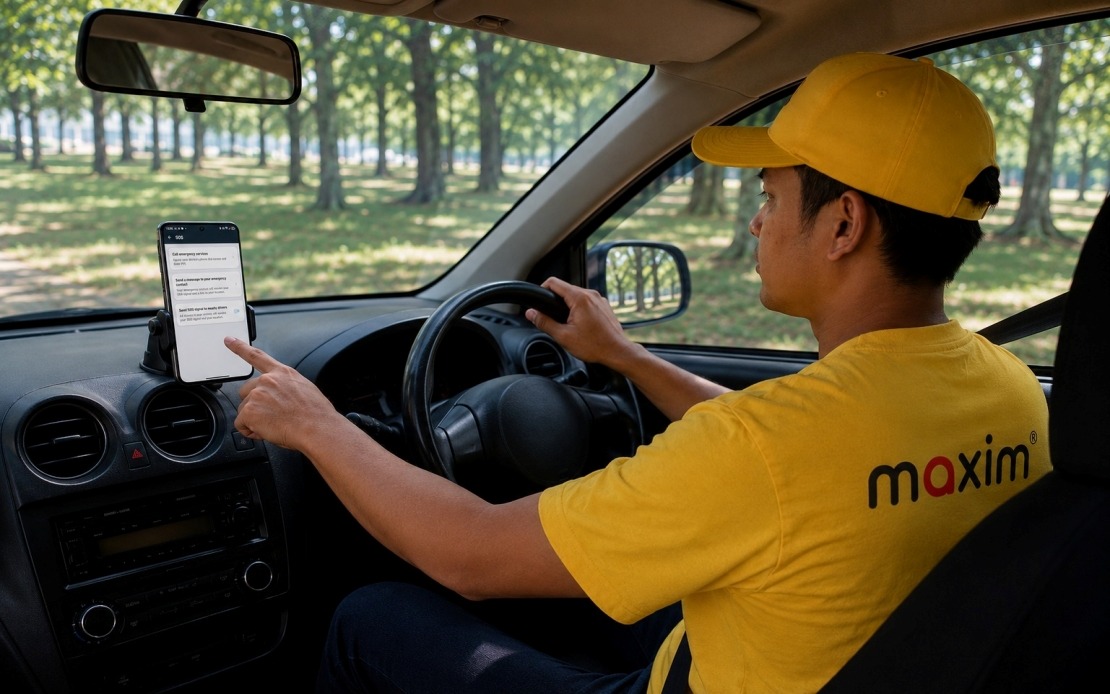
Maxim Malaysia has substantially upgraded its emergency response infrastructure through a new SOS system designed to reduce response times when drivers and passengers face critical situations on the road. The rideshare platform announced the enhancements on July 13, introducing a suite of interconnected safety features that fundamentally reshape how users access help during emergencies across Malaysia's growing ride-hailing ecosystem.
The centrepiece of the upgrade is a recalibrated SOS button that functions identically for both passenger and driver-partner accounts, eliminating previous inconsistencies in the emergency protocol. Users can now select their preferred response channel within seconds—either connecting directly to the 999 emergency hotline for professional first responders or triggering alerts to up to three pre-registered emergency contacts. This flexibility recognises that different emergencies demand different immediate interventions: a medical crisis may require paramedics, while a roadside breakdown might be better served by a trusted family member or colleague.
Central to the system's effectiveness is its GPS integration capability. When an alert is dispatched, recipients receive an SMS containing the user's precise location coordinates along with a live trip-tracking hyperlink, allowing remote monitoring of the situation as it unfolds. Critically, the system maintains functionality even when internet connectivity deteriorates—a practical consideration in Malaysia's varied network infrastructure across urban and semi-rural areas. This resilience ensures that users in remote locations or areas with poor data coverage can still transmit location information through basic text messaging protocols.
For driver-partners, Maxim has implemented a Driver Alert System that extends the safety net beyond formal emergency services. When a driver activates the emergency function, notifications propagate to other Maxim drivers operating within a three-kilometre radius, creating an informal mutual-aid network capable of providing immediate assistance before official responders arrive. This peer-support mechanism leverages the platform's real-time driver location data to mobilise assistance from the closest available resources—a practical innovation that acknowledges the gaps between emergency call receipt and actual arrival times in congested urban environments or areas with stretched emergency services.
Mohd Hazwan Musli, director of Maxim Malaysia, framed the enhancements as customer-centric design that prioritises choice and response speed. He emphasised that the time saved in selecting an appropriate help channel—rather than following a single standardised alert protocol—can prove decisive in emergencies where minutes determine outcomes. The system's architecture allows users to make informed decisions about whether they need family notification, professional rescue services, or peer driver assistance, sometimes simultaneously triggering multiple channels if the situation warrants it.
The SOS infrastructure sits within a broader safety architecture that Maxim has layered into its platform. Passengers benefit from a Trip Sharing feature that instantly transmits real-time journey data to nominated family members or friends immediately upon boarding, creating a transparent record of their movements and vehicle details. This transparency serves dual purposes: it enables family monitoring of passenger whereabouts, while simultaneously creating a digital breadcrumb trail that enhances accountability within the platform.
Internal trip monitoring represents another dimension of the safety framework, continuously tracking essential journey parameters including GPS positioning throughout every ride. This comprehensive data collection creates a complete temporal and geographical record of each transaction, enabling post-incident analysis and pattern identification should problems arise. The secure in-app chat function operates separately from mainstream messaging platforms, employing platform-specific encryption to prevent interception and reduce fraud vectors—a particular concern in a region where ride-hailing fraud and scams have occasionally undermined user confidence.
Data security underpins all these features. Maxim states that information transmitted through the SOS function, Driver Alert System, and Trip Sharing feature undergoes encryption conforming to contemporary security standards, with access restricted to authorised security personnel and relevant government authorities operating within established legal procedures. This framing—explicitly noting government authority access—suggests the platform has negotiated data-sharing agreements with Malaysian law enforcement and emergency services, ensuring that official responders can access incident data when investigating crimes or coordinating rescue operations.
The upgrades reflect industry-wide pressure on ride-hailing platforms to demonstrate robust safety commitments in Southeast Asia, where regulatory scrutiny has intensified following high-profile passenger safety incidents. Malaysia's ride-hailing sector has faced periodic calls for stronger safety standards, particularly concerning driver background checks and in-app emergency response mechanisms. Maxim's announcement positions the platform as a safety-conscious operator investing in infrastructure that theoretically reduces both passenger vulnerability and driver exposure to difficult situations.
The Driver Alert System innovation carries particular significance for Malaysia's road safety context. With relatively high traffic accident rates and variable emergency service response times depending on location, creating a network of nearby drivers who can render immediate assistance—checking on welfare, calling for help, directing traffic around accident scenes—addresses a genuine infrastructure gap. This crowdsourced emergency response mechanism could prove especially valuable in Malaysia's secondary cities and highway corridors where emergency service density remains lower than in Kuala Lumpur and Selangor.
However, the practical effectiveness of these systems depends on user familiarity and adoption. Malaysian ride-hailing users must understand both the technical operation of these features and their optimal use cases—knowledge that requires targeted user education campaigns. The platform faces the challenge of ensuring that vulnerable passengers and drivers are aware these tools exist and understand when and how to deploy them.
The announcement also reflects Maxim's competitive positioning within Malaysia's ride-hailing market. As multiple platforms operate in the country, safety feature parity and superiority become differentiation vectors in attracting risk-conscious users and partner drivers. Enhanced emergency response capabilities market-favourably to families contemplating whether to allow their relatives to use rideshare services, and to prospective driver-partners evaluating platform safety and support systems before committing their time and vehicles.

