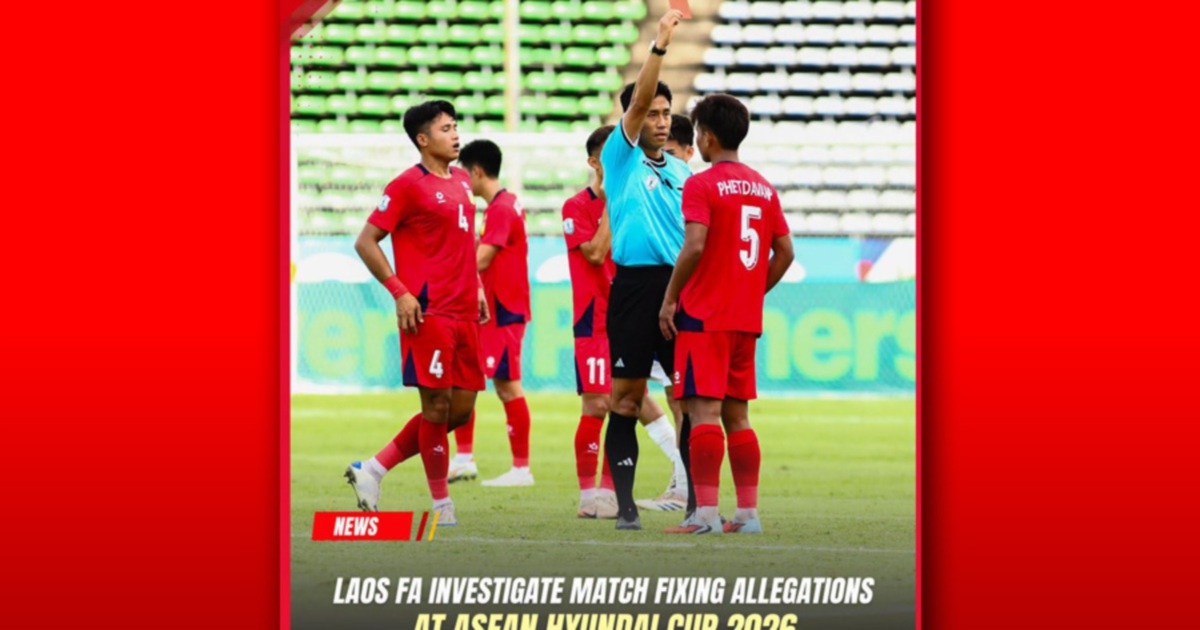
Southeast Asian football has been rocked by a corruption crisis following the Lao Football Federation's decision to pursue a comprehensive investigation into widespread allegations of match manipulation, bribery schemes, and unlicensed wagering involving players and officials from the Lao national squad. The scandal threatens to undermine the integrity of regional competitions and raises serious questions about enforcement mechanisms across the confederation.
The emergence of this controversy during the Asean Cup serves as a stark reminder that match-fixing remains an endemic problem plaguing the sport throughout Southeast Asia. Unlike the occasional isolated incident, the scope of allegations involving an entire national team delegation points to systemic vulnerabilities in how tournaments are organised and monitored. The timing—with the region's premier football championship in progress—amplifies concern among fans, sponsors, and governing bodies that the fundamental credibility of results may be compromised.
Match-fixing has plagued Southeast Asian football for years, with previous scandals in Thailand, Vietnam, and Indonesia demonstrating that no nation is immune to this form of organised crime. The involvement of gambling networks, often linked to organised syndicates operating across borders, makes eradication particularly challenging. These networks exploit the substantial financial disparities between what players earn legitimately and the sums offered for predetermined outcomes, creating powerful incentives for participation.
The decision by the Lao Football Federation to initiate formal proceedings suggests either growing transparency within the organisation or escalating pressure from Asean football bodies. This represents a significant step, as national federations have historically been reluctant to publicly acknowledge corruption involving their own representatives, preferring quiet resolution to protect national reputation. The federation's willingness to open this matter for investigation indicates the evidence may be too substantial to suppress internally.
For Malaysia and other established football nations in the region, this scandal reinforces the necessity of strengthening independent oversight mechanisms and implementing sophisticated monitoring systems to detect suspicious betting patterns and unexplained player conduct. The Asean Football Confederation must consider whether current regulatory frameworks and investigative capacity are adequate to prevent similar incidents. Enhanced cooperation between national federations, law enforcement agencies, and international anti-corruption bodies would improve detection and deterrence across the confederation.
The broader implications extend beyond sport into regional security and organised crime networks. Match-fixing rarely operates in isolation; it typically forms part of a larger ecosystem involving money laundering, illegal gambling operations, and connections to transnational criminal organisations. By targeting these networks comprehensively rather than treating match-fixing as merely a sporting violation, authorities could potentially disrupt criminal enterprises with wider ramifications for Southeast Asia.
Players implicated in such schemes face severe career jeopardy, potential criminal prosecution, and lifetime bans from the sport. However, the investigation must fairly distinguish between those who willingly participated and those who may have been coerced or deceived by corrupt officials and intermediaries. Clear legal frameworks and transparent proceedings are essential to ensure justice while maintaining public confidence in the investigative process.
This scandal arrives at a particularly sensitive moment for Southeast Asian football, which has invested substantially in developing professional infrastructure and attracting international investment. Broadcasters, sponsors, and betting operators base their commercial calculations on assuming competition integrity. Revelations of widespread corruption can cause sponsors to withdraw and diminish audience engagement, inflicting economic damage to clubs and confederations across the region.
The Lao Football Federation's investigation will serve as a crucial test of whether regional football bodies can genuinely police themselves or whether independent, external oversight becomes necessary. International observers will scrutinise the thoroughness of the investigation, the impartiality of those conducting it, and the severity of sanctions imposed. A perceived soft-touch response could validate cynicism about corruption in Southeast Asian football and embolden further misconduct.
Moving forward, the Asean Football Confederation should consider implementing mandatory reporting systems, establishing independent ethics committees with external representation, and creating whistleblower protection mechanisms that encourage reporting without fear of retaliation. Investment in player education about corruption risks and the legal consequences of involvement would also strengthen preventative efforts.
The investigation's outcomes will significantly influence public perception of football governance throughout Southeast Asia. For fans, administrators, and policymakers, the credibility of the findings and the proportionality of consequences will determine whether this scandal becomes a turning point toward institutional reform or merely another episode in a cycle of corruption and inadequate response. The coming weeks will reveal whether regional football bodies can demonstrate the institutional maturity and independence necessary to address this threat comprehensively.

