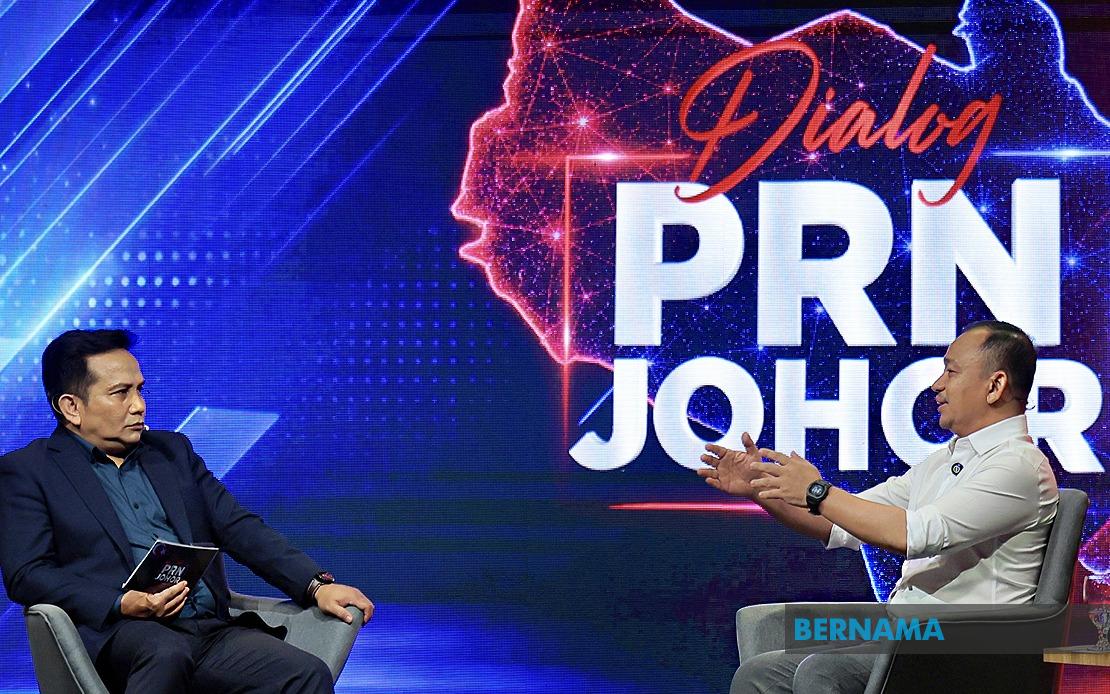
Dr Maszlee Malik, the Pakatan Harapan candidate contesting the Puteri Wangsa state seat, believes that structured political dialogue can fundamentally reshape how Malaysians approach electoral decisions. Speaking after participating in a state-level election discussion in Johor Bahru on July 7, the former education minister expressed optimism that such forums represent an important step toward building a more sophisticated political environment where substantive argument displaces sentiment.
The event, held at the Permata Sari Auditorium under the Johor State Broadcasting Department, brought together political representatives for a public discussion aimed at equipping voters with tools for rational decision-making. Maszlee characterized the forum as particularly valuable because it directly addressed what he sees as a critical gap in Malaysian electoral culture: the tendency for voters to rely on emotional appeals rather than policy analysis and factual assessment when casting their ballots.
For Maszlee, the transition from emotionally-driven to evidence-based voting patterns is not merely an academic exercise in improving democratic quality. He frames this shift as essential to ensuring that electoral outcomes genuinely reflect public preferences and produce governments with authentic legitimacy. In his view, when voters make choices grounded in careful consideration of facts and arguments, the resulting administrations carry stronger mandates and greater public confidence in their right to govern.
The dialogue session, jointly organized by Radio Television Malaysia, Astro AWANI, and Sinar Harian, represented a collaborative effort to raise the standard of political communication during the campaign period. Such initiatives carry particular significance in Malaysia's context, where rapid urbanization, social media proliferation, and intense electoral competition have sometimes accelerated the spread of unverified claims and polarizing messaging. By creating dedicated spaces for reasoned political exchange, organizers aimed to provide voters with an alternative to the fragmented information environment they typically encounter.
With three days remaining in the campaign before the July 11 polling day, Maszlee shifted focus toward a more immediate challenge: mobilizing voter participation. The Pakatan Harapan campaign machinery has identified turnout as a critical variable in determining not just which coalition wins, but the perceived legitimacy of the outcome. Maszlee emphasized that high participation rates strengthen democratic processes by ensuring that victorious parties cannot claim to represent popular will when large segments of the electorate have abstained.
The campaign's particular concern about absentee voters reflects a demographic reality in Malaysian politics. Many registered voters, especially younger professionals and families, live outside their designated constituencies for work or education. Their return to vote therefore requires deliberate logistical coordination and persuasion. Maszlee's comments suggest Pakatan Harapan views this group as strategically important and has structured its final campaign push to explicitly encourage such voters to travel home for polling day.
Communications Minister Datuk Fahmi Fadzil's presence at the dialogue underscored the government coalition's investment in this particular campaign narrative. Fahmi's attendance signaled that the federal government views the Johor contest not as a local affair but as consequential to national political standing. The presence of a senior cabinet minister alongside a state-level candidate also demonstrated how government messaging coordinates across different levels of political authority.
The timing of the dialogue session is worth noting. Held during early voting on July 7, it reached an audience already engaged enough to participate in electoral processes, making it an efficient way to reinforce messaging among committed supporters while also reaching undecided voters who remained actively following campaign developments. The broadcast partnership with Astro AWANI and Sinar Harian multiplied the event's reach beyond the auditorium's physical attendees.
Maszlee's framing of political maturity around fact-based debate touches on a broader concern among Malaysian political observers. Regional democracies increasingly grapple with information fragmentation, where different constituencies inhabit fundamentally different factual realities. By advocating for a political culture that privileges evidence, Maszlee implicitly acknowledges this challenge and positions dialogue and media as potential correctives. Whether such forums can meaningfully shift voter behavior remains an open question, but the attempt reflects growing recognition among political leaders that electoral legitimacy depends partly on maintaining shared epistemological ground.
The election schedule itself—with early voting on July 7 and polling day on July 11—created a compressed timeframe for final campaign messaging. In this context, Maszlee's emphasis on voter turnout became increasingly tactical. Every day remaining before July 11 offered diminishing returns for persuading undecided voters, making the mobilization of already-committed supporters the rational priority. This explains why, in his closing comments to reporters, Maszlee pivoted from the dialogue's lofty aspirations toward the unglamorous work of getting supporters to the polls.

