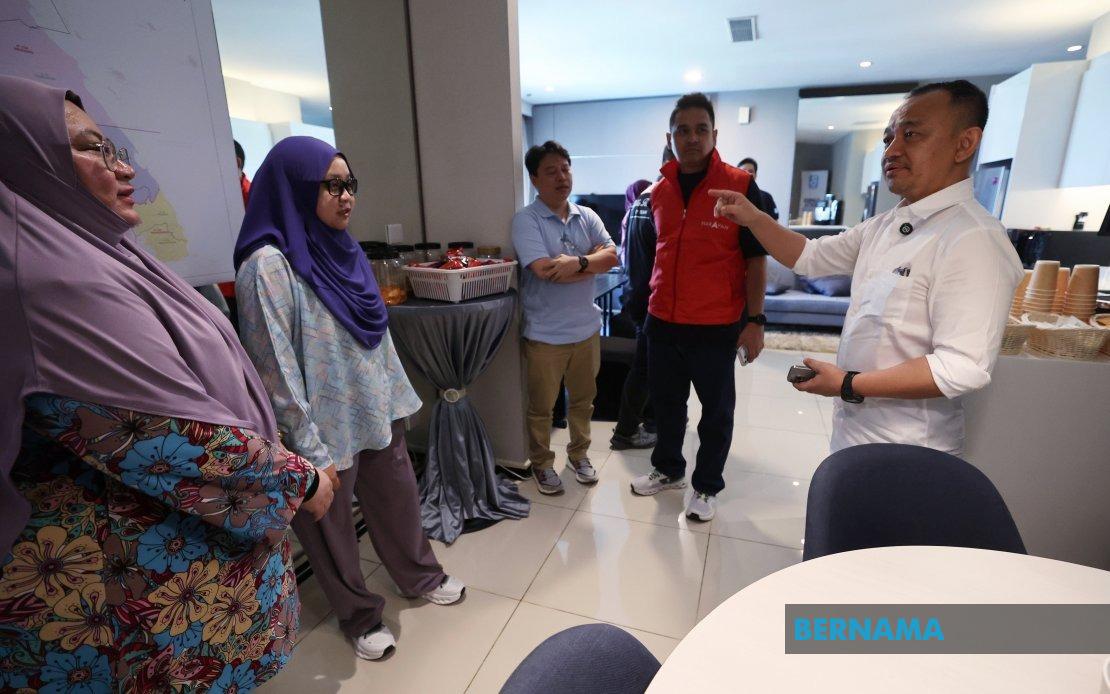
Dr Maszlee Malik, the Pakatan Harapan candidate for the Puteri Wangsa state seat in the 16th Johor election, is promising to launch a dedicated mobile application that would enable residents to lodge complaints and report infrastructure problems with greater ease. Speaking in an exclusive interview ahead of voting on July 11, the former education minister outlined how such a digital platform would address the particular challenges facing a constituency that stretches across considerable distances and encompasses vastly different communities.
The Puteri Wangsa seat presents distinctive governance challenges that Maszlee believes warrant an innovation-focused approach. The constituency encompasses both exclusive residential areas including Austin Heights and rural settlements such as Felda Ulu Tebrau, creating what he describes as a need for practical, sophisticated solutions that can serve populations with markedly different priorities and circumstances. Rather than relying solely on conventional constituency management methods, the proposed application would function as a centralised portal through which residents could document problems ranging from potholes and flooding to street lighting failures, with reports automatically prioritised and directed to relevant authorities.
Beyond basic complaint management, Maszlee sees the application as a tool for identifying marginalised groups within the constituency who might otherwise slip through the cracks of bureaucratic systems. Single mothers, persons with disabilities, and other vulnerable populations frequently face significant barriers when attempting to access welfare support or government schemes, whether through lack of awareness about available programmes or difficulty navigating registration procedures. A well-designed mobile platform could highlight eligible individuals and streamline their access to assistance, potentially uncovering support gaps that conventional door-to-door canvassing might miss.
Inspiration for the initiative comes from international models of constituent engagement, particularly the approach adopted by New York City Mayor Zohran Mamdani, who combines digital applications with social media strategies to gather direct feedback from residents. Maszlee emphasises that such technology-enabled governance allows elected representatives to maintain continuous communication with their constituencies rather than limiting interaction to scheduled meetings or campaign periods. The application would complement rather than replace traditional engagement methods, working alongside regular town halls, meetings with resident associations and partnerships with non-governmental organisations that serve specific communities within the constituency.
The digital campaign strategy extends beyond the proposed application into broader efforts to reach voters who remain disconnected from conventional campaigning methods. Young voters and Malaysians working in Singapore, segments that traditionally have lower engagement with grassroots politics, represent particular targets for social media outreach. These groups often struggle to participate in walkabouts and in-person events due to work schedules and geographical separation, making online platforms the most practical channels for political engagement. By concentrating resources on digital communications, Maszlee's campaign aims to ensure that messages reach voters regardless of their proximity to the constituency or availability for face-to-face interaction.
However, Maszlee acknowledges that digital campaigning presents genuine difficulties that cannot be ignored. Algorithmic filtering on social media platforms creates echo chambers where messages reach primarily those who already share similar political views, while the overwhelming volume of content competing for attention makes message penetration difficult. These structural challenges mean that simply deploying social media strategies without careful consideration of audience segmentation risks wasting campaign resources and failing to reach persuadable voters.
To address these limitations, his campaign has adopted a granular approach to content creation and distribution. Rather than broadcasting identical messages across all channels and to all voter groups, the team develops tailored messaging that speaks specifically to the concerns and demographic characteristics of different communities. The strategy recognises that working professionals have different preoccupations than retirees, that urban residents face different infrastructure challenges than those in newer residential areas, and that communities organised along ethnic or linguistic lines may respond more effectively to culturally resonant messaging. This segmented approach requires significant research into local conditions and community priorities, but offers a more efficient method of reaching persuadable voters in a crowded political marketplace.
The specific targeting includes Gen Z voters concerned with climate change and educational opportunities, Malaysians working across the border in Singapore who may vote in the state election, working professionals from various ethnic communities, and non-urban residents whose concerns often diverge significantly from those of city dwellers. Each segment receives campaign communications designed to address their particular situations and priorities. Chinese community members working in Singapore, for instance, may receive messaging focused on issues including remittance efficiency and cross-border employment policies, while residents in underdeveloped areas might see communications emphasising infrastructure development and connectivity improvements.
The Puteri Wangsa contest will unfold within a congested political landscape featuring five candidates competing for voter support. Beyond Maszlee, the field includes Rashifa Aljunied representing the Malaysian United Democratic Alliance, Teow Chia Ling running under the Barisan Nasional banner, Nicholas Paul Vincent from Parti Bersama Malaysia, and independent candidate Wang Wee Siong. This crowded field means that even modest swings in voter preference can determine electoral outcomes, making targeted campaigning and constituent service promises potentially significant factors in determining the result.
Early voting for the Johor state election takes place on July 7, with general polling scheduled for July 11. The compressed campaign timeline means that candidates must quickly establish their core messages and mobilise voter support through whatever channels prove most effective. For candidates like Maszlee advocating technology-driven approaches to constituent service, the digital campaign period itself functions as a proof-of-concept demonstration of the capabilities he promises to deploy as an elected representative. Success in reaching and persuading voters through digital platforms would simultaneously validate the approach and provide evidence of competence in leveraging technology for public service purposes.
The proposal to introduce technology-enabled constituent services reflects broader trends across Malaysian politics toward digital engagement strategies, though implementation remains inconsistent. While larger municipal authorities and more affluent constituencies have pioneered mobile applications for complaint management, rural and smaller constituencies frequently lack such platforms. The Puteri Wangsa initiative, if successfully implemented, could serve as a replicable model for other constituencies seeking to improve service delivery while maintaining the personal connection between elected representatives and constituents that remains central to Malaysian political culture. The combination of technology infrastructure with continued emphasis on face-to-face engagement and community partnerships suggests an attempt to balance innovation with the values of accessibility and personal accountability that voters in diverse constituencies continue to value.

