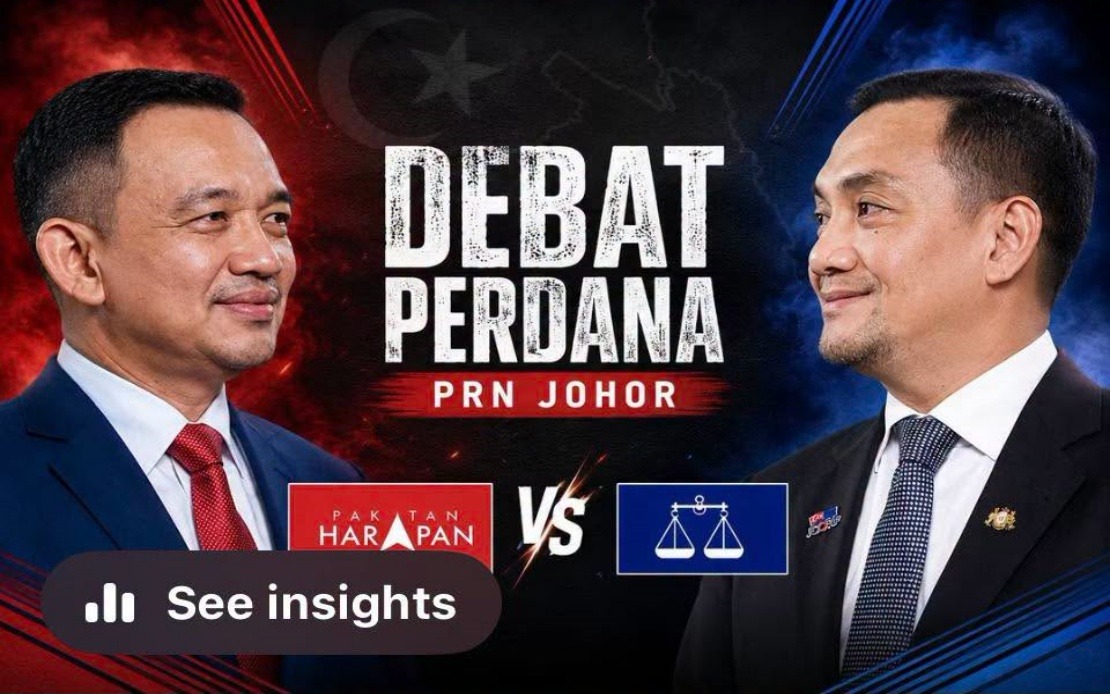
Former Education Minister Maszlee Malik has thrown his support behind a high-profile public debate with Johor Menteri Besar Onn Hafiz Ghazi as campaigning intensifies ahead of the state election scheduled for July 11. The confirmation came as Pakatan Harapan formally unveiled its slate of candidates competing across the state, signalling a significant moment of political engagement between the ruling coalition and its main challenger in one of Malaysia's most closely watched electoral contests.
Maszlee, the PH candidate for the Puteri Wangsa seat, framed his acceptance as consistent with his commitment to democratic principles and voter education. In a statement posted to social media, he emphasised that debates provide an essential mechanism for elevating public discourse and demonstrating the maturity of Malaysia's political culture. His measured response reflected broader PH strategy to present itself as a responsible custodian of democratic institutions, particularly as it seeks to consolidate support in a state where electoral competition has historically been fierce and unpredictable.
The debate proposal originated from social media influencer Muhamad Harris Nasril and gained traction through circulation on the Redaksi.com Facebook page following Anwar Ibrahim's announcement of the party's full candidate list in Muar. The initiative reflects a contemporary trend in Malaysian politics where digital activists and social media personalities increasingly shape the agenda of major political contests by proposing formats and platforms that circumvent traditional media structures. This grassroots mobilisation has attracted significant public attention, with multiple organisations seeking confirmation of participation from key figures.
The timing of the debate proposal coincides with Pakatan Harapan's comprehensive campaign rollout across Johor. The coalition has distributed its 56 candidates strategically across three parties, with PKR fielding 20 candidates, Amanah contributing 19, and DAP running 17. This composition underscores the coalition's efforts to balance representation among its component parties while maximising electoral competitiveness across diverse constituencies. The distribution reflects broader calculations about voter demographics and historical performance in different areas of the state.
Maszlee's framing of the debate as an opportunity to advance political maturity holds particular significance for Pakatan Harapan's messaging. As the ruling federal coalition attempting to extend its influence at state level, PH has positioned itself as the champion of institutional reform and democratic renewal. Debates, within this narrative, serve not merely as campaign tools but as forums where substantive policy differences can be articulated and evaluated by an engaged electorate. This rhetorical stance distinguishes PH's approach from purely adversarial campaigning, though the strategic calculations underlying the decision to debate remain evident.
The Election Commission's calendar has compressed the campaign period considerably. Nomination day falls this Saturday, with early voting scheduled for July 7 and general polling on July 11. This abbreviated timeline means that any major public event, particularly a widely publicised debate between senior candidates, could significantly influence voter sentiment during the crucial final weeks of the campaign. The compressed schedule also raises logistical challenges for organisers seeking to arrange a professional broadcast debate within the available window.
Johor remains critical terrain in Malaysian politics. As the country's second-largest state by population and a traditional stronghold of Barisan Nasional, any shift in voting patterns carries implications for the broader balance of power at national level. The upcoming election represents an important test of whether Pakatan Harapan can sustain electoral momentum in peninsular states while managing internal coalition dynamics. The engagement around the debate proposal suggests that voters in Johor are primed for substantive political discussion and are not content with conventional campaign messaging alone.
The choice to accept the debate invitation demonstrates Maszlee's confidence in his ability to articulate PH's policy platform and criticise government record. As former Education Minister, he brings ministerial experience and institutional credibility to his campaign, distinguishing him from first-time candidates. His willingness to engage in public debate signals that PH views this election as winnable and that key party figures see value in direct confrontation with government candidates, rather than relying solely on media messaging and grassroots organisation.
Onn Hafiz's role as Johor Menteri Besar brings significant incumbent advantages to this electoral contest. As the chief executive responsible for state administration, government service delivery, and economic development initiatives, he represents continuity and established governance structures. Any debate between the two figures will necessarily revolve around the government's record on state priorities including economic development, infrastructure investment, education standards, and public service efficiency. These are areas where incumbency typically confers advantages but where accumulated grievances can also accumulate over the course of an administration.
The broader implication of this debate acceptance extends beyond the immediate Johor election. It reflects how Malaysian political culture has evolved to incorporate digital mobilisation, social media pressure, and public expectations for substantive policy discussion. Traditional gatekeeping by mainstream media organisations has diminished, and voters increasingly demand direct engagement with candidates through forums that maximise unfiltered communication. The success or failure of this debate could establish precedent for future electoral contests where similar public demands for candidate engagement become standard expectations.
As campaigning unfolds over the coming weeks, the scheduled debate will likely emerge as a defining moment of the Johor election. Both Maszlee and Onn Hafiz will prepare extensively to articulate competing visions for the state's future, defend their respective organisational records, and appeal to undecided voters who may still be forming their electoral preferences. The event will also test the capacity of civil society actors and digital platforms to facilitate high-quality political engagement in Malaysia.