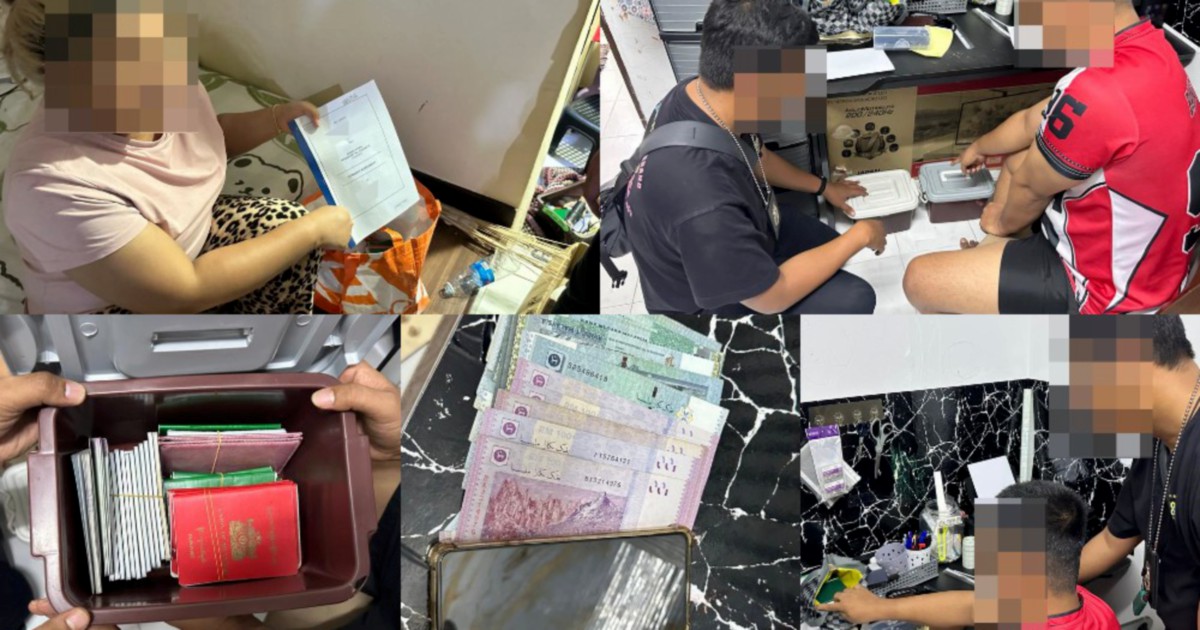
Federal police and immigration enforcement officers have moved against what authorities describe as a sophisticated passport-counterfeiting network, securing the arrest of an individual alleged to have orchestrated the illegal operation from within Kuala Lumpur. Datuk Zakaria Shaaban, who heads the Immigration Department, confirmed the detentions during a statement to officials, indicating that the investigation had progressed sufficiently to enable law enforcement intervention.
The operation itself represents a significant vulnerability in document security protocols, operating from within Malaysia's capital city and targeting the integrity of travel documentation systems. Document forgery rings of this nature typically maintain complex supply chains, involving the acquisition of blank passport stocks, the reproduction or tampering of security features, and distribution networks that channel fraudulent papers to end-users. The identification and apprehension of an alleged leadership figure suggests investigators have been tracing financial flows, communications, and operational logistics spanning potentially several months or years of clandestine activity.
Three individuals fell into custody as a result of these enforcement actions, though reporting has specifically highlighted the alleged mastermind as the primary target. The terminology employed—identifying someone as orchestrating the syndicate—suggests this individual held strategic decision-making power, managed finances or personnel, and directed operational activities rather than participating in lower-level execution tasks. Such distinctions matter considerably in how prosecutions proceed and what charges prosecutors ultimately pursue.
Passport forgery carries particular concern for Malaysian authorities because fraudulent documents enable international movement by individuals who might otherwise face travel restrictions, investigation, or law enforcement action. Beyond direct immigration control implications, such documents facilitate human trafficking, smuggling operations, and transnational crime. The security infrastructure embedded in modern Malaysian passports—including biometric identifiers, microprinting, security threads, and digital features—represents substantial investment in document integrity, making systematic counterfeiting a direct affront to these technological safeguards.
The geographical context matters significantly. Kuala Lumpur, as the national capital and a major international hub, presents both opportunity and attention for criminal enterprises. The concentration of immigration facilities, international airports, and transient populations creates potential demand for fraudulent documents. Simultaneously, the presence of significant law enforcement resources means such operations face heightened scrutiny compared to activities in less-monitored regions. That authorities managed to identify and apprehend this syndicate's leadership from within the city suggests either sophisticated investigative tradecraft or intelligence derived from intercepted communications, informant testimony, or analysis of document seizures.
For Southeast Asian travellers and Malaysia-based business people, passport security matters considerably. Fraudulent documents circulating in regional criminal networks can create complications for legitimate document-holders, potentially triggering heightened screening at border crossings or questions about document authenticity during immigration interviews. Regional cooperation among immigration and law enforcement agencies increasingly tracks and interdicts forged documents, meaning counterfeiting operations face operational challenges that extend beyond Malaysian borders into neighbouring jurisdictions.
The Immigration Department's capacity to detect and prosecute document forgery operations has evolved substantially over recent years, incorporating digital forensics, international intelligence-sharing protocols, and enhanced staff training in document authentication. However, these enforcement successes also reflect the cat-and-mouse dynamic inherent in security work—as authorities improve detection capabilities, criminal operators invest in more sophisticated replication techniques or seek new vulnerabilities within systems. The arrest of an alleged operational leader provides an opportunity for investigators to penetrate deeper into the network's structure, potentially exposing upstream document suppliers or downstream distribution channels.
Regional context underscores the transnational dimensions of document fraud. Forged Malaysian passports appearing in enforcement actions across Thailand, Indonesia, or Singapore suggest networks operating with some sophistication in logistics and distribution. The apprehension of leadership figures in Kuala Lumpur may therefore have ripple effects across Southeast Asian immigration enforcement as regional partners investigate connected individuals or operations. Interpol coordination, ASEAN intelligence-sharing mechanisms, and bilateral law enforcement cooperation increasingly focus on these document-trafficking networks.
Investigators will likely examine financial records, communications devices, workshop facilities, and raw materials seized during the operation. Such examination often reveals the customer base, pricing structures, and delivery mechanisms that sustained the syndicate's operations. Understanding who purchased forged documents helps authorities identify end-users engaged in illicit movement across borders, potentially expanding the scope of investigation beyond the document producers themselves.
The case exemplifies broader trends in organised crime, where document production represents a critical service enabling multiple downstream criminal activities. Syndicates that perfect passport forgery develop valuable commercial positions within criminal supply chains, selling to trafficking networks, smuggling operators, and individuals evading law enforcement. Targeting the production side of this ecosystem potentially proves more efficient than attempting to interdict every forged document at border checkpoints.
Authorities will now proceed with formal investigations, reviewing evidence, interviewing detainees, and building prosecutorial cases. The allegations against the alleged mastermind will likely include charges related to forging official documents, trafficking in fraudulent papers, and potentially money laundering or conspiracy offences depending on the operation's sophistication and scope. These proceedings will unfold within Malaysia's legal framework while potentially intersecting with regional enforcement interests should connected activities emerge in neighbouring jurisdictions.

