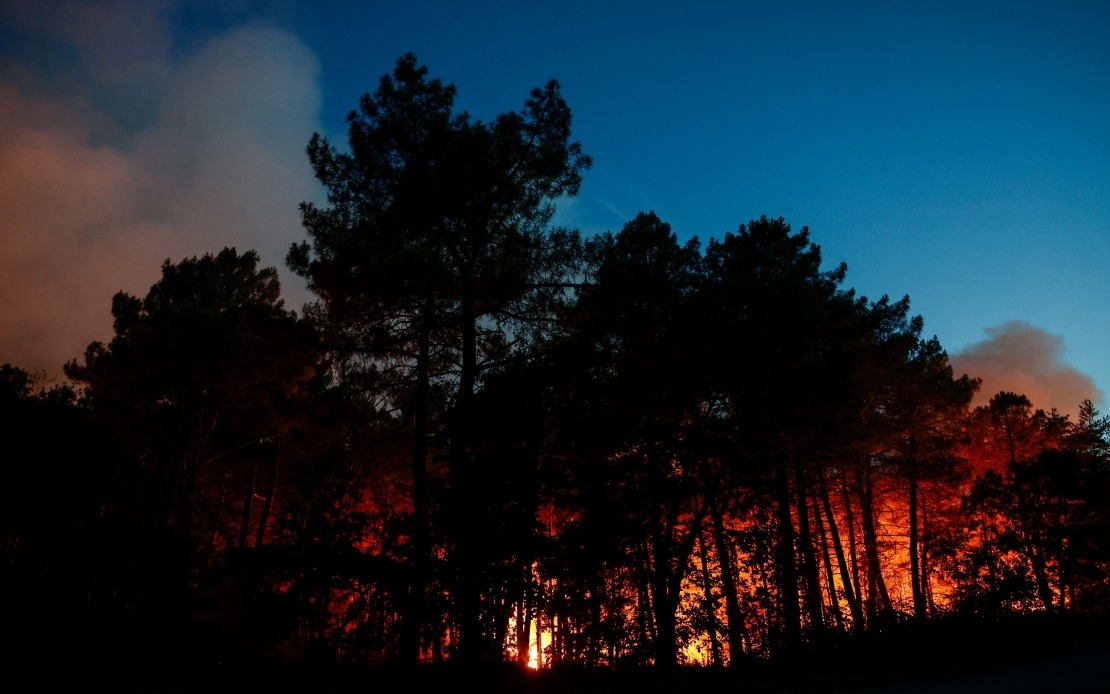
Approximately 400 firefighters are engaged in a fierce battle against a massive wildfire ravaging the Fontainebleau forest, a celebrated landscape located south of Paris. The blaze erupted late on Sunday evening near a major motorway and has already consumed 800 hectares of forest, marking one of the most significant wildfire incidents to strike the region in recent years. The fire's rapid spread and scale have prompted a comprehensive emergency response, highlighting the vulnerability of even Europe's most protected natural areas to catastrophic fire events during extreme weather conditions.
The firefighting operation has escalated significantly, with two water-bombing aircraft now supporting ground crews. These aerial assets have been drawing water supplies from the Seine river, deployed by the Seine-et-Marne department as part of an all-hands effort to contain the expanding flames. This combination of ground and aerial resources reflects the severity of the situation and the coordinated response typical of major French natural disasters. The mobilisation of such resources underscores the critical threat posed by the advancing inferno to surrounding communities and infrastructure.
French Interior Minister Laurent Nuñez visited the fire zone and provided a startling assessment: authorities now suspect the fire may have been deliberately ignited. Multiple distinct fire outbreaks detected within a confined area of just 1,000 metres have prompted gendarmerie investigators to open a formal inquiry into potential arson. This revelation introduces a criminal dimension to the ecological disaster, suggesting that human malice rather than natural causes may have triggered the catastrophe. The investigation remains ongoing, with authorities scrutinising the circumstances surrounding each fire outbreak.
The Fontainebleau forest holds immense historical and ecological significance, serving as the location of the iconic Château de Fontainebleau and constituting one of Western Europe's largest continuous forested expanses. Its destruction carries consequences extending far beyond immediate environmental damage, threatening irreplaceable cultural heritage and disrupting ecosystems that have developed over centuries. The forest's unique status as both a natural treasure and historical monument makes its devastation particularly poignant for France and the broader European cultural landscape.
The human toll has been severe, with emergency services evacuating more than 1,000 residents and tourists from the affected region. The mayor of Le Vaudoué provided harrowing descriptions of the crisis, reporting a literal wall of flames advancing with terrifying speed toward residential areas at the forest's edge. Families and visitors found themselves fleeing as the inferno encroached on their homes and accommodation, creating scenes of panic and displacement that have become uncomfortably familiar across Mediterranean and continental Europe during recent summers.
Government officials have characterised the situation as exceptional in scope and intensity. French government spokeswoman Maud Bregeon emphasised that all available state resources were being marshalled to combat the blaze, stressing that wildfires of this magnitude have occurred rarely in northern France. This statement reflects a troubling reality: climate change and rising temperatures are pushing ecological tipping points in regions historically spared the worst wildfire devastation. Northern France, long considered relatively safe from such disasters, now faces threats previously concentrated in southern Europe and the Mediterranean basin.
The Fontainebleau crisis unfolds against a backdrop of unprecedented heat stress gripping France throughout the summer. The nation's meteorological service, Météo-France, issued its highest-level red heat alert for 37 departments at the beginning of the week, indicating dangerously elevated temperatures and parched conditions across vast swathes of the country. This third heatwave of 2023 has created ideal conditions for rapid fire spread, with dry vegetation and superheated air accelerating combustion wherever ignition sources exist. Firefighting crews across multiple regions of France have been simultaneously battling numerous blazes fuelled by these extreme meteorological circumstances.
The convergence of extreme weather, possible criminal action, and ecological vulnerability presents a complex challenge for French authorities and policymakers. While investigators pursue leads regarding potential arson, climate scientists and emergency management experts must grapple with the reality that even deliberate fires can spread with unprecedented ferocity under extreme heat conditions. The incident underscores how climate change is amplifying existing risks, whether natural or human-caused, transforming localised incidents into catastrophic events.
For Southeast Asian observers, the Fontainebleau crisis offers sobering lessons. Malaysia and other tropical nations face their own wildfire challenges, particularly during extended dry seasons exacerbated by climate patterns. The French experience demonstrates that no region—regardless of historical fire frequency or economic development level—remains immune from devastating wildfires in an era of climatic destabilisation. The coordination of cross-border resources, investment in aerial firefighting capacity, and integrated emergency response systems evident in France's response provide potential models for regional cooperation and preparedness in Southeast Asia.
The medium-term implications extend beyond immediate containment. Reconstruction of the Fontainebleau forest will require decades of reforestation and ecological restoration. The investigation into potential arson may yield important insights into criminal exploitation of weather conditions and security vulnerabilities in forest management. French authorities will likely undertake comprehensive reviews of wildfire prevention infrastructure, evacuation protocols, and resource allocation in light of this disaster. Such institutional learning processes, replicated across vulnerable regions globally, may incrementally improve resilience against future incidents.

