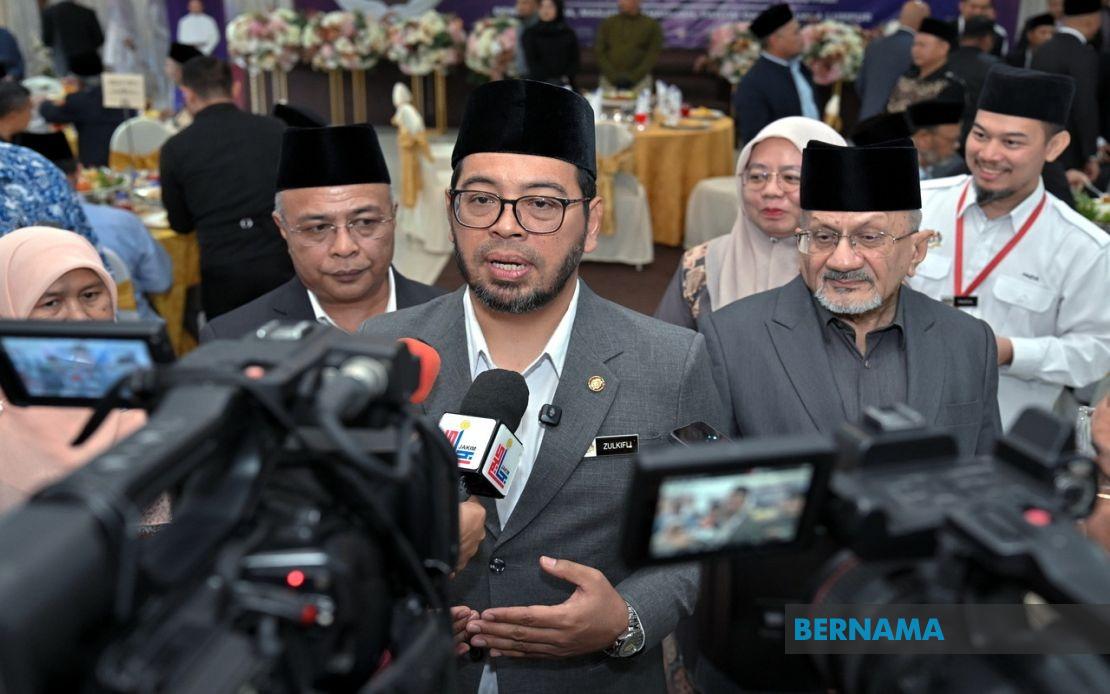
The construction of Masjid Warisan, positioned in front of the Tun Razak Exchange (TRX) development in Kuala Lumpur, will advance according to its original timeline, according to Minister in the Prime Minister's Department (Religious Affairs) Dr Zulkifli Hasan. Speaking to journalists on June 23, the minister emphasised that this initiative represents a longstanding commitment within government planning, and authorities remain committed to its realisation contingent on divine will.
The mosque project carries significance beyond its architectural contribution to the TRX landscape. According to Dr Zulkifli, the undertaking forms part of a broader strategic vision to position mosques as community anchors that foster social cohesion and collective wellbeing. This framing responds to mounting criticism from certain quarters who have publicly opposed the project, contending that its construction might trigger community friction and generate public dissatisfaction among residents and workers in the precinct.
Such opposition represents a notable pushback against the development. Media outlets have reported organised efforts to halt the project, with detractors presenting concerns about potential tensions arising from the mosque's presence in the heart of the bustling TRX financial district. These objections appear rooted in anxieties about how religious infrastructure might interact with the commercial and secular character of the broader development zone.
Dr Zulkifli's response to these objections is measured but firm. He directed anyone harbouring concerns about the mosque's construction to engage directly with the Federal Territories Islamic Religious Council (MAIWP) to seek clarification and understanding of the project's objectives and implementation approach. This invitation reflects the government's inclination to address scepticism through dialogue rather than defensive posturing.
To contextualise the decision, the minister drew upon international precedent. He noted that major metropolitan centres worldwide routinely feature mosques within their commercial and financial precincts, and that the Islamic call to prayer represents a source of spiritual tranquillity rather than disruption. This positioning attempts to normalise the mosque's presence within an urban commercial environment, suggesting that religious and economic functions can coexist harmoniously in cosmopolitan cities.
The announcement arrives alongside broader initiatives to strengthen mosque governance structures. On the same occasion, Dr Zulkifli distributed appointment letters to committee members overseeing Federal Territories mosques and Friday prayer suraus for the 2026-2029 term, a ceremony held at Masjid Al-Khadijah in Kampung Pantai Dalam. This administrative activity underscores the government's emphasis on institutionalising mosque management and ensuring robust leadership across the mosque network.
The selection process for these committee positions reflects rigorous vetting procedures designed to maintain governance standards. From 3,010 nominations submitted for the 2026-2029 cycle spanning 91 mosques and 124 Friday prayer suraus, authorities selected 2,914 candidates following comprehensive integrity screening. This vetting involved collaboration between the Royal Malaysia Police, the Malaysian Anti-Corruption Commission, and the Insolvency Department, indicating a multi-agency approach to ensuring that appointed officials meet stringent probity standards.
For Malaysian observers, the Masjid Warisan controversy encapsulates broader tensions between religious identity and modernist urban development. The TRX district represents Kuala Lumpur's ambitions as a global financial hub, yet the government's decision to embed religious infrastructure within this space signals an intention to ensure that Malaysia's Islamic character remains visible and integrated within its most prestigious commercial developments. This positioning contrasts with urban models where religious and commercial zones remain geographically separated.
The project's advancement also reflects Malaysia's multicultural governance philosophy, where religious institutions are conceived not as competing with secular development but as complementary elements within a comprehensive social framework. By framing the mosque as a centre for harmony rather than a symbol of religious dominance, the government attempts to recast religious architecture as universally beneficial infrastructure.
The opposition to Masjid Warisan likely stems from concerns about religious expression in secular-oriented spaces, reflecting anxieties present in diverse societies about how religious identity manifests in shared commercial environments. The minister's commitment to transparency and dialogue through MAIWP engagement suggests official recognition that such sensitivities warrant serious engagement rather than dismissal.
Moving forward, the success of Masjid Warisan will likely depend on how effectively authorities manage community perceptions and integrate the facility within the broader TRX ecosystem. The project will serve as a test case for whether Malaysia can successfully blend religious and commercial architecture in ways that genuinely foster rather than fragment social harmony, as government rhetoric promises.