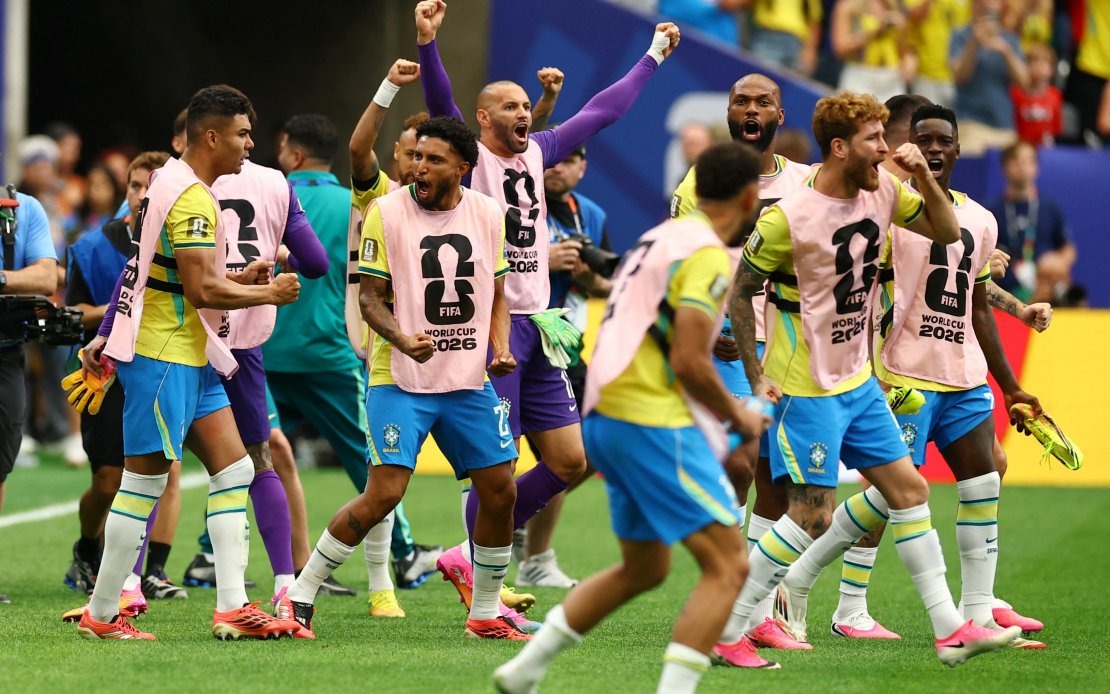
Gabriel Martinelli's composure in the dying moments proved decisive as Brazil scraped past Japan 2-1 in a tightly contested World Cup round-of-32 fixture in Houston on Monday, advancing to the last 16 where they will face either Côte d'Ivoire or Norway. The Seleção's late breakthrough showcased their tournament pedigree and capacity to maintain pressure even when progress seemed uncertain, while Japan's defeat ended an impressive group phase performance that had kept them unbeaten through their opening matches.
Both nations arrived at this knockout tie with perfect records from their group stage campaigns, each having progressed without defeat. Brazil topped Group C with seven points accumulated from two victories and a draw, establishing themselves as serious contenders for the trophy. Japan, meanwhile, finished as runners-up in Group F after securing one win alongside two draws, a respectable showing that demonstrated their growing competitiveness at football's highest level and raised expectations heading into the round-of-32 confrontation.
Historically, Brazil holds a commanding advantage over the Japanese national team at World Cup level. The five-time champions previously defeated Japan 4-1 in their only prior tournament meeting, a result that underscored the gulf in experience and pedigree between the two nations. However, that record took on less significance given Japan's impressive form coming into this fixture. The teams had met just last year, when Japan mounted a stirring second-half comeback to secure a 3-2 victory, overturning an initial deficit and handing Brazil a rare defeat. This recent result suggested the Asian representatives possessed the tactical acumen and technical quality to trouble even established football powerhouses.
From the opening exchanges, Brazil sought to impose their authority through possession and territorial dominance. In the 14th minute, Matheus Cunha tested Japan's goalkeeper Zion Suzuki with a promising effort that forced a one-handed save, signalling Brazil's intent to control proceedings and create scoring opportunities through their superior midfield control. The volume of possession statistics favoured the South Americans in this period, yet they struggled to translate territorial advantage into clear-cut chances that genuinely troubled Suzuki.
Japan's breakthrough against the run of play arrived in the 29th minute through a combination of pressing and clinical finishing. Danilo's careless pass in midfield was pounced upon by Kaishu Sano, who demonstrated impressive awareness and pace to surge forward beyond Casemiro before unleashing a powerful strike that eluded goalkeeper Alisson's grasp. The goal represented reward for Japan's disciplined pressing and willingness to attack on transition, a tactical approach that had served them throughout their group stage campaign and suggested they would not be intimidated by Brazil's established reputation.
Brazil's response was characterised by sustained attacking play, though the quality of their chances remained frustratingly inconsistent for much of the second half. Bruno Guimaraes fashioned a shooting opportunity that failed to find the target, whilst Casemiro's header was blocked when the ball arrived at a promising height inside the penalty area. The defending champions maintained their siege on Japan's goal line but appeared to lack the incisiveness and precision required to unlock a well-organised defensive unit that remained resolute in their deep-lying shape.
Equalization arrived in the 56th minute when Casemiro atoned for his earlier defensive lapse by redirecting a Bruno Guimaraes cross past Suzuki with a well-placed header, levelling the match and restoring Brazil's belief. Minutes later, Vinicius Jr produced a moment of individual brilliance, weaving through Japan's midfield with a sinuous run that seemed destined to produce a goal until his strike cannoned back off the post in agonising fashion. This sequence suggested Brazil's attacking momentum had shifted decisively in their favour, with Japan now defending rather than dictating proceedings.
As the match entered its final stages, Brazil maintained relentless pressure and found their decisive breakthrough deep within stoppage time. Bruno Guimaraes executed a precise pass that located Gabriel Martinelli in unmarked space within the penalty area, and the forward demonstrated composure under pressure to finish clinically past Suzuki in a one-on-one situation. Japan's desperate attempts to manufacture a late equaliser ultimately proved fruitless, leaving Brazil to celebrate a hard-earned progression to the knockout stage.
The victory carries significant implications for both nations' tournament trajectories. Brazil's passage into the last 16 positions them favourably to mount a serious assault on the trophy, their attacking depth and experience suggesting they can navigate the remaining stages. For Japan, despite the disappointing result, their performance throughout the group phase and competitive showing against a five-time champion has established them as an emerging force capable of threatening traditional continental powers and suggesting they will return to future tournaments with genuine aspirations of progressing further in the competition.

