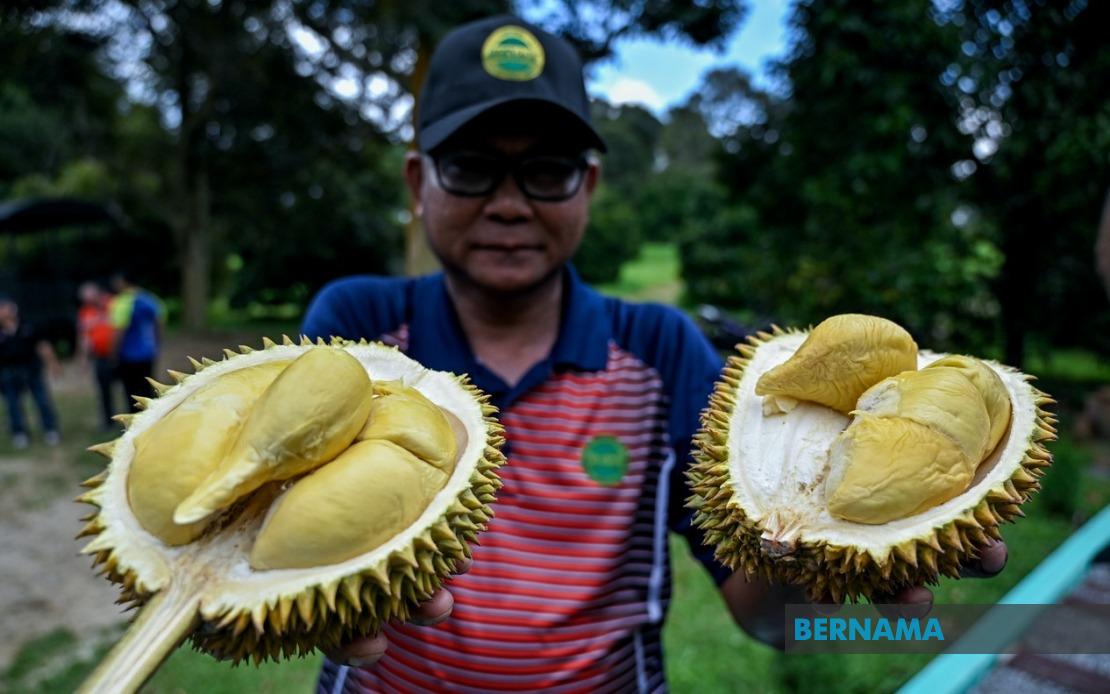
The Malaysian Agricultural Research and Development Institute (MARDI) has made significant progress in its domestic durian cultivation initiative, with nearly 25,000 MS88 hybrid durian trees now established across the nation. This substantial planting represents a coordinated effort to strengthen Malaysia's position in the global premium durian market, where quality and consistency have become increasingly important competitive factors.
According to Datuk Dr Mohamad Zabawi Abdul Ghani, MARDI's director-general, these trees occupy approximately 242 hectares of land, predominantly concentrated in Selangor and the east coast states. The strategic geographical distribution reflects MARDI's assessment of optimal growing conditions across these regions, where climatic and soil factors align with the horticultural requirements of this commercially valuable crop. The east coast concentration is particularly notable given those states' historical association with durian cultivation and their established farmer networks.
The MS88 represents one tier of MARDI's premium durian portfolio, which also includes the MDUR78 and MDUR79 varieties. Collectively, these three cultivars emerged from decades of research beginning in the early 2000s, reflecting MARDI's long-term commitment to developing durian genetics that balance commercial viability with consumer appeal. These established varieties have already cultivated a dedicated following among serious durian enthusiasts, establishing proof of concept for MARDI's breeding methodology.
Beyond the existing MS88 programme, MARDI is actively advancing a new generation of premium hybrid durians designed to capture emerging market opportunities. Three additional varieties currently undergo rigorous evaluation protocols that examine multiple critical dimensions simultaneously. These assessments extend beyond simple yield metrics to encompass fruit quality characteristics such as flavour profile, flesh consistency, and aroma intensity—attributes that directly influence market positioning and retail value.
The selection process represents a sophisticated approach to cultivar development that recognises the durian market's sensitivity to consumer perception. Farmers participating in or considering adoption of these varieties require assurance that their investments will yield commercially viable products, while consumers expect consistency in the sensory experiences that justify premium pricing. MARDI's evaluation framework attempts to satisfy both constituencies by subjecting candidates to comprehensive testing across production and consumption dimensions.
Consumer acceptance testing occupies central importance in the assessment methodology. Unlike commodity crops where standardisation and transportability dominate selection criteria, durian cultivation remains deeply influenced by subjective taste preferences that vary regionally and among demographic groups. Obtaining robust data on how different consumer segments respond to each variety's distinctive characteristics enables MARDI to make informed judgements about which cultivars merit commercial release and which geographic markets represent optimal deployment zones.
Cultivation suitability for farmers forms the third critical evaluation pillar. A durian variety may possess exceptional fruit characteristics and strong consumer appeal, yet prove impractical or economically unviable for producers if it demands specialised knowledge, equipment, or environmental conditions beyond what typical orchardists can reasonably provide. By integrating farmer feedback into the selection process, MARDI increases the probability that released varieties will achieve meaningful adoption rather than remaining research curiosities confined to experimental plots.
The timing of planned releases during the durian season reflects sophisticated marketing strategy. By introducing new varieties when consumer attention focuses intensely on durian selection and consumption, MARDI maximises media coverage, generates word-of-mouth discussion among enthusiasts, and enables direct consumer engagement through tasting opportunities. This seasonal launch window capitalises on the cultural and commercial prominence of durian within the Malaysian economy and broader Southeast Asian consciousness.
For Malaysia's agricultural sector, the MS88 programme and its successor initiatives carry significance extending beyond individual farm economics. Durian has evolved from a regional speciality commodity into a global luxury product commanding premium international prices, particularly in Chinese markets where demand growth consistently outpaces supply expansion. MARDI's breeding programme represents a strategic investment in maintaining Malaysian competitive advantage in this high-value sector. By continuously developing varieties that meet international quality standards while remaining adapted to local growing conditions, MARDI supports farmer competitiveness and positions the country favourably within increasingly sophisticated global supply chains.
The confidentiality surrounding the unnamed new varieties until their official launch reflects standard agricultural intellectual property practice. Premature disclosure of variety names and characteristics might enable competing institutions or foreign breeders to accelerate their own programme timelines or attempt to circumvent MARDI's development investments through alternative breeding approaches. The controlled revelation strategy protects MARDI's research assets while building anticipation within the industry.
For Malaysian consumers and the broader public, these developments signal continued scientific attention to crops of both cultural and economic importance. Durian occupies a distinctive position within Malaysian identity, transcending simple commodity classification to embody regional culinary heritage and agricultural tradition. MARDI's investment in systematic genetic improvement demonstrates how modern scientific methods can enhance rather than diminish traditional crops, combining contemporary research capacity with respect for established agricultural practices.
The MS88 programme's scale—nearly 25,000 trees across 242 hectares—demonstrates MARDI's confidence in the variety's commercial viability and market demand. This represents neither experimental-scale cultivation nor full-scale commercial deployment, but rather a substantial commitment suggesting that MARDI anticipates meaningful farmer adoption and consumer interest. The ongoing development of complementary varieties indicates an institutional strategy of offering diversified options suited to different growing environments and market segments.

