President Ferdinand Marcos Jr has signalled unwavering confidence in the Armed Forces of the Philippines, despite recent revelations suggesting that serving military officers may be involved in planning his assassination. The development marks a delicate balancing act for the Philippine leader, who must address serious security concerns while preserving institutional stability and military morale during a period of significant political tension.
The allegations surfaced when National Bureau of Investigation Director Melvin Matibag disclosed during Vice President Sara Duterte's impeachment proceedings that active uniformed personnel have been identified as persons of interest in connection with the alleged plot. Matibag's statement, made on Wednesday, July 22, added a troubling dimension to ongoing political tensions in the Philippines, suggesting that the conspiracy potentially involves individuals within the military establishment itself rather than merely external actors.
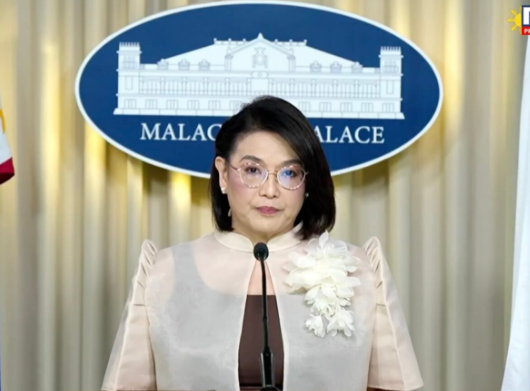
Palace Press Officer Claire Castro delivered the administration's response at a subsequent press briefing, emphasising that Marcos maintained complete confidence in the armed forces as an institution. Her carefully calibrated remarks sought to distinguish between the organisation and any individual members who might be implicated in wrongdoing. Castro stated that any personnel found to have strayed from their constitutional mandate should be identified and held accountable, framing accountability as consistent with rather than contradictory to institutional loyalty.
The investigation has expanded beyond military circles. According to Matibag's revelations, another person of interest is connected to Vice President Duterte's security detail, suggesting potential involvement from individuals within the Vice President's immediate entourage. This detail raises complex questions about the separation of security apparatus between the President and Vice President and the potential for overlapping or conflicting loyalties within the state security establishment.
Castro's remarks reflected the administration's preference for institutional trust over wholesale institutional purges. She noted that the President maintains clear knowledge of which individuals and units warrant his confidence, and indicated that no blanket loyalty verification process was underway across the armed forces. This approach contrasts with the potential alternative of conducting widespread security reviews that could destabilise military command structures and damage institutional cohesion during an already fraught political period.
The Palace statement also addressed a broader concern about the motivations underlying the alleged conspiracy. Castro suggested that any individuals contemplating violations of law ostensibly to protect or advance the interests of a particular political figure should be identified and removed from sensitive positions. This characterisation appeared to reference suggestions that some actors might be motivated by loyalty to Duterte rather than genuine national security concerns, though such implications remained implicit rather than explicitly stated.
Vice President Duterte herself made dramatic revelations during her impeachment testimony, claiming that she had instructed an unnamed individual regarding succession arrangements in the event of her death or that of President Marcos. She referenced Liza Araneta and Martin Romualdez alongside the President in her remarks, though her comments remained cryptic and lacked contextual clarity. Her refusal to comply with a subsequent NBI subpoena further complicated the investigation, with the Vice President declining to provide formal statements or testimony to the investigating agency.
The situation reflects deepening fractures within Philippine politics, where institutional trust remains strained by competing claims of institutional loyalty and personal allegiance. The alleged assassination plot, if confirmed, would represent an extraordinary breach of military discipline and constitutional order. Yet the investigation itself occurs against a backdrop of ongoing impeachment proceedings against the Vice President, creating a complex political landscape where institutional investigations and partisan conflict become difficult to disentangle.
For Malaysian observers and Southeast Asian analysts, the Philippine situation underscores the fragility of military institutions when exposed to serious political divisions. The revelations demonstrate how even well-established democratic systems can face threats when political tensions create competing centres of loyalty within the security apparatus. This dynamic carries implications for regional stability, as institutional instability in major Southeast Asian nations can reverberate across the broader region.
Marcos's continued institutional trust in the armed forces reflects both political necessity and genuine confidence. Military support remains essential for presidential authority and security in the Philippines, and wholesale institutional accusations could undermine the President's own political position. However, the administration's approach also suggests confidence that military leadership will police its own ranks and prevent genuine conspirators from retaining positions of influence or access.
The NBI investigation continues despite the Vice President's non-compliance with subpoena procedures, raising questions about whether the agency possesses sufficient independent evidence to proceed without her testimony. The handling of these parallel investigations—the impeachment proceedings against Duterte and the alleged assassination plot inquiry—will substantially influence the trajectory of Philippine politics in coming months and potentially reshape civil-military relations in the country.

