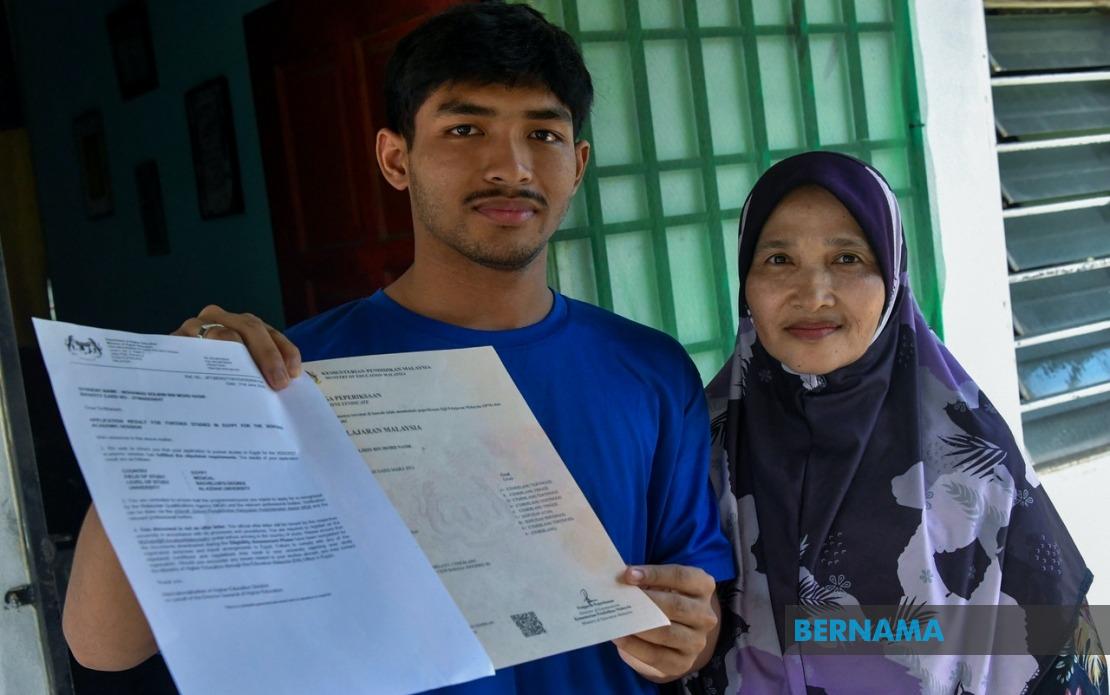
A promising student from Kelantan facing an impossible choice between his medical ambitions and family poverty has received a reprieve after Malaysia's state development agency stepped in with a lifeline. Mohamad Solihin Mohd Nasir, 19, was preparing to decline his acceptance to study medicine at Al-Azhar University in Cairo when the Majlis Amanah Rakyat (MARA) intervened, offering to sponsor his five-year degree programme. The intervention came just weeks before Mohamad Solihin was scheduled to depart, highlighting both the financial barriers facing gifted students from disadvantaged backgrounds and the critical role government agencies play in removing such obstacles.
The former student of MARA's Junior Science College at Jeli in Kelantan had secured a place at one of the Islamic world's most prestigious medical institutions on June 15, an achievement that ordinarily would have been cause for celebration. However, the estimated RM100,000 in combined tuition fees and living expenses over the programme's duration posed an insurmountable barrier for his single-parent household. His widowed mother, Faridah Mohamad, 60, works with limited means and manages chronic thyroid illness, relying on financial contributions from her four older children to meet basic family needs. For Mohamad Solihin, the youngest of five siblings, the acceptance letter initially represented an impossible dream rather than a pathway forward.
Mohamad Solihin's family circumstances underscore the cruel mechanics of educational inequality in Malaysia. His father, Mohd Nasir Abdul Rahman, passed away from a heart attack in 2014 when his son was merely seven years old, depriving the family of its primary breadwinner and introducing a trauma that would shape the boy's entire outlook. Rather than diminishing his ambition, this tragedy instead crystallised it. Mohamad Solihin developed a specific aspiration to become a cardiothoracic surgeon, driven by the desire to save others from the devastating loss his own family experienced. His academic performance at Kelantan Matriculation College—where he achieved an impressive 3.96 cumulative grade point average—demonstrated the calibre of student Al-Azhar's admissions team had identified. Yet without MARA's intervention, this talent would have been lost to Malaysia's economy and society entirely.
MARU Chairman Datuk Dr Asyraf Wajdi Dusuki visited Mohamad Solihin's home in Kampung Kubang Keranji during a video call to present two distinct pathways forward. The first option would enable Mohamad Solihin to pursue his originally-planned Al-Azhar education with MARA's full sponsorship, including financial support for an intensive Arabic language course necessary to meet entry requirements before formal medical study commences. This route addresses a practical challenge facing Malaysian students enrolling at Egyptian institutions—the language barrier—by treating it as an integral part of MARA's support architecture rather than an additional hurdle. The second alternative offered by the agency involves Mohamad Solihin transferring his admission to Universiti Sains Malaysia Health Campus, USMKK, where he would pursue medicine locally under MARA sponsorship, eliminating the additional complexity of studying abroad while still accessing elite medical education.
MARU's approach reflects a deliberate policy orientation toward high-achieving students confronting acute financial disadvantage, particularly those from homes disrupted by parental loss. According to Asyraf Wajdi's own statement, the agency specifically targets this demographic, recognising both the human dimension of educational access and the economic loss when talented young Malaysians cannot afford to develop their potential. The mathematics here favour intervention—the investment in Mohamad Solihin's education would yield returns in the form of a medically-trained professional who would likely contribute to Malaysia's healthcare sector or advance medical knowledge globally. Equally important, however, is the signal such assistance sends to other disadvantaged but capable students: institutional support exists for those whose ambition exceeds their family's financial reach.
The community mobilisation surrounding Mohamad Solihin's case also warrants attention. Before MARA's intervention, teachers at MRSM Jeli had already initiated fundraising efforts on his behalf, while Mohamad Solihin and his family had submitted applications to multiple agencies including the Kelantan Islamic Religious and Malay Customs Council, Kelantan Islamic Foundation, and Kelantan Darulnaim Foundation. This pattern—multiple fragmented applications to various bodies—illustrates both the pervasiveness of financial barriers facing deserving students and the inefficiency that can characterise the assistance landscape. MARA's decisive response suggests the potential value of consolidated application systems or inter-agency coordination that might identify and fast-track assistance for students in Mohamad Solihin's circumstances before crisis points force difficult decisions.
Mohamad Solihin's mother expressed the conflicting emotions that such situations generate. While Faridah acknowledged her pride in her son's acceptance to study abroad, the joy was tempered by the family's complete inability to finance the undertaking. Her comments—that she could "only hope there are parties willing to help"—reflect the vulnerability of families in her position, dependent entirely on external benevolence for their children's futures. The fact that a student of Mohamad Solihin's academic calibre was even contemplating rejecting such an opportunity speaks volumes about the unmet need for educational financing mechanisms that extend beyond the wealthy households that can comfortably afford overseas medical education.
With MARA's intervention secured, Mohamad Solihin's anticipated departure window of late August now appears viable. He has indicated a preference for pursuing his studies at Al-Azhar despite the additional requirement to complete an Arabic language preparatory course first. This choice reveals something important about his commitment—he is willing to invest additional time in preparation rather than settle for the superficially easier domestic option. His focus remains on the institution and the quality of medical training it provides, not simply on proximity or convenience. Such determination, combined with his academic record and the formative experience of familial loss, suggests he possesses the resilience and motivation necessary to succeed in a challenging international educational environment.
The implications of MARA's decision extend beyond one student's fortunes. First, it demonstrates that agency responsiveness to individual cases remains possible within Malaysia's bureaucratic apparatus, though such interventions typically require external pressure and visibility. Second, it highlights the potential for strategic investment in high-achieving students from disadvantaged backgrounds to yield disproportionate returns. Third, it raises questions about how many similar students—equally capable, equally motivated, equally deserving—never receive such assistance simply because their families lack the social capital to navigate application systems or generate the visibility that prompted MARA's intervention in Mohamad Solihin's case.
Looking forward, Malaysia's commitment to developing world-class healthcare depends partly on ensuring that talented individuals like Mohamad Solihin can actualise their potential regardless of family wealth. The financial barriers facing medical education—both domestically and internationally—effectively restrict the talent pool from which future physicians are drawn. A student with a 3.96 GPA, a personal connection to medical need, and demonstrated resilience through family adversity represents precisely the human capital Malaysia requires. MARA's decision to sponsor him reflects not charity but strategic national investment in human capital development.

