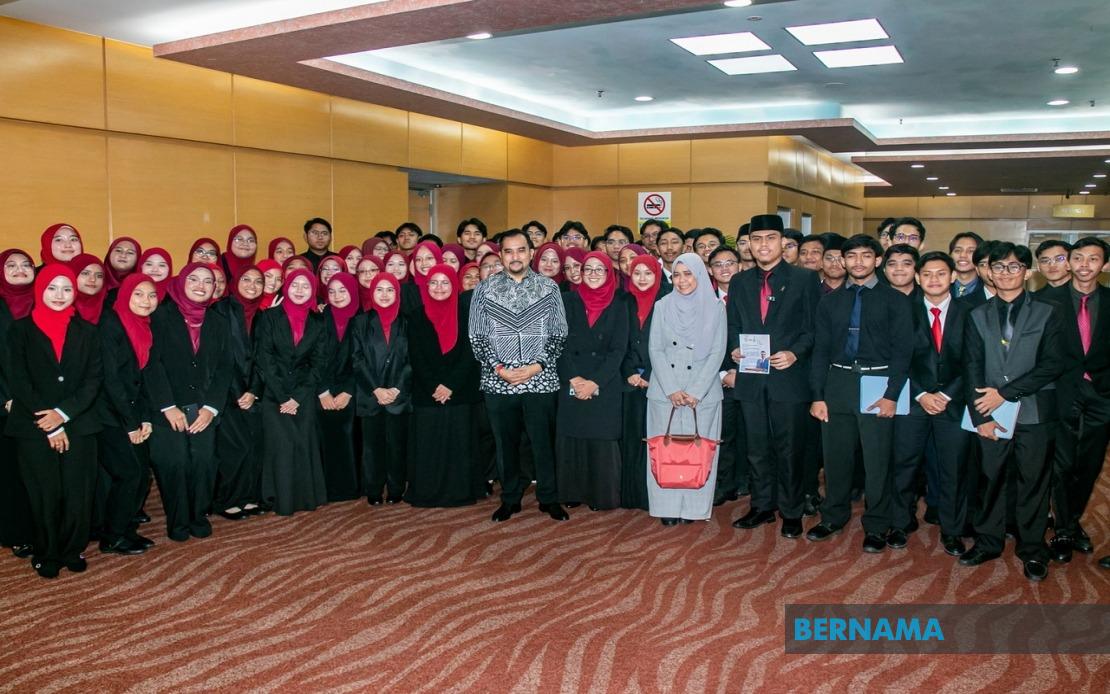
Majlis Amanah Rakyat (MARA) has resumed its medical education programme at Al-Azhar University in Egypt, marking a significant return to international medical training after a seven-year hiatus. The state development agency's decision to reactivate the partnership came following Cabinet approval, with an initial cohort of 78 medical students set to begin their studies this year. The resumption signals MARA's renewed confidence in leveraging overseas educational partnerships to build Malaysia's medical workforce while managing costs more efficiently than domestic alternatives.
MARА chairman Datuk Dr Asyraf Wajdi Dusuki announced the decision at a pre-departure ceremony for the agency's sponsored overseas students, emphasizing the financial advantages of the programme. The total investment per medical student, covering accommodation throughout the five-year course, stands at RM350,000. This represents a considerable saving compared to pursuing medical degrees within Malaysia, where tuition and related expenses typically range between RM700,000 and RM800,000 per student. The cost reduction becomes possible through a 50 per cent discount that Al-Azhar University has extended to MARA, making international medical education a more viable option for the agency's scholarship recipients.
The restoration of the medical programme reflects broader policy discussions about optimizing Malaysia's human resource development strategy. Medical education requires substantial investment, yet domestic capacity remains limited relative to the number of qualified applicants seeking medical training annually. By revitalizing partnerships with established institutions like Al-Azhar, MARA can simultaneously expand opportunities for deserving students while controlling expenditures. The move also demonstrates renewed diplomatic engagement with Egypt, particularly in the educational sphere, potentially strengthening bilateral ties in professional development.
Datuk Seri Anwar Ibrahim's administration granted approval for the initiative, reflecting the government's prioritization of accessible professional education across different income groups. MARA chairman Asyraf Wajdi specifically acknowledged the Prime Minister's endorsement, underscoring political commitment to expanding the agency's international scholarship offerings. This backing is crucial for initiatives requiring Cabinet authorization and substantial budgetary allocation, ensuring that programmes receive high-level support necessary for successful implementation and sustainability.
Beyond the medical programme, MARA is executing a broader international student deployment strategy this year. Approximately 600 students who have completed preparation at MARA's domestic colleges will depart for overseas universities beginning the following week, dispersing across multiple continents. These scholars originate from three primary MARA preparatory institutions: Kolej MARA Seremban in Negeri Sembilan, Kolej MARA Banting in Selangor, and Kolej MARA Kuala Nerang in Kedah. Their chosen destinations span geographically and academically diverse regions, including New Zealand, Canada, Australia, South Korea, the United Kingdom, and Egypt, reflecting MARA's portfolio approach to international education partnerships.
The breadth of overseas placements demonstrates MARA's capacity to facilitate student mobility across both traditional and emerging educational hubs. New Zealand, Canada, and Australia have longstanding appeal as English-speaking nations with strong higher education systems recognized internationally. The inclusion of South Korea indicates growing engagement with Asian educational excellence, particularly in technology and specialized fields. By distributing students across multiple countries and institutions, MARA reduces dependency on single partnerships while exposing Malaysian scholars to varied academic environments and cultural contexts.
Competitive placement at top-tier universities signals the quality of students emerging from MARA's preparatory system. Eleven sponsored students secured admission to Imperial College London for the current academic year, representing selective placement at one of Britain's premier science and technology institutions. More broadly, MARA reports that 40 students have gained acceptance to universities ranked within the world's top 10, while 107 have been admitted to institutions within the top 20. These figures underscore the caliber of candidates the agency is selecting and preparing, suggesting that rigorous screening and academic preparation at MARA colleges produce competitive applicants capable of meeting exacting international standards.
The success of MARA's scholarship recipients at globally ranked institutions carries significance for Malaysia's broader educational reputation and human capital development. When Malaysian students perform well at prestigious universities, they enhance the country's intellectual standing and establish networks that benefit the nation professionally and diplomatically. Upon completion, many of these scholars return to Malaysia equipped with international qualifications, contributing expertise across sectors including medicine, engineering, sciences, and other specialized fields. The investment in their development thus represents long-term capacity building for the domestic economy and professional landscape.
The resumption of Al-Azhar's medical programme also reflects calculated risk assessment regarding the stability and quality of the Egyptian institution. Al-Azhar maintains centuries of academic heritage and remains recognized across the Islamic world as a centre of scholarly excellence. By 2024, the university's capacity to deliver quality medical education had clearly recovered sufficiently for MARA to confidently reinvest in partnership. The decision was not hasty but emerged after careful evaluation, suggesting MARA leadership conducted due diligence before committing resources and student futures to the renewed arrangement.
For Malaysian families seeking affordable medical education pathways for talented children, MARA's reactivated programme offers a compelling alternative to competing demands on limited domestic medical school places. The agency's scholarship approach removes financial barriers that might otherwise prevent economically disadvantaged but academically gifted students from pursuing medical careers. By concentrating investment on individual students rather than dispersing resources thinly, MARA maximizes impact and quality while managing public expenditure responsibly, a principle increasingly important as government budgets face competing demands across multiple sectors.
The broader context suggests Malaysia is strategically recalibrating its overseas education ecosystem, particularly for programmes requiring specialized facilities and expertise. Medical training cannot be improvised; it demands institutional infrastructure, experienced faculty, and clinical exposure spanning years. Partnering with established international providers allows Malaysia to leverage existing excellence rather than attempting domestic replication. This pragmatic approach acknowledges both Malaysia's capabilities and realistic limitations, channeling investment toward student opportunity rather than institutional prestige projects.

