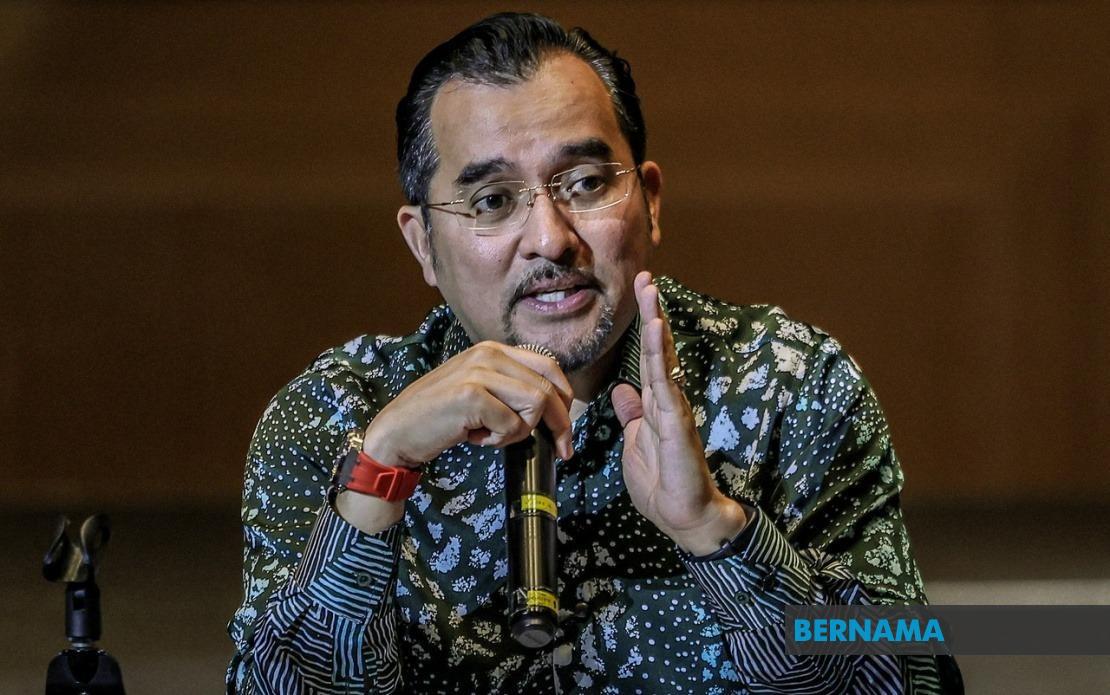
Datuk Dr Asyraf Wajdi Dusuki, chairman of Majlis Amanah Rakyat, has outlined an ambitious legislative agenda designed to fundamentally reshape how Malaysia's principal Bumiputera development agency operates. The proposed MARA Bill 2026, slated for parliamentary consideration before the year concludes, represents the most significant governance overhaul of the institution since its founding legislation in 1966. According to Asyraf Wajdi, four-fifths of the Bill's provisions are dedicated to strengthening corporate governance mechanisms, a deliberate strategic choice reflecting the institution's troubled history of leadership misconduct and financial irregularities.
The legislative initiative emerged from persistent concerns about institutional vulnerability to abuse of power, management weaknesses, and financial leakage. These governance failures have historically compromised MARA's capacity to effectively discharge its constitutional responsibility for safeguarding Malay and Bumiputera economic interests. By concentrating the Bill's architecture on preventative governance measures rather than programmatic expansion, policymakers signal recognition that structural integrity must precede renewed institutional activism. This approach carries particular significance for Malaysian stakeholders invested in ensuring that government agencies serving specific communities operate with demonstrable integrity and transparent accountability.
Among the Bill's most consequential provisions is the deliberate curtailment of the MARA chairman's executive authority. Under current arrangements flowing from the 1966 Act, the chairman wields expansive powers encompassing policy formulation, board leadership, and operational management. The proposed legislation would restrict these powers to board chairmanship and high-level policy decisions, fundamentally altering the office's scope. This restructuring embodies contemporary governance principles emphasizing power distribution, institutional checks, and separation between strategic direction and day-to-day administration—standards increasingly adopted across Southeast Asian institutional reform efforts.
The Bill mandates formal separation between the board of directors and management functions, a foundational governance precept often absent from Malaysian state-owned enterprises. This compartmentalization creates distinct accountability mechanisms whereby the board provides oversight while management executes strategy, preventing the concentrated decision-making authority that historically enabled institutional misadventure. Complementing this structural reform, the legislation introduces explicit "fit and proper" criteria for board member appointments, establishing professional and ethical qualification benchmarks. Board members would face defined tenure limits, institutionalizing orderly succession and reducing entrenchment of particular factions or interest groups within the institution's leadership.
Financial governance enhancements represent another substantial legislative element, requiring MARA's accounting practices and procurement procedures to meet both national and international standards. This codification of financial discipline addresses a recurrent vulnerability wherein procurement processes became vehicles for corruption or favoritism. By embedding stringent financial controls within statutory law rather than leaving them to administrative discretion, the Bill creates enforceable obligations and creates legal consequences for violations. For Malaysian investors and business partners engaging with MARA initiatives, these standards provide greater assurance regarding the legitimacy and transparency of institutional resource allocation.
The proposed legislation establishes a series of specialized board committees with defined mandates, including dedicated audit, investment, finance, governance, and risk oversight bodies. These committees distribute governance responsibilities across multiple constituencies, preventing single-point failures where particular leaders monopolize institutional decision-making. The establishment of a Syariah Committee marks a notable innovation, formalizing religious compliance oversight and signaling institutional commitment to operating within Islamic jurisprudential frameworks—a particularly significant development given MARA's historical positioning within Malaysia's Bumiputera and Islamic institutional ecosystem.
Asyraf Wajdi has contextualised the Bill within broader governance reforms initiated following his appointment on March 10, 2023. He established a specialized task force under former Bank Negara Malaysia governor Tan Sri Muhammad Ibrahim to diagnose institutional weaknesses and prescribe remedial measures. This foundation-building exercise has encompassed forensic audits of MARA subsidiaries, recentralization of internal audit functions previously dispersed across subsidiary entities, and comprehensive restructuring of procurement operations. These immediate reforms, implemented before legislation takes effect, demonstrate good-faith institutional self-correction and create documented evidence of governance deficiencies that the Bill statutorily addresses.
The reform agenda extends to financial transparency protocols requiring monthly performance reporting to the MARA Council, aligning institutional practice with international governance norms. Such reporting cadences enable timely identification of operational anomalies and financial deviations, strengthening institutional responsiveness to emerging risks. These procedural enhancements, while technical in appearance, represent meaningful investments in institutional discipline and member accountability. For Malaysian governance observers and institutional reform specialists, MARA's comprehensive renovation offers instructive lessons regarding how legacy institutions adapt to contemporary accountability expectations.
The Bill's approval in principle by the Cabinet signals executive branch alignment regarding governance priorities. Parliamentary tabling before year-end suggests political commitment to advancing the legislation through legislative processes relatively promptly, though the actual timeline remains subject to parliamentary scheduling pressures. Should the Bill successfully navigate parliamentary procedures, it would establish modernized statutory frameworks governing Malaysia's principal Bumiputera development apparatus, with implications extending across the institution's subsidiary operations, corporate ventures, and funding relationships. The legislative initiative also carries symbolic weight, publicly demonstrating governmental commitment to institutional accountability and governance standards that transcend particular political constituencies or factional interests.
For Southeast Asian observers monitoring institutional governance trends across the region, MARA's statutory reform initiative reflects broader recognition that state-owned enterprises require robust structural safeguards and distributed decision-making authority to prevent institutional capture. The Bill's emphasis on governance mechanisms rather than programmatic expansion mirrors governance philosophies gaining currency across regional development institutions. The explicit incorporation of religious compliance oversight through the Syariah Committee also reflects institutional adaptation to stakeholder expectations regarding alignment between state enterprise operations and Islamic principles—a pattern increasingly visible across Malaysia's state-owned institutional landscape.
Asyraf Wajdi's strategic approach prioritizes institutional renovation before renewed programmatic expansion, recognizing that governance credibility forms essential foundation for institutional legitimacy. The June 14 statement that amended legislation would strengthen MARA's role in advancing the Bumiputera development agenda suggests the chairman views governance reforms as enabling rather than constraining institutional effectiveness. By establishing transparent, distributed, and legally enforceable governance mechanisms, the Bill aims to position MARA as a trustworthy steward of public resources and Bumiputera community interests—a positioning essential for the institution's continuing relevance within Malaysia's evolving economic architecture.

