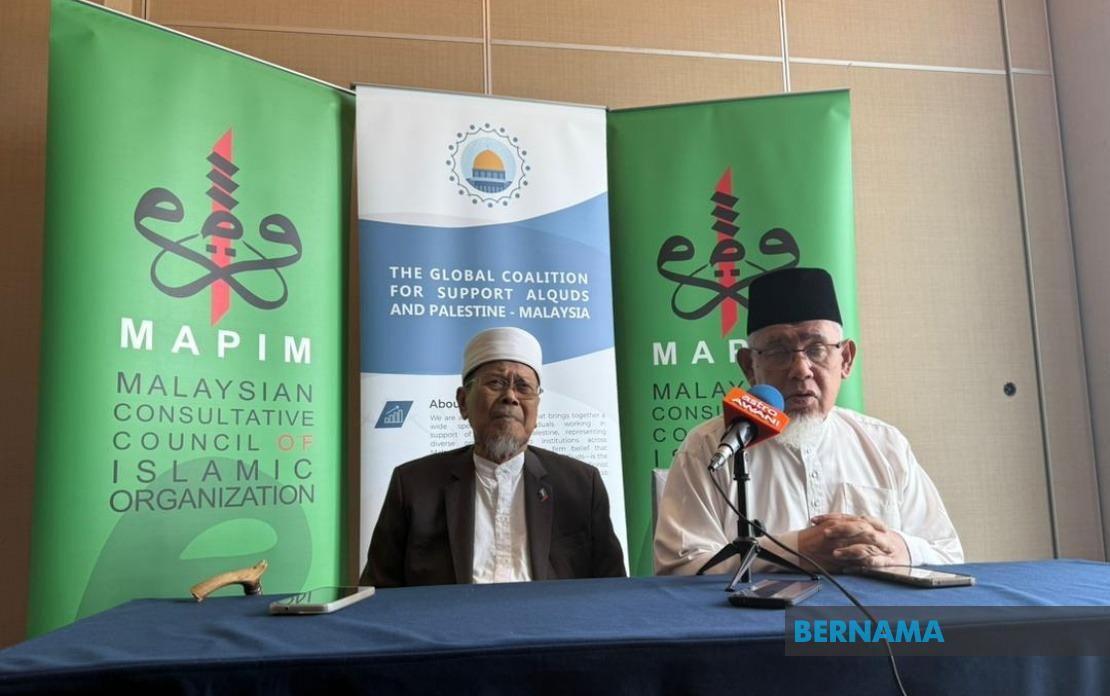
The Malaysian Consultative Council of Islamic Organisations (MAPIM) is preparing to convene a significant gathering in Ipoh this week that reflects the growing emphasis on institutional coordination within Southeast Asia's Islamic landscape. Working alongside the Perak Islamic Religious Department (JAIPk), MAPIM will orchestrate a two-day Regional Mosque Conference 2026 at a premier venue in the state capital, representing an ambitious effort to unite mosque leadership across the region around shared developmental and humanitarian objectives.
The conference anticipates the attendance of approximately 400 mosque representatives spanning Malaysia and a diverse range of neighbouring nations. Delegates will arrive from Indonesia, Singapore, Brunei, Timor-Leste, Myanmar, Cambodia, Thailand and Vietnam, demonstrating the breadth of MAPIM's regional reach. The gathering will also feature special international participation from Turkiye, Iran and Pakistan, underscoring the conference's ambition to facilitate dialogue beyond immediate Southeast Asian borders and engage with influential Islamic-majority nations in other regions.
The timing of this conference carries symbolic significance, coinciding with commemoration of World Mosque Day on August 21, an observance established to memorialise the 1969 arson attack on Al-Aqsa Mosque in Jerusalem. MAPIM president Mohd Azmi Abdul Hamid emphasised during a press briefing that for his organisation, observing this day transcends ceremonial observance. He articulated a vision wherein World Mosque Day functions as a catalytic moment for substantive reflection on mosques' foundational purpose within Muslim communities. Rather than treating the occasion as annual ritual, Mohd Azmi framed the conference as an opportunity to recalibrate and reinvigorate mosques as institutional anchors providing spiritual, social and economic support to believers across the region.
The conference architecture reflects seven core strategic objectives that MAPIM hopes participating institutions will embrace. Foremost among these is constructing a formal regional cooperation framework specifically designed for mosque networks, facilitating knowledge-sharing, resource coordination and collaborative problem-solving across borders. The agenda also prioritises mobilising youth participation within mosque structures and fostering economic initiatives rooted in community engagement, recognising that sustainable institutional vitality requires generational investment and livelihood integration. Additionally, the conference seeks to deepen collaborative relationships between formal mosque structures and Islamic civil society organisations, acknowledging the critical roles that non-governmental entities play in contemporary Islamic community development throughout the region.
Mohd Azmi outlined that the conference will function simultaneously as both intellectual forum and practical platform for consensus-building. Scheduled programming encompasses academic presentations examining Islamic institutional history and contemporary challenges, structured international dialogue sessions permitting cross-border exchange of perspectives, and dedicated discussions addressing Palestine and the Al-Aqsa Mosque situation. These thematic focuses reveal MAPIM's conviction that regional mosque networks carry responsibilities extending beyond local congregational needs toward broader humanitarian advocacy, particularly concerning geopolitical situations affecting Muslim populations globally.
Three significant initiatives will receive formal launch during the conference proceedings. A regional mosque coalition dedicated to Palestine advocacy will be established, creating an institutional mechanism through which Southeast Asian mosques can coordinate advocacy efforts and solidarity activities. Simultaneously, MAPIM will unveil a comprehensive publication examining mosques' historical and contemporary societal roles, providing intellectual grounding for institutional renewal conversations. Most innovatively, the organisation will introduce the MAPIM Gold Dinar, a fundraising instrument designed to facilitate public contributions toward the Al-Aqsa Mosque Fund through a tangible, commodified mechanism that symbolically links Southeast Asian Muslims to sacred site preservation efforts.
Mohd Azmi articulated that these initiatives ultimately serve a unified strategic purpose: mobilising Southeast Asian Islamic institutional networks toward active engagement with global humanitarian causes whilst simultaneously generating sustainable funding mechanisms for significant religious projects. The Gold Dinar concept particularly reflects pragmatic recognition that contemporary fundraising requires accessible, psychologically meaningful vehicles capable of translating religious conviction into financial commitment. By commodifying contributions through gold dinar purchases, MAPIM creates a mechanism permitting incremental participation across diverse economic strata whilst maintaining symbolic connection to Islamic monetary tradition.
The conference structure anticipates producing tangible outputs beyond the immediate gathering. Participating organisations are expected to collaborate on developing a formal declaration and implementable action plan, creating accountability mechanisms for post-conference momentum. This approach acknowledges that regional conferences risk remaining intellectually stimulating yet institutionally inconsequential unless coupled with concrete commitments and follow-up mechanisms. By requiring delegates to commit to specific actions before departing Ipoh, MAPIM seeks to transform conference participation into initiating point for sustained regional cooperation rather than isolated diplomatic exercise.
For Malaysia's broader Islamic institutional landscape, this conference signals continued emphasis on positioning the nation as convening space for regional Islamic dialogue and coordination. Ipoh's selection as venue places a secondary Malaysian city at the centre of significant international religious engagement, distributing institutional prestige beyond Kuala Lumpur. The conference demonstrates MAPIM's evolution from purely national consultative body toward regional coordination mechanism, reflecting the growing recognition that contemporary Islamic institutional challenges—youth engagement, economic integration, geopolitical advocacy—require transnational collaboration frameworks.
The conference's emphasis on mosque roles and youth participation also reflects broader demographic shifts affecting Southeast Asia's Muslim populations. As younger generations of believers navigate increasingly plural societies characterised by competing institutional loyalties and diverse identity options, traditional mosque structures must demonstrate relevance and responsiveness. The emphasis on community economic involvement suggests recognition that purely spiritual institutional offerings prove insufficient for retaining generational commitment, particularly among economically mobile populations. By positioning mosques as venues for economic opportunity creation and community prosperity, MAPIM proposes institutional models potentially more resonant with contemporary aspirations.
The participation of representatives from non-Muslim-majority Southeast Asian nations including Myanmar, Cambodia and Thailand underscores minority Muslim communities' institutional networking needs. In contexts where Muslim populations constitute smaller demographic proportions, regional coordination mechanisms become particularly valuable for sharing best practices, securing resources, and maintaining advocacy capacity. The conference thus serves distinct functions across diverse national contexts: reinforcement of institutional coordination in Muslim-majority nations contrasts with resource-sharing and solidarity functions for minority Muslim communities throughout the region.

