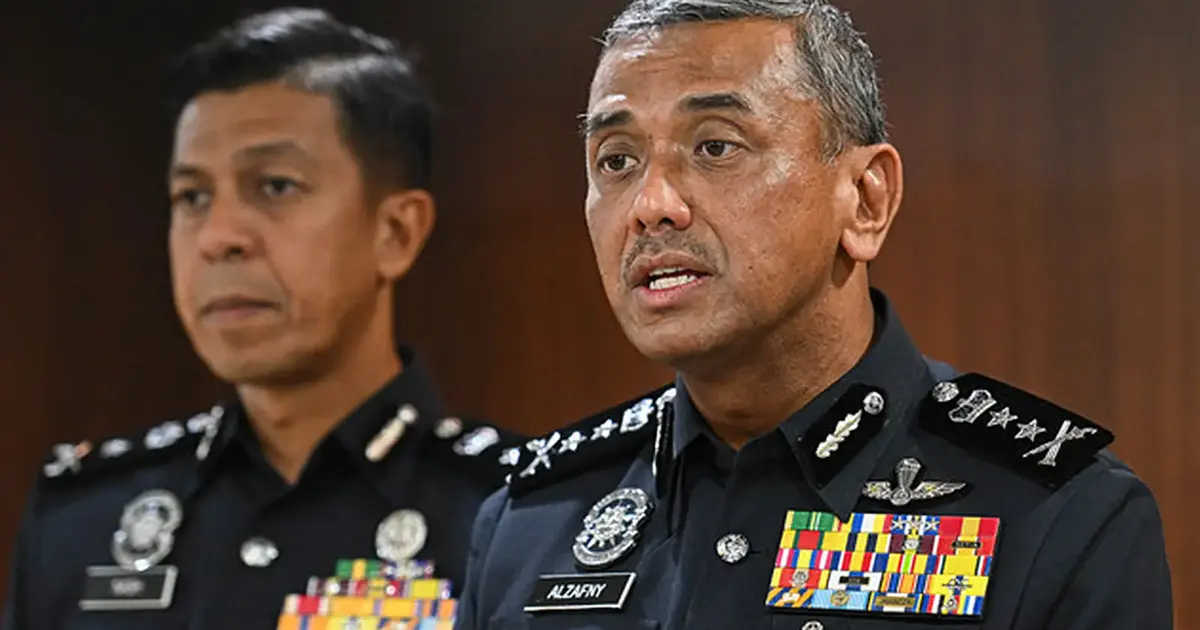
A man has been taken into custody by Negeri Sembilan police following accusations that he published a social media post containing material deemed insulting to the state's royalty. The arrest represents the latest in a series of high-profile cases involving alleged breaches of protocols surrounding the nation's royal institutions, a matter treated with considerable seriousness under Malaysian law.
According to Negeri Sembilan police chief Alzafny Ahmad, the suspect's mobile telephone was seized as part of the investigative process. Such digital devices are typically crucial to establishing the circumstances surrounding online postings, as they can contain evidence of when and from where the content was published, along with any communications relating to its creation or distribution.
The detention underscores the sensitivity with which Malaysian authorities approach matters involving the dignity and honour of royal personages. Under the Sedition Act and related legislation, individuals can face serious consequences for content deemed to insult or ridicule members of the royal families across the country's thirteen states, as well as the Yang di-Pertuan Agong at the federal level. These laws remain actively enforced across the nation, reflecting deep-rooted cultural and constitutional respect for the institution of the monarchy.
Negeri Sembilan, one of the nine states with constitutional monarchies, holds its royal institution in particular regard. The Yamtuan Besar, as the state's ruling sovereign is titled, occupies a central position in the state's governance and cultural identity. Allegations of disrespect directed toward the throne therefore command immediate police attention and investigation. The state's constabulary has consistently demonstrated responsiveness to complaints involving such matters, treating them as priorities within their law enforcement mandate.
The circumstances surrounding the alleged post remain to be fully clarified as the investigation proceeds. Authorities have not yet disclosed the specific nature of the content in question or the platform through which it was published, though social media platforms including Facebook, Instagram, and X remain common vectors for such allegations in recent years. The timing of the arrest and the identity of the complainant have similarly not been disclosed to the public at this juncture.
This case arrives amid broader Malaysian discourse concerning the balance between free expression and respect for institutional symbols. Digital communications have substantially transformed how Malaysians engage in public debate, yet the legal framework governing speech has not fundamentally evolved to reflect this shift. Tensions periodically surface when online commentary crosses what authorities determine to be permissible boundaries, particularly when directed at the monarchy, Islam, or national institutions.
The seizure of the suspect's phone indicates that investigators will likely examine his digital communications, browsing history, and social connections as they build their case. Forensic analysis of mobile devices has become standard procedure in cases involving online content, providing authorities with detailed timelines and contextual information that can establish intent and knowledge. Such investigative techniques are increasingly common across Malaysia and throughout Southeast Asia.
For the broader Malaysian public and those resident in Negeri Sembilan specifically, the arrest serves as a reminder of the legal consequences potentially accompanying uncritical online posting. Despite widespread use of social media for personal expression and political commentary, individuals remain subject to prosecution for content that authorities determine violates laws protecting state symbols and institutions. This reality shapes how many Malaysians calibrate their online discourse, particularly regarding politically or institutionally sensitive matters.
The matter also highlights the ongoing challenge facing Malaysian law enforcement in navigating cyberspace as an investigative terrain. As digital communication becomes increasingly central to how Malaysians interact and express themselves, police forces must develop capacity to investigate online offences while respecting legitimate privacy and freedom of expression interests. The resources dedicated to such investigations reflect how seriously the authorities treat allegations involving royal institutions.
Pending further developments in this case, questions may arise regarding proportionality and the precise language that constitutes an insulting post versus legitimate political or social commentary. Legal scholars and civil rights observers have periodically noted that broad interpretations of statutes protecting royal dignity can potentially chill legitimate public discourse. However, Malaysian courts have consistently upheld the validity of such laws while remaining mindful of distinguishing between genuine insult and protected expression.
The investigation's conclusion will ultimately depend on what evidence the police have gathered and how prosecutors interpret the contested social media post in legal terms. Should the suspect face formal charges, the case would likely proceed through Negeri Sembilan's magistrates and sessions courts, providing greater clarity on how contemporary online speech is evaluated against decades-old statutory provisions. Until then, the arrest remains largely procedural, with the investigation's substantive findings still pending.

