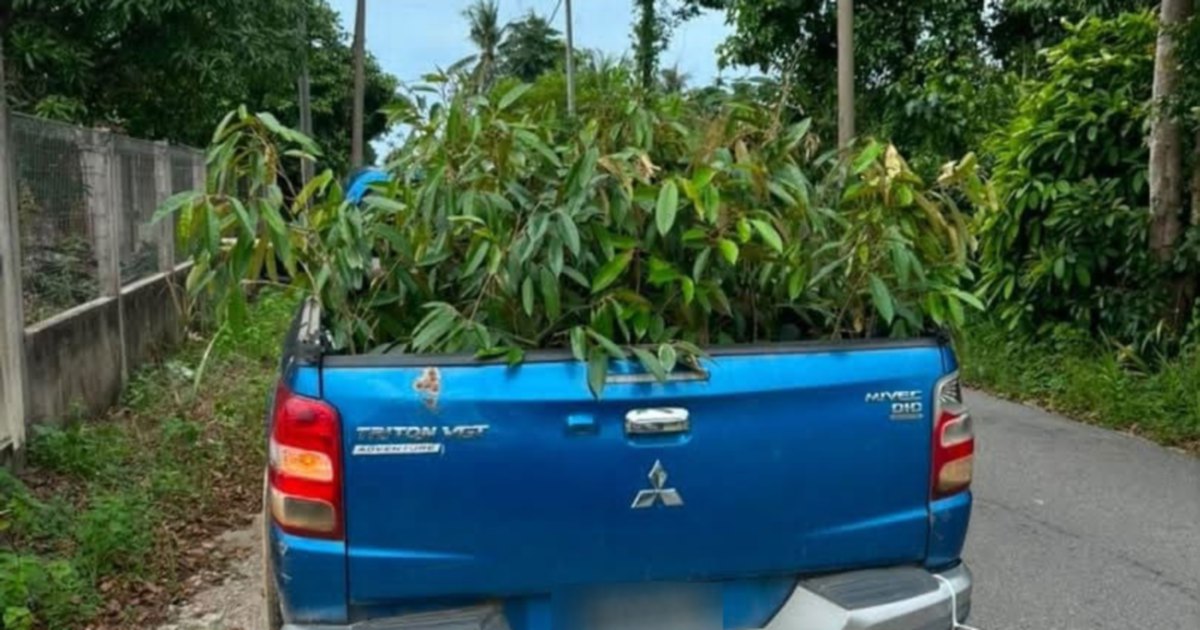
A 55-year-old man faces arrest after the General Operations Force uncovered a shipment of 52 durian saplings allegedly brought across the Thai border illegally during an enforcement operation in Tumpat yesterday. The seizure underscores persistent challenges authorities face combating agricultural smuggling along Malaysia's northern frontier, where valuable horticultural stock regularly crosses international boundaries without proper documentation or customs clearance.
The operation, conducted in the Kelantan district bordering Thailand, represents part of broader efforts by law enforcement to regulate the movement of plant materials across controlled checkpoints. Durian saplings command significant commercial value in Southeast Asia's rapidly growing specialty agriculture sector, making them attractive targets for smugglers seeking to avoid tariffs, phytosanitary certification requirements, and official trade channels. The apprehension suggests organised networks may be exploiting porous border areas to move high-value botanical products destined for local nurseries or regional distributors.
Smuggling of durian propagation material reflects deeper market dynamics shaping the region's horticultural trade. Thailand's long-established durian cultivation industry, particularly in provinces near Malaysia's border, positions it as a natural source for saplings destined for Malaysian growers seeking specific rootstocks or grafted varieties. Malaysian farmers often prefer certain Thai cultivars, creating demand that underground traders attempt to satisfy outside regulated import systems designed to protect local producers and ensure disease-free planting stock reaches consumers and commercial operations.
The illicit agricultural trade carries substantial risks extending beyond simple customs violations. Smuggled plant material bypasses mandatory phytosanitary inspections that screen for pests, pathogens, and diseases capable of devastating domestic agricultural sectors. Malaysia's regulatory framework requires imported durian saplings to undergo strict quarantine protocols and certification procedures ensuring they pose no biosecurity threats to existing plantations. Unvetted imports could potentially introduce fungal infections, insect infestations, or viral pathogens that devastate commercial orchards and threaten food security throughout the region.
Kelantan's position as a primary entry point for contraband agricultural goods reflects its geographical vulnerability and the volume of cross-border movement occurring daily across lesser-monitored sections of the Malaysia-Thailand frontier. While major checkpoints maintain intensive surveillance, smugglers have historically exploited rural crossing points and informal routes where enforcement presence remains limited. The successful interception demonstrates that targeted operations can yield results, though the scale of the seizure suggests authorities may only be intercepting a fraction of total smuggling activity occurring across the state's extended border.
The arrest marks escalating enforcement activity aimed at disrupting agricultural smuggling networks operating with apparent sophistication and organisation. Investigators will likely focus on determining whether the 55-year-old suspect was acting independently or functioning within a larger trafficking operation. Understanding supply chains feeding these networks remains crucial for disrupting organised smuggling syndicates that potentially coordinate multiple shipments across different border regions and commodity types simultaneously.
Durian's economic significance within Malaysia's agricultural sector adds weight to enforcement priorities surrounding its propagation materials. The fruit commands premium pricing in export markets throughout East and Southeast Asia, driving substantial revenue for Malaysian producers. Protecting the quality and disease-free status of domestic planting stock remains essential for maintaining competitive advantages in international markets and ensuring the country's durian industry sustains productivity growth meeting rising regional demand from increasingly affluent consumer bases.
The seizure occurs within broader context of increasing sophistication in agricultural smuggling operations throughout Southeast Asia. Criminal networks recognise that high-value botanical products attract lower detection rates and lighter penalties than narcotic trafficking, making horticultural smuggling an attractive alternative revenue stream. Durian saplings, particularly grafted varieties representing years of selective breeding, carry values justifying substantial smuggling investments, yet law enforcement agencies historically dedicate fewer resources to agricultural interdiction than to narcotics enforcement.
Effective response to durian smuggling requires coordinated effort between Malaysian and Thai authorities, improved intelligence sharing regarding cross-border plant material movements, and enhanced capacity at provincial checkpoints to detect concealed shipments. Cooperation frameworks must address root causes driving demand for smuggled stock, including examining whether legitimate import channels adequately serve farmer requirements or whether regulatory barriers inadvertently encourage illegal alternatives. Strengthening official bilateral trade in durian propagation materials may prove more effective long-term than enforcement alone in reducing smuggling incentives.
Longer-term solutions demand investment in border infrastructure, personnel training in plant identification and disease recognition, and technology deployment enabling rapid detection of concealed botanical materials. Malaysia's commitment to agricultural security alongside broader biosecurity priorities necessitates treating plant material smuggling with seriousness comparable to food safety and quarantine enforcement. The Tumpat seizure, while modest in scale, represents valuable intelligence regarding trafficking patterns and network operations targeting Malaysia's horticultural sector.

