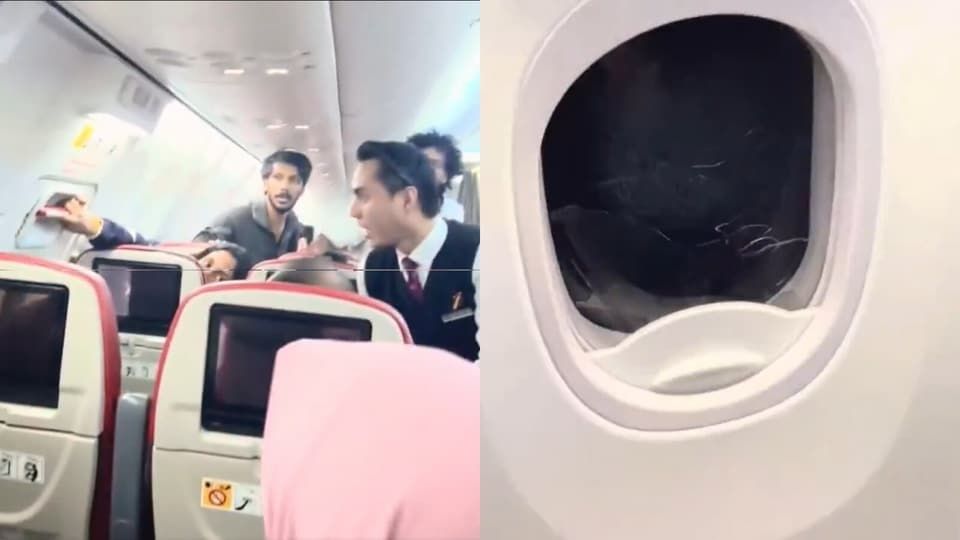
A passenger has been arrested following a disturbing mid-air incident aboard a Batik Air flight traversing the Kuala Lumpur-Kochi route, during which he allegedly attempted to breach the aircraft's emergency exit, unsettling dozens of travellers at altitude. Jamsheer Athanikkal, 36, a resident of Sreemoolanagaram who hails from Palakkad, was taken into custody by Kerala Police upon the Boeing 737's arrival on Thursday morning, with authorities subsequently filing charges reflecting the gravity of the security breach.
The distressing episode unfolded on Batik Air flight OD231 during the late evening hours of Wednesday, specifically between 9:30pm and 11:05pm while the aircraft maintained its cruising altitude en route to Kerala. Witnesses described the moment when Athanikkal, seated in the emergency row, began violently striking the emergency exit's inner window panel with his foot in what appeared to be a deliberate attempt to rupture the protective barrier. His aggressive behaviour extended beyond the physical assault on the aircraft's safety equipment, as he simultaneously directed threats toward fellow passengers and members of the cabin crew, heightening the sense of danger pervading the cabin.
The rapid intervention of alert passengers and trained cabin staff proved instrumental in preventing what could have evolved into a catastrophic scenario at 30,000 feet. Eyewitness accounts indicate that the majority of passengers were sleeping during the late-night service when the disturbance erupted, with many roused suddenly by the unmistakable sound of pressurised air rushing through the fuselage following the damaged window panel. Despite the compromised inner window, the structural design of modern aircraft and the cabin's pressurisation system ultimately safeguarded against the door itself being opened—a critical safety feature that prevented decompression and potential loss of life.
Matty Mathew, a fellow traveller aboard the flight, provided eyewitness documentation through social media, posting video evidence and describing the terrifying minutes as crew members and passengers jointly restrained the disruptive individual. In his account, Mathew emphasised the psychological impact of the incident, noting that the experience proved "extremely frightening" despite the ultimate safety outcome. His observations regarding the cabin crew's swift response underscore the importance of rigorous training protocols and the readiness of aviation personnel to respond to security threats with precision and courage under pressure.
The incident has prompted formal legal proceedings, with the Kochi airport's Batik Air security chief lodging a formal complaint that triggered investigation by local authorities. Athanikkal faces charges under multiple statutes reflecting the seriousness of his alleged conduct. Under Section 351(3) of the Bharatiya Nyaya Sanhita, he has been booked for criminal intimidation, while Section 11A of the Aircraft Act specifically addresses violations of safety and security directives issued for aviation operations. Additionally, charges under Section 118(e) of the Kerala Police Act target acts considered dangerous to public safety, indicating that investigators are pursuing the matter through comprehensive legal channels.
This incident contributes to a troubling pattern of aviation security concerns in South Asian airspace. Merely two days prior to this emergency exit breach, the region witnessed another serious mid-air emergency when Air India flight AI2379, departing from Phuket in Thailand bound for Delhi, experienced a sudden and alarming loss of altitude during its cruise phase. The flight, carrying 137 passengers alongside eight crew members, managed to descend safely to Delhi's airport despite the frightening circumstances that unfolded at elevation.
The Air India incident resulted in multiple hospitalisations, with 13 passengers and four crew members requiring medical attention upon landing. The airline's response emphasised its commitment to passenger welfare, with company representatives maintaining presence at hospitals and providing ongoing support to affected individuals and their families. The aircraft involved was identified as a seven-year-old Airbus model, and Air India indicated that it had promptly notified relevant aviation regulators, the aircraft's manufacturer, and cooperated fully with official investigation procedures.
These consecutive incidents raise significant questions about aviation security protocols across regional carriers and the effectiveness of pre-flight screening measures. The Kuala Lumpur-Kochi route traverses one of the world's busiest commercial corridors, and such episodes have the potential to undermine passenger confidence in regional air travel safety systems. Airlines operating across Southeast Asia and South Asia face mounting pressure to demonstrate robust security measures while maintaining the passenger experience that modern travellers expect.
For Malaysian travellers and those utilising the region's extensive air network, these occurrences serve as reminders of the intricate systems designed to maintain safety at altitude. Aircraft are engineered with multiple redundancies specifically to prevent scenarios where individual passenger actions could compromise the integrity of the aircraft or endanger those aboard. The emergency exit system's design, incorporating both mechanical locks and pressure-differential protections, exemplifies how modern aviation prioritises passenger protection through layered safety mechanisms.
The arrests and ongoing investigations signal that regional authorities are treating aviation security breaches with appropriate seriousness and legal rigour. The charges pursued against Athanikkal suggest that jurisdictions view such incidents not merely as passenger disturbances but as potential threats to national aviation safety infrastructure. This approach aligns with international aviation security standards and sends a clear deterrent message regarding the consequences of attempting to compromise aircraft safety systems.
Batik Air, Malaysia's largest low-cost carrier operating this particular route, has not issued additional public statements regarding operational changes or enhanced security measures in the aftermath of the incident. Industry observers will likely scrutinise whether the airline implements supplementary protocols for passengers seated in emergency rows, where proximity to critical safety equipment can create opportunities for such disruptions. Airlines throughout Southeast Asia continuously balance accessibility for passengers with security requirements designed to protect everyone aboard.

