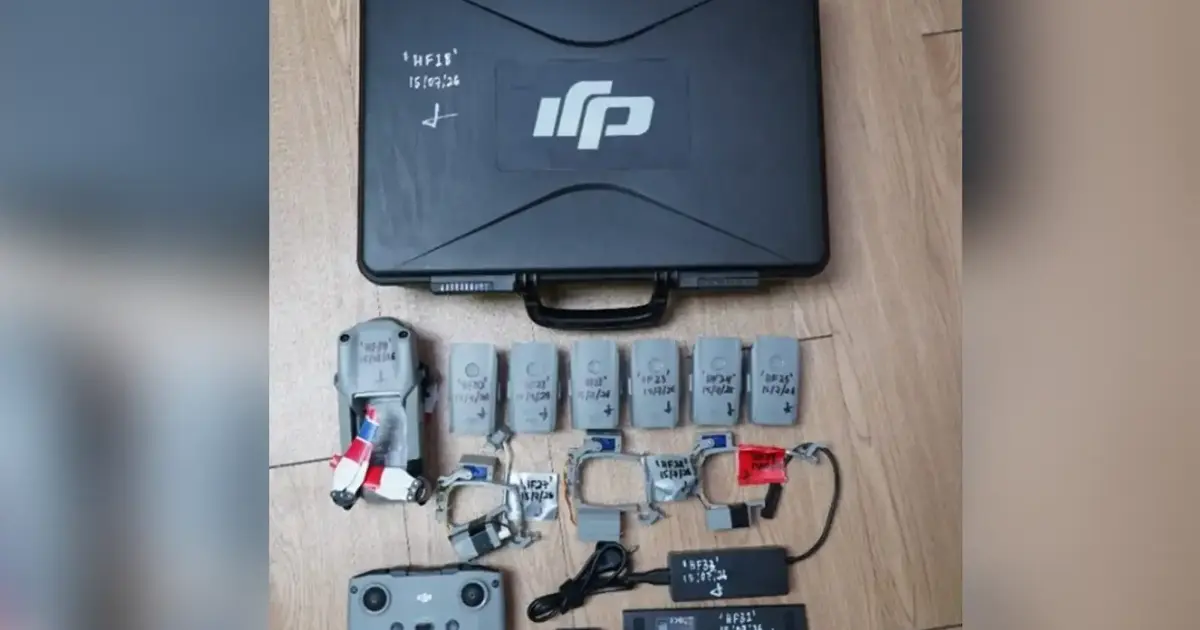
The Melaka Police Department has made an arrest in connection with an attempted smuggling operation at the state's prison facility, where a man and woman were apprehended while trying to deliver contraband tobacco using an unmanned aerial vehicle. The incident highlights a growing challenge for Malaysian correctional authorities, who are increasingly confronted with creative methods employed by those seeking to supply prohibited items to detainees. According to the Melaka police chief, the operation bore hallmarks of a coordinated effort, suggesting involvement from at least one individual already housed within the facility.
The use of drone technology to circumvent prison security represents a significant evolution in smuggling tactics observed across Malaysian detention centres. This method offers would-be smugglers considerable advantages over traditional approaches, enabling them to bypass physical barriers and perimeter controls that have long formed the backbone of prison security infrastructure. The low altitude and small size of such devices make them difficult to detect through conventional means, particularly during hours of reduced visibility or when operations coincide with shift changes. For correctional administrators across the country, the incident underscores the necessity for updated surveillance and interdiction capabilities.
Investigations by the Melaka Police Department have established that the smuggling attempt was not an isolated act of individual initiative but rather part of a broader conspiracy. The suspected involvement of an inmate in orchestrating or facilitating the operation from within prison walls is particularly concerning, as it demonstrates how incarcerated individuals can continue to exercise influence and coordinate external activities. This dimension of the case raises questions about communication channels within the facility and the effectiveness of current monitoring systems designed to prevent precisely such coordination between prisoners and outside accomplices.
Tobacco smuggling into prisons has become an increasingly prevalent problem in Malaysia, driven by the substantial price differential between contraband and legally available products, combined with restrictions on tobacco sales within correctional facilities. Inmates with financial resources or external connections can accumulate considerable purchasing power by acquiring smuggled tobacco and distributing it through prison economies. The profits generated from such operations can fund other illicit activities within the facility, creating a secondary market economy that complicates management and security operations. Prison authorities have noted that tobacco-related contraband often serves as currency in prison underground economies, making its control essential to maintaining order.
The apprehension in Melaka reflects broader regional law enforcement responses to prison security challenges. Neighbouring jurisdictions have similarly grappled with drone-based smuggling attempts, and international correctional agencies have begun issuing guidance on counter-drone technologies and detection protocols. The relative affordability and ease of acquisition of commercial drone systems mean that such attempts are likely to increase unless detection and interdiction measures are substantially upgraded. Several Malaysian states have already begun exploring technological solutions, including drone detection systems and radio frequency jamming capabilities, though implementation remains uneven across the country's prison network.
From a correctional management perspective, the incident raises troubling questions about internal security arrangements at the Melaka prison facility. The fact that an inmate could organise an external smuggling operation suggests either gaps in communication monitoring systems or insufficient supervision of prisoner conduct. Modern prison management relies heavily on detection of contraband communications, whether through phone calls, messages, or visits, yet inmates continue finding methods to circumvent such systems. The investigation's findings regarding the nature of coordination between the detained couple and their alleged contact within the prison will likely inform recommendations for enhanced monitoring protocols across Malaysia's correctional estate.
The timing and execution of the attempted delivery may offer insights into how such operations are typically conducted and coordinated. Intelligence gathered from this case could assist other Malaysian law enforcement agencies and prison authorities in identifying similar plots before they reach fruition. Regional intelligence sharing, particularly through ASEAN channels and bilateral arrangements with neighbouring countries, has become increasingly important as smuggling networks develop cross-border dimensions. The knowledge that drone technology is being actively deployed for contraband delivery enables authorities to prioritise counter-measures and allocate resources more strategically.
The broader implications for Malaysia's criminal justice system extend beyond security concerns within prison walls. The case reflects the tension between individual liberty and collective security, particularly when external associates seek to assist incarcerated individuals in circumventing institutional rules. It also highlights how technological advancement creates novel challenges for law enforcement and corrections agencies operating within existing legal and procedural frameworks. Malaysian legislators and corrections officials may need to consider whether current legislation adequately addresses drone-based smuggling and whether new regulatory measures are required.
For correctional staff working daily within Malaysian prisons, incidents such as this underscore the evolving nature of security threats they must anticipate and counter. Unlike traditional contraband items that can be intercepted at entry points or detected through physical searches, drone deliveries require different detection strategies and responses. Training requirements for prison security personnel will need to expand to encompass identification and reporting of drone activities in proximity to facilities. The psychological impact on corrections officers—knowing that new technological vectors for rule violation are emerging—also merits consideration in discussions about institutional safety and staff wellbeing.
The Melaka case will likely prompt a systematic review of security practices at Malaysian correctional facilities nationwide. As investigation proceeds and more details emerge regarding the operation's scope and any institutional involvement, policymakers may accelerate implementation of technological countermeasures and procedural reforms. The question of whether this represents an isolated incident or a broader trend remains under scrutiny, with law enforcement agencies monitoring intelligence channels for evidence of similar smuggling networks or coordinated efforts across multiple facilities.

