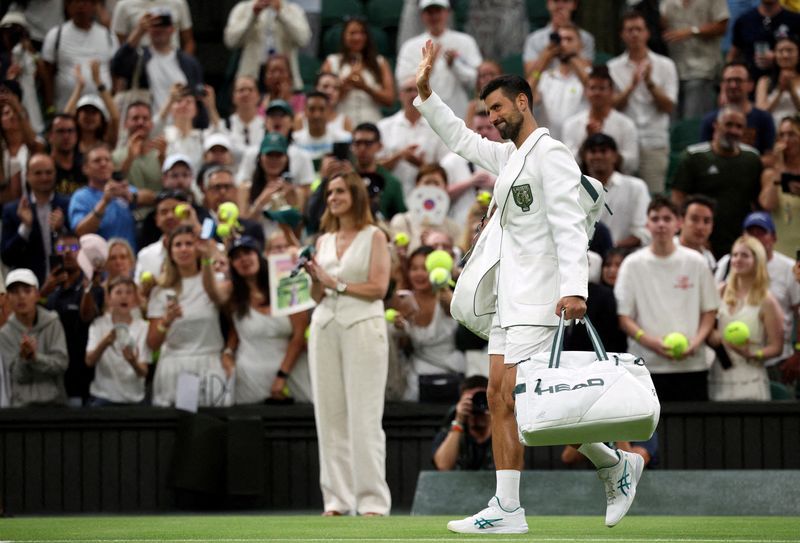
The tradition of all-white attire at Wimbledon has long been seen as constraining, yet this year's Championships have witnessed an unexpected fashion renaissance driven equally by men and women. Beyond Naomi Osaka's headline-grabbing "Kill Bill"-inspired kimono entrance, male competitors have discovered that the grass courts of the All England Club offer a legitimate platform for sartorial creativity. World number one Novak Djokovic has commanded attention in a personalised Lacoste blazer paired with shorts, while sixth seed Taylor Fritz has strode onto court in a tailored Hugo Boss ensemble featuring a white cotton jacket, complementary trousers, and a white silk scarf. These calculated style choices represent a deliberate shift in how male athletes approach one of tennis's most iconic tournaments.
Industry observers point to a fundamental change in athlete branding philosophy. Joelle Michaeloff, chief creative officer at Wilson sports brand, characterises the current moment as unprecedented. She notes that male players are now actively leveraging their entrance moments as vehicles for self-expression, mirroring the approach long established by their female counterparts. This development reflects broader cultural shifts within professional tennis, where players increasingly view their public presentation as integral to their personal brand. The sponsorship ecosystem has evolved accordingly, with major brands recognising that a player's walkout attire generates substantial social media engagement and press coverage before a single point is played.
Wimbledon's unique position within the tennis calendar amplifies the significance of these fashion moments. As the sole Grand Slam enforcing an all-white dress code, it paradoxically creates a more controlled aesthetic canvas than the colourful exhibitions permitted at the Australian Open, French Open, and US Open. This restriction, rather than limiting creativity, has historically produced some of tennis's most memorable sartorial statements. Roger Federer's iconic jacket from 2007 and Ted Tinling's revolutionary white bodysuit from 1985 remain touchstones in sports fashion history. Michaeloff observes that contemporary players are deliberately channelling these historical precedents, studying Wimbledon's fashion archives and seeking to contribute their own memorable moments to this prestigious legacy.
Yet with elevated visibility comes tangible risk, particularly for male players less accustomed to fashion scrutiny. Fritz acknowledged this tension frankly, stating that a player cannot afford to debut an eye-catching entrance outfit only to suffer an early tournament exit. The optical dissonance of departing the court in the first round after such a carefully constructed entrance would invite unflattering commentary. Fortunately for Fritz, his sartorial gamble has paid dividends through the tournament's early rounds. His Hugo Boss suit features trousers with detachable side seams, allowing him to remove them before play begins, a practical design solution that prioritises both aesthetic impact during the walk-on and functional comfort during competition. This balance between style and substance represents the evolution of athlete-sponsor collaboration in contemporary professional sport.
The commercialisation of entrance wear reflects shifting dynamics between athletes and their brand partners. Nike and Osaka's team strategically disseminated video and photographic content of her kimono-inspired arrival across social media platforms ahead of her opening match, treating the entrance as a discrete marketing asset. Similarly, Hugo Boss actively promoted Fritz's tailored ensemble through its own promotional channels. Marta Kostyuk collaborated with Wilson on a specially designed version of "The Marta Dress" for her Wimbledon appearance, demonstrating how female players have successfully established walkout wear as a formal component of sponsorship agreements. Michaeloff suggests this represents a fundamental reconceptualisation of athlete-brand relationships, where the partnership extends beyond equipment and apparel to encompass curated personal presentation and storytelling.
Some players have become increasingly invested in the design process itself, moving beyond passive acceptance of sponsor-provided attire to active creative collaboration. Karen Khachanov, the Russian player who has navigated to the third round, exemplifies this new breed of athlete-designer engaged with every aspect of the creative process, from fabric selection and colour theory to structural elements such as neckline design and garment fit. This hands-on approach reflects a broader recognition among players that entrance wear must satisfy dual imperatives: it must communicate personality and aesthetic vision while remaining functionally compatible with the demands of professional tennis. The garment serves its purpose only if it enhances rather than constrains performance.
Not every fashion aspiration clears Wimbledon's notoriously strict regulatory framework. Italy's Matteo Berrettini, a former top-ten player, encountered official resistance when submitting his desired entrance outfit for approval. Championship officials rejected his design, citing insufficient whiteness—a reminder that even as fashion expression has expanded, the tournament maintains authoritarian control over what constitutes acceptable dress. This regulatory gatekeeping occasionally frustrates player and sponsor ambitions, yet it also preserves Wimbledon's distinctive identity and maintains the visual cohesion that distinguishes it from other Grand Slams.
Naomi Osaka herself has emerged as the tour's most consistent fashion innovator, elevating entrance wear to the level of major tournament storyline. Her earlier appearances at the Australian Open featured a jellyfish-inspired design, while the French Open witnessed her successive iterations: a black Kevin Germanier skirt followed by a layered yellow-brown and gold Nike dress inspired by the Eiffel Tower's nocturnal luminescence. At Wimbledon, she has unveiled yet another variation of her signature kimono aesthetic, each appearance representing a coordinated collaboration between athlete, designer, and major brand. Eleanor Thomas, collections lead at the All England Lawn Tennis Club, situates Osaka's contributions within the museum's curatorial framework, identifying her 2024 fashion choices as definitional "iconic moment" in Wimbledon history—the designation typically reserved for transformative precedents rather than passing trends.
The phenomenon extends beyond mere personal expression or commercial opportunism; it reflects democratisation of fashion within professional tennis. Historically, sartorial innovation belonged primarily to the sport's elite—the Federers and Borg-generation icons whose status granted them latitude for unconventional presentation. Contemporary sponsorship structures and social media dynamics have redistributed creative agency more broadly across the player roster. Mid-ranked competitors and emerging talents can now leverage entrance wear as a mechanism for personality differentiation and audience engagement. This represents a meaningful shift from an era when entrance onto court was simply functional—a transition from preparation space to competition arena—into a staged performance that carries independent cultural and commercial weight.
Michaelaoff characterises the underlying dynamic as fundamentally about personality and style articulation across the full spectrum of a player's public existence. The narrative extends beyond match performance, equipment choices, and on-court demeanour into the realm of sartorial self-fashioning. For sponsors, this expansion of the athlete-brand story offers opportunity to communicate values, aesthetic sensibilities, and aspirational lifestyle positioning. For players, it provides agency over personal presentation and control over the broader narrative surrounding their participation in major tournaments. For audiences and the tennis industry more broadly, it transforms the solemnity and tradition-bound aesthetic of Wimbledon into a contemporary fashion event where male and female athletes participate equally in creating memorable cultural moments.
Looking forward, Fritz predicted that male participation in high-fashion entrances would continue expanding, noting that women players have already established walkout wear as a legitimate production element. The barrier to broader male participation appears to be diminishing—no longer constrained by outdated notions of masculinity or sporting propriety, contemporary male athletes view fashion expression as compatible with serious athletic endeavour. The sponsorship ecosystem has invested substantially in these moments, suggesting they will proliferate rather than fade as a tournament phenomenon. Wimbledon's traditional aesthetic remains intact, yet its role has evolved from constraint on self-expression into a paradoxical framework within which creativity and personality flourish, transforming the grass courts into simultaneously a sporting venue and an international fashion stage.

