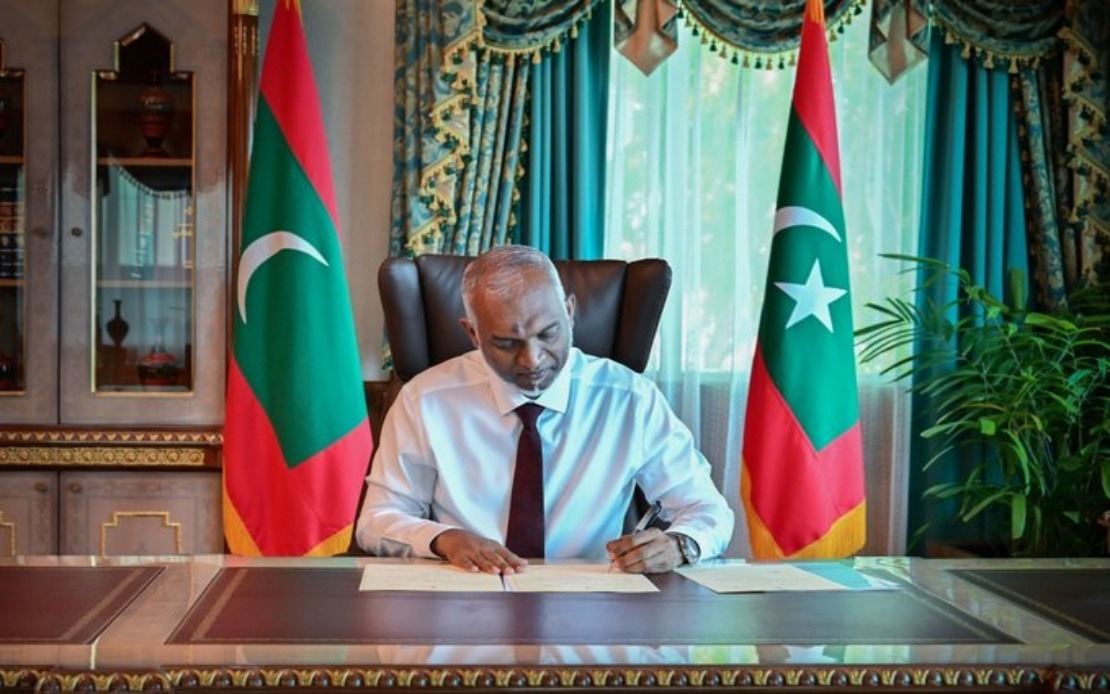
Maldives President Mohamed Muizzu has used Malaysia's National Day observance as an occasion to underscore the enduring partnership between the two Indian Ocean nations, sending formal greetings to His Majesty Sultan Ibrahim, King of Malaysia, and Prime Minister Datuk Seri Anwar Ibrahim on Monday. The presidential message, issued through the Maldives presidency, represents a deliberate diplomatic gesture at a time when regional relationships are increasingly central to South and Southeast Asian stability.
In his missive to the Malaysian monarch, Muizzu reflected on the trajectory of bilateral engagement, characterising the relationship as rooted in five decades of steadfast cooperation. The president emphasised that this partnership rests on foundational pillars of mutual respect and shared commitment to development, suggesting a relationship that extends beyond ceremonial exchange to substantive collaborative endeavours. By invoking the historical depth of ties, Muizzu positioned the Maldives-Malaysia relationship within a broader context of regional integration and cultural affinity.
The messaging to Prime Minister Anwar Ibrahim struck a notably warmer tone, with Muizzu describing the connection between the two nations as "brotherly." This language choice is significant for Malaysian audiences, as it reflects how island nations in the Indian Ocean view their relationship with Malaysia—not merely as diplomatic partners, but as kindred societies sharing common values and interests. The Maldives president specifically highlighted the role of high-level political engagement and citizen-to-citizen connections in strengthening these ties, recognising that sustained diplomacy at multiple levels remains essential for deepening integration.
According to the presidency statement, Muizzu expressed optimism that the friendship would flourish and expand into new domains. Critically, the president flagged economic engagement as a priority area, suggesting both nations view the relationship through a development lens. For Malaysian observers, this focus on trade and commercial opportunities reflects how island economies increasingly seek deeper integration with larger regional economies to diversify revenue streams and build resilience against external shocks.
The regional dimension of Malaysia's National Day greetings extended beyond the Maldives, with Pakistan and India also sending formal congratulations. Pakistan's Ministry of Foreign Affairs, speaking through the social media platform X, conveyed warm wishes to Malaysia's government and people, framing the occasion as an opportunity to reaffirm bonds with what it termed a "brotherly" nation. This language, consistent across multiple regional capitals, underscores how Pakistan views its relationship with Malaysia within a broader Islamic world context.
India's response, delivered by Minister of External Affairs Subrahmanyam Jaishankar, carried additional strategic weight. Jaishankar's greeting to his Malaysian counterpart, Foreign Minister Datuk Seri Mohamad Hasan, included explicit reference to advancing the Comprehensive Strategic Partnership between New Delhi and Kuala Lumpur. This framing transforms a ceremonial National Day message into a statement of intent regarding bilateral cooperation, signalling India's commitment to deepening engagement with Malaysia across multiple sectors including defence, security, trade, and cultural exchange.
For Malaysian policymakers and observers, these coordinated greetings from three significant regional and global powers reveal how Malaysia's National Day has become a platform for reaffirming diplomatic relationships. The convergence of messages from the Maldives, Pakistan, and India demonstrates Malaysia's centrality to Indian Ocean geopolitics and its role as a bridge between South Asian and Southeast Asian interests. The emphasis on friendship and cooperation in each message reflects a conscious diplomatic strategy to maintain amicable relations during a period of global geopolitical complexity.
The Maldives-Malaysia relationship deserves particular attention given the strategic location of both nations. The Maldives, positioned astride critical shipping lanes connecting Europe, the Middle East, and Asia, holds significance for Malaysian regional interests. Similarly, Malaysia's presence in Southeast Asia and its role within ASEAN make it an important partner for the island nation in advancing shared development agendas and regional prosperity initiatives. The presidential message thus carries implications beyond bilateral courtesy, touching on maritime security, trade facilitation, and regional stability.
The deliberate invocation of "five decades" of relations in the presidential message suggests both nations have consciously periodised their engagement, likely marking from the early 1970s when both countries were consolidating their independent roles in global affairs. This historical framing provides continuity to the relationship and demonstrates institutional memory in diplomatic practice. For Malaysian audiences interested in foreign policy, such temporal markers indicate mature partnerships characterised by accumulated goodwill and established protocols.
Looking forward, the emphasis on people-to-people exchanges in Muizzu's message to Prime Minister Anwar points to a strategic recognition that sustainable bilateral relationships require cultivation beyond governmental channels. Educational exchanges, tourism, and cultural programmes between Malaysia and the Maldives can strengthen societal connections and build grassroots support for continued cooperation. This people-centric approach to diplomacy reflects contemporary understanding that lasting partnerships depend on multiple stakeholder engagement.
The convergence of National Day greetings from multiple regional powers also underscores Malaysia's diplomatic standing and its perceived importance to various stakeholders. Whether viewed from New Delhi's strategic perspective, Islamabad's civilisational approach, or Male's island-nation concerns, Malaysia emerges as a valued partner warranting formal and prominent acknowledgment. This diplomatic attention, though ceremonial in nature, reinforces Malaysia's influence and relevance within competing regional and global frameworks, suggesting the nation's continued centrality to Asian affairs.

