Parliament's upper chamber has advanced a legislative measure designed to provide transitional support for witnesses exiting Malaysia's protection programme, marking a significant shift in how the government manages the departure of individuals from one of the country's most sensitive security operations. The Witness Protection (Amendment) Bill 2026, which cleared the Dewan Rakyat on July 14, now proceeds with backing from the government's law and institutional reform portfolio as it addresses a longstanding vulnerability in the existing framework.
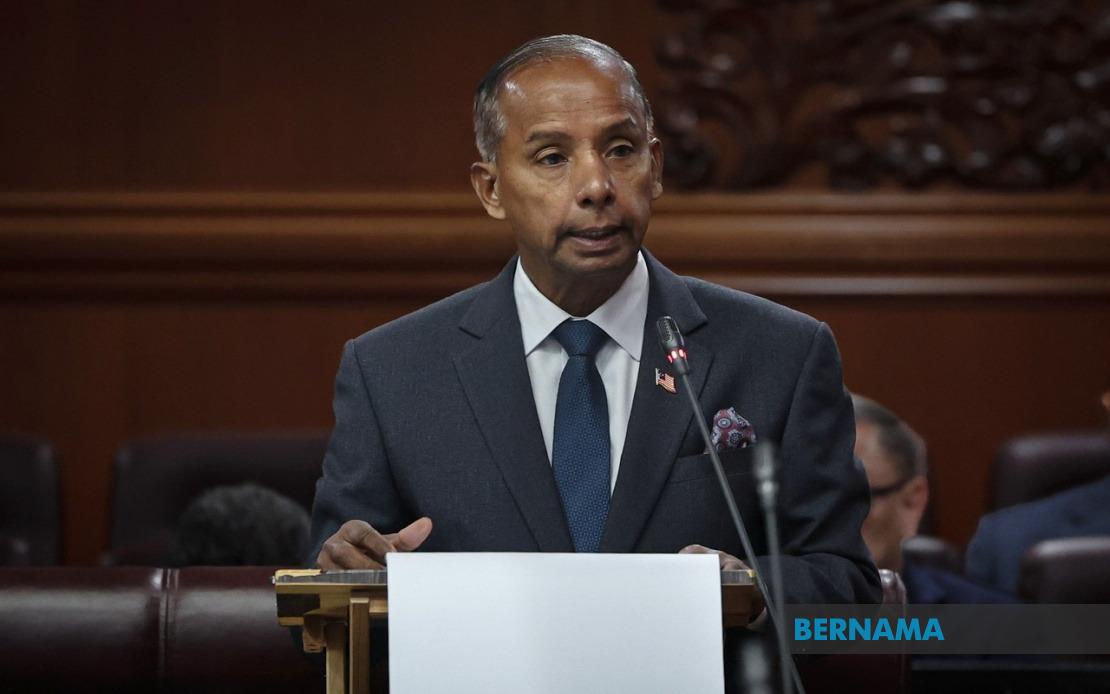
Deputy Minister M. Kulasegaran outlined the Bill's central innovation during the second reading in the Dewan Negara, explaining that participants will receive one-off assistance packages upon the Attorney General's decision to terminate their protection status. This financial intervention is deliberately circumscribed—designed to bridge the immediate period following exit rather than establish ongoing dependency on state support. The assistance encompasses housing expenses, transportation costs associated with relocating from secure shelters to civilian residences, and educational transitions for dependent children, representing a practical acknowledgment of the practical obstacles witnesses face when reintegrating into ordinary society.
The existing legislative framework, established under the Witness Protection Act 2009, has long operated under a fundamental limitation: it provides comprehensive support exclusively during the active protection phase. Once the Attorney General determines that protection is no longer necessary—typically because criminal proceedings have concluded or security threats have substantially diminished—participants have faced an abrupt withdrawal of all institutional assistance. This structural gap has created genuine hardship for individuals whose cooperation with law enforcement has often cost them their previous employment, housing, and community connections, leaving them vulnerable precisely when they are attempting to rebuild civilian lives.
The Bill's provisions expand the authority granted to the director-general of the Protection Division within the Prime Minister's Department, conferring discretionary power to determine what constitutes "necessary and reasonable" protection and assistance in individual circumstances. This language signals an intention to move beyond formulaic responses, acknowledging that witness circumstances vary considerably. A person exiting protection after testifying in a corruption investigation may face entirely different reintegration challenges than someone whose testimony concerned organised crime or violent offences, and the legislative framework now contemplates such variations.
For Malaysia's institutional framework, this amendment represents a maturation of witness protection thinking that aligns with international best practices in jurisdictions where such programmes have operated for several decades. Countries including the United States, United Kingdom, and Australia have long recognised that inadequate exit support undermines the entire protective enterprise—witnesses may become reluctant to participate in prosecutions if they fear destabilisation upon emergence from the programme. By contrast, demonstrable commitment to managed transitions strengthens the credibility and attractiveness of the programme itself.
The Bill's passage also reflects broader prosecutorial strategy considerations. Malaysia has invested substantially in building corruption cases against high-profile figures in recent years, many of which depend critically on witness testimony from individuals with insider knowledge of complex financial transactions. The Witness Protection Programme has proven invaluable in securing such cooperation, but only when potential witnesses believe their departure from the programme will not leave them economically stranded. The amendment essentially fortifies this institutional tool by removing a significant deterrent to participation.
However, the limitation to one-off rather than recurring assistance warrants scrutiny from a practical perspective. While the legislative language emphasises that support is meant to facilitate "safe" transitions, genuine security concerns may necessitate longer-term support in certain cases. A witness to serious organised crime, for instance, might reasonably require extended assistance beyond the immediate post-exit period if ongoing threats persist. The Bill's framework appears to reserve such determinations to administrative discretion, which provides flexibility but potentially creates uncertainty for participants navigating exit negotiations with the Protection Division.
The timing of the Bill's advancement through Parliament also occurs within Malaysia's broader modernisation of its law enforcement and prosecutorial capabilities. Recent high-profile cases have demonstrated the critical importance of witness protection infrastructure in achieving successful prosecutions of complex financial crimes and organised criminal activity. By reinforcing the programme's capacity to manage exits responsibly, the government signals sustained commitment to building the institutional capabilities necessary for prosecuting sophisticated crimes that demand insider testimony.
For witnesses themselves, the amendment provides tangible reassurance that cooperation with law enforcement carries defined endpoints rather than open-ended uncertainty. The explicit authorisation for housing and relocation assistance removes ambiguity about whether such costs constitute permissible programme expenses. Educational support for children addresses a particular vulnerability, as families with school-age dependents often face the most complicated transitions, with children's educational continuity presenting genuine hardship if interrupted by forced relocations following programme exit.
Regionally, Malaysia's refinement of witness protection law may influence how Southeast Asian jurisdictions approach similar programmes. Several countries in the region maintain witness protection operations with similar structural limitations, and Malaysia's legislative solution could serve as a model for addressing comparable gaps. As regional prosecutorial cooperation intensifies—particularly in cases involving transnational crime—harmonisation of witness protection frameworks becomes increasingly relevant for cross-border investigations requiring testimony from protected witnesses.
The Bill's passage also underscores the Prime Minister's Department's expanded role in justice sector modernisation beyond its traditional administrative functions. The vesting of discretionary authority over exit assistance packages in the Protection Division director-general represents a meaningful concentration of decision-making power regarding vulnerable individuals, one that will require careful institutional oversight to ensure consistency and fairness in how assistance determinations are made across different cases and circumstances.

