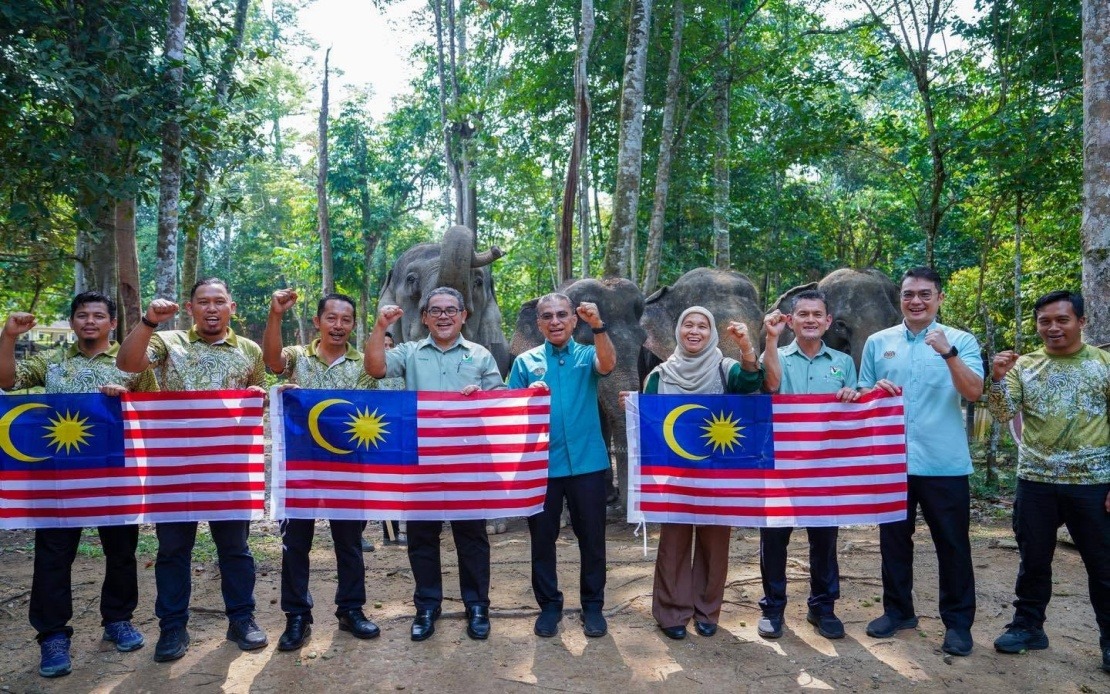
Malaysia's approach to managing the escalating friction between humans and wildlife is entering a new phase, with the Ministry of Natural Resources and Environmental Sustainability committing itself to formulating innovative solutions that respect both animal welfare and community safety. Deputy Minister Syed Ibrahim Syed Noh outlined this commitment at an event in Tangkak, emphasising that the challenge of keeping wild animals, especially elephants, from clashing with human settlements has intensified and demands urgent, creative intervention.
The problem has become particularly acute as Malaysia experiences rapid urbanisation and agricultural expansion. As new residential areas, farming operations, and infrastructure projects consume forested landscapes, wildlife populations find their traditional ranges shrinking and fragmented. Elephants, which require vast territories to sustain their herds, increasingly venture into areas where they encounter human activity—sometimes resulting in property damage, crop destruction, and occasionally injury or death to both animals and people. This phenomenon is not unique to Malaysia; across Southeast Asia, similar pressures are forcing wildlife into ever-closer contact with human populations, creating a crisis that many governments struggle to address effectively.
The ministry's stance reflects a nuanced understanding of the problem. Rather than adopting purely reactive measures such as culling or aggressive relocation, Perhilitan—the Department of Wildlife and National Parks—emphasises continuous monitoring and habitat preservation. The deputy minister stressed that the goal is not indifference to conflicts but rather a commitment to allowing wild animals to remain in their natural environments where they can thrive. This philosophy recognises that elephants and other wildlife possess complex behavioural patterns that cannot be easily overridden through confinement or forced displacement.
The case of Sulong Chalil, an adult male elephant that was relocated to Gerik in Perak but trekked several hundred kilometres back to Gua Musang in Kelantan despite suffering from a leg injury, illustrates the profound attachment these animals have to their ancestral ranges. The incident, which drew international attention through viral video footage, demonstrates that relocation alone—a strategy long favoured by some wildlife agencies—may prove counterproductive if it conflicts with the animal's deep territorial and social ties. Perhilitan's decision to monitor Sulong rather than re-capture him highlights an evolving philosophy that prioritises the animal's wellbeing and natural behaviour over administrative convenience.
The broader strategy being developed by the ministry and Perhilitan involves collaboration with multiple stakeholders, suggesting recognition that no single institution can solve this challenge in isolation. By engaging various partners—likely including state governments, local communities, environmental organisations, and development authorities—the effort aims to create a comprehensive framework that addresses root causes rather than merely managing symptoms. This collaborative approach could yield solutions such as wildlife corridors connecting fragmented habitats, buffer zones between forests and settlements, and community-based early warning systems that allow both people and animals to coexist more peacefully.
For Malaysian society, the implications of this initiative extend beyond wildlife management. The rising frequency of human-wildlife conflicts reflects broader environmental pressures created by development and climate change. How Malaysia addresses this challenge will shape the country's approach to sustainable development and biodiversity conservation for decades to come. A successful model could serve as a template for other Southeast Asian nations facing identical pressures, potentially positioning Malaysia as a regional leader in innovative wildlife management.
The challenge also carries economic dimensions. Tourism revenue from wildlife viewing, particularly elephants in their natural state, contributes significantly to Malaysia's economy. Communities living alongside wildlife sometimes suffer economic losses from animal damage, yet tourism development centred on wildlife viewing can provide alternative livelihoods. Balancing these competing economic interests requires sophisticated policy frameworks that the ministry appears to be attempting to construct.
Syed Ibrahim's comments also highlight the emotional and ethical dimensions that now accompany wildlife management discussions in Malaysia. The public's affection for Sulong Chalil and support for his return to familiar territory reflect changing attitudes toward wildlife. Malaysians increasingly view their endemic species not merely as problems to be managed but as national treasures deserving protection and respect. This shift in public sentiment creates both opportunities and pressures for policymakers, who must respond to heightened public interest while implementing practical solutions.
The commitment to developing new methodologies suggests that existing approaches have proven inadequate. Traditional wildlife management focused on limiting human access to protected areas or removing problem animals has not arrested the rise in conflicts. The ministry's acknowledgment that fresh thinking is required indicates administrative humility and recognition of complexity. Whether such new methods emerge quickly enough to prevent further deterioration in human-wildlife relations remains uncertain, particularly given the pace of development in Malaysia.
Implementation will prove crucial. Well-designed policies mean little without adequate funding, trained personnel, and genuine commitment to enforcement. Perhilitan has demonstrated dedication to wildlife protection, but the agency operates with resource constraints that sometimes limit its effectiveness. Scaling up new conflict-reduction methods across Malaysia's diverse landscapes and varying development pressures will require sustained political will and substantial investment.
The situation also intersects with international conservation efforts. Malaysia is home to endangered elephant populations that concern global conservation bodies. International agreements and partnerships may support domestic efforts to reduce human-wildlife conflicts, while simultaneously raising international expectations for Malaysia's wildlife protection standards. This external dimension adds another layer of complexity to the ministry's work.
As Malaysia progresses, the manner in which it resolves human-wildlife conflicts will reflect its broader values regarding environmental stewardship, economic development, and animal welfare. The ministry's commitment to finding new solutions suggests movement toward recognising that conservation and development, rather than being inherently opposed, must be integrated thoughtfully. Success would demonstrate that rapid economic growth need not come at the cost of eliminating the wildlife that defines Malaysia's natural heritage and contributes to its regional distinctiveness.

