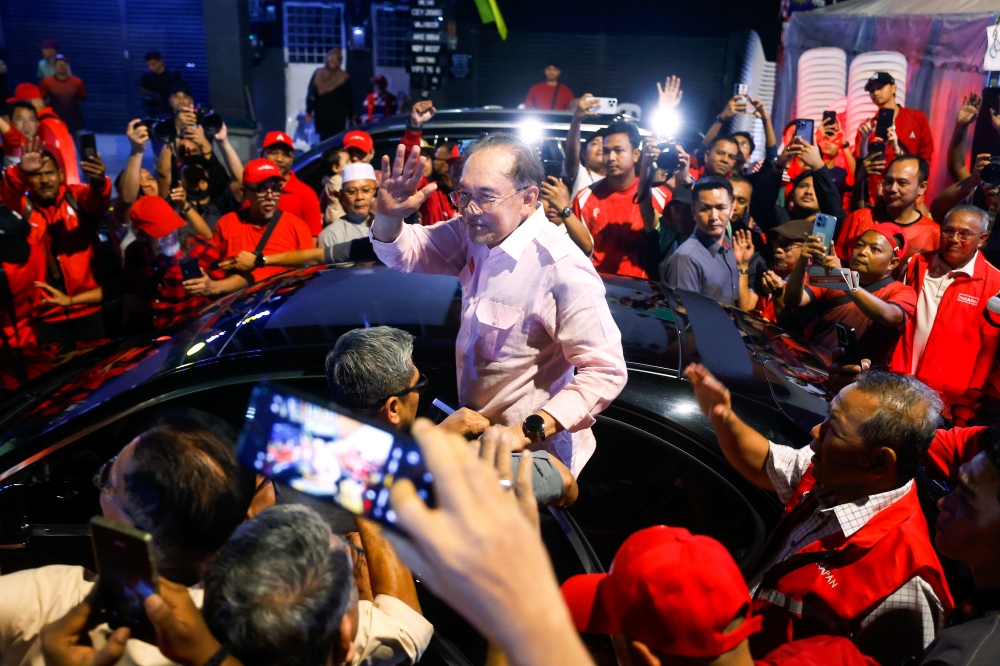
Prime Minister Datuk Seri Anwar Ibrahim used a visit to Seremban on July 23 to underline his confidence in the durability of Malaysia's federal unity government, projecting an image of steady leadership even as the coalition continues to manage internal pressures and external scrutiny. Speaking to supporters and party members in the Negeri Sembilan capital, Anwar stressed that the multi-party arrangement formed after the November 2022 elections remains fundamentally robust, capable of delivering on its governance mandate, and positioned to steer the nation through economic headwinds.
The timing of Anwar's remarks carries particular significance, coming at a juncture when questions about the longevity and coherence of Malaysia's unity coalition periodically surface. Since its inception following the 14th General Election, the government has brought together parties with divergent ideological bases and regional strongholds, a configuration that demands constant negotiation and consensus-building. Anwar's public affirmation therefore serves both as a reassurance to coalition partners—many of whom harbor individual political ambitions—and as a message to investors and the international community that Malaysia remains politically stable.
A defining element of Anwar's argument centers on the government's economic performance and trajectory. The Prime Minister indicated that Malaysia's macroeconomic indicators remain healthy, with growth prospects intact despite global headwinds including persistent inflation, rising interest rates, and supply-chain uncertainties affecting Southeast Asia. By framing economic resilience as evidence of governmental effectiveness, Anwar attempts to shift the narrative away from coalition management challenges toward measurable outcomes that benefit ordinary Malaysians through employment, consumer spending power, and investment activity.
The unity government's composition reflects a pragmatic but complex political reality. Bringing together the opposition Pakatan Harapan coalition with Barisan Nasional and various smaller parties created an unprecedented governing arrangement in contemporary Malaysia. This structure, while offering advantages in parliamentary numbers, requires careful management of competing interests, resource allocation among coalition members, and the articulation of a coherent policy agenda acceptable to diverse constituencies. Anwar's emphasis on stability appears designed to convince sceptics that this heterogeneous arrangement can function effectively beyond the medium term.
Anwar's statements also warrant examination in the context of regional comparisons. Several Southeast Asian nations face similar governance challenges, with multiparty coalitions attempting to balance competing demands while maintaining policy continuity. Malaysia's experience offers lessons—both positive and cautionary—to observers across the region watching how diverse political forces can be reconciled within a single government framework. The success or failure of the unity government influences perceptions of democratic stability not just domestically but across the broader Southeast Asian political landscape.
Domestically, the unity government has presided over efforts to address institutional reforms, judicial independence concerns, and attempts to restore public confidence in governance after years of political turbulence. Anwar's assurances about the government's stability can be read as implicit claims that these reforms remain on track and that the coalition possesses sufficient cohesion to implement substantive changes. Whether the government delivers on these ambitions will determine public perception of the unity arrangement's value beyond its immediate parliamentary utility.
The economic dimension that Anwar emphasized carries weight given Malaysia's vulnerability to external shocks and the population's sensitivity to bread-and-butter issues. The ringgit's exchange rate, foreign direct investment flows, and employment levels in manufacturing and services sectors remain barometers of government performance. By connecting the unity government's political stability to economic outcomes, Anwar effectively argues that the cost of political disruption—in terms of investor confidence and economic momentum—outweighs any short-term advantages coalition partners might gain from seeking alternative arrangements.
Dissent within coalition ranks, though typically managed discreetly, occasionally surfaces in public. Tensions between alliance partners over ministerial positions, policy directions, and electoral prospects represent ongoing background friction that the Prime Minister's reassurances must address implicitly. By projecting confidence in the government's trajectory, Anwar signals to potentially restless partners that the current arrangement remains mutually beneficial and politically sustainable, thereby discouraging speculation about coalition breakdowns.
Looking forward, the unity government's continued viability depends on several factors: sustained economic performance, successful management of internal coalition dynamics, and the absence of major political shocks or scandals that could destabilize the arrangement. Anwar's visit to Seremban and his statements about governmental strength represent efforts to reinforce positive narratives around these elements. For Malaysian stakeholders—whether business leaders, foreign investors, civil society observers, or ordinary citizens—the durability and effectiveness of the unity government remains a central consideration shaping confidence in the nation's political and economic trajectory.

