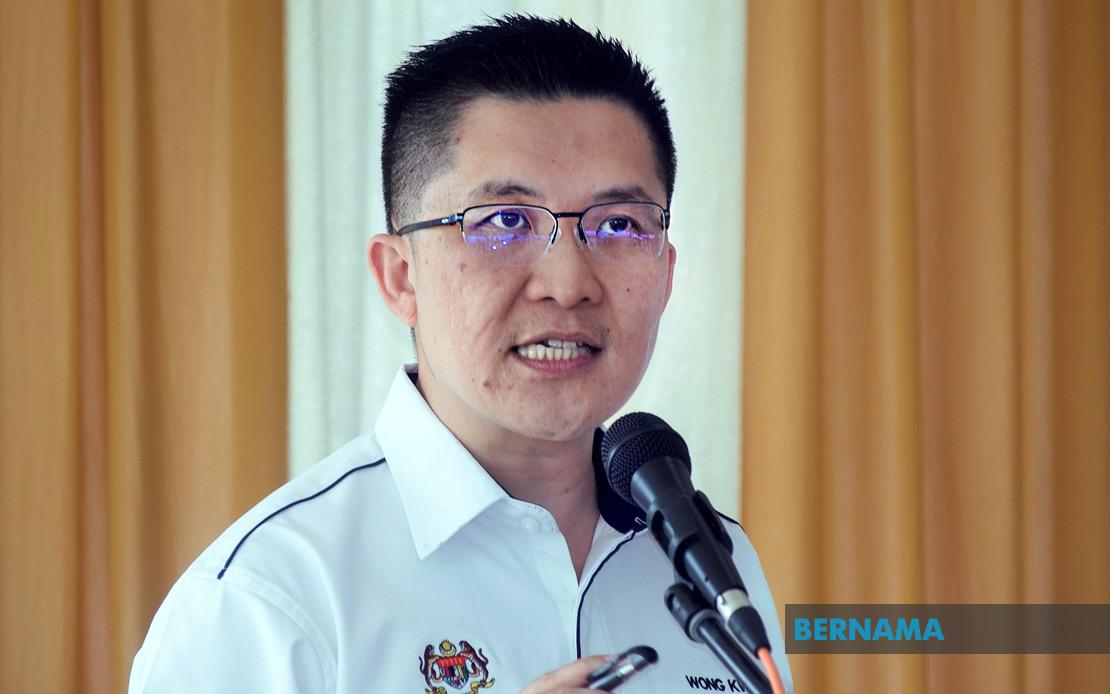
The Ministry of Education has reaffirmed its commitment to the Tamil-medium education sector, which currently encompasses 528 Tamil national-type schools (SJKT) operating across Malaysia with a combined pupil population of 78,501 as of the end of May. Deputy Education Minister Wong Kah Woh disclosed these figures during a Special Chamber session in parliament, responding to concerns raised by V. Ganabatirau, emphasising that the government continues to view Tamil language education as a vital pillar of Malaysia's multicultural schooling system.
The participation of Tamil-medium students in the national Sijil Pelajaran Malaysia (SPM) examination demonstrates steady engagement with tertiary education pathways. In 2023, 8,023 candidates from SJKT institutions registered for the examination, a figure that declined modestly to 7,925 in 2024 and 7,693 in 2025 before settling at 7,494 new candidates for the current year. This gradual decrease reflects broader demographic trends affecting school populations across the nation, though the Ministry remains committed to sustaining Tamil as an examinable subject within the SPM framework. The education authority has explicitly assured parliament that Tamil will continue as an offered language subject, maintained within the curriculum structures overseen by the Examinations Syndicate.
One significant advantage for Tamil learners is the flexibility embedded within Malaysia's examination system. Students enrolled at schools lacking Tamil-language programmes retain full eligibility to sit the Tamil language paper in SPM, provided they satisfy the standard registration criteria set by examination authorities. This provision ensures that pupils seeking to preserve or develop proficiency in Tamil are not disadvantaged by their school's linguistic offerings, a policy mechanism that broadens access to heritage language qualification across different student populations and geographic regions.
The Ministry's developmental agenda for the Tamil education sector extends beyond curriculum delivery into substantial physical infrastructure improvements. In Johor alone, the state housing the nation's most significant concentration of Tamil-medium institutions, 71 SJKTs operate with a combined enrolment exceeding 12,906 pupils. Within Johor Bahru district specifically, 15 schools serve 7,840 students, with four institutions demonstrating particularly strong enrolment figures: SJKT Taman Tun Aminah accommodates 1,529 pupils, SJKT Ladang Rini enrolled 1,055 students, SJKT Jalan Yahya Awal serves 890 pupils, and SJKT Masai operates with 768 enrolees. These concentrated populations justify targeted investment in capital expenditure.
Capital allocation reflects the government's measured approach to supporting high-demand institutions while simultaneously addressing infrastructure deficits. Construction of new educational facilities at SJKT Ladang Rini and SJKT Kulai Besar, each allocated RM4.3 million, represents direct investment designed to expand capacity by an additional 200 to 300 pupil places respectively. These projects underscore recognition that particular schools face genuine space constraints limiting further growth, a challenge increasingly apparent in urbanised districts where demand outpaces existing accommodation. However, this expansion strategy coexists with operational challenges affecting smaller institutions, with two Johor Bahru-based schools—SJKT Ladang Sungai Plentong and SJKT Ladang Mados—registering fewer than 30 enrolled pupils each, creating sustainability questions around educational viability and resource efficiency.
The Ministry has developed a comprehensive roadmap specifically targeting under-enrolled Tamil schools, recognising that population concentration creates institutional imbalances requiring differentiated responses. As of May 31, 2026, 135 under-enrolled SJKTs nationwide have implemented multi-grade teaching arrangements, wherein single educators instruct pupils across different educational levels within unified classrooms. Simultaneously, 36 Tamil-medium schools have received ministerial approval for relocation initiatives, reflecting a strategic decision to transfer operations to areas demonstrating stronger demographic demand. This tripartite approach—combining classroom restructuring, geographic repositioning, and retention of schools serving specific local communities—acknowledges that uniform solutions prove inappropriate across Malaysia's diverse settlement patterns and Tamil-speaking population distributions.
Teacher availability and professional capacity represent critical factors determining service quality within the Tamil education network. The Ministry reports that the secondary Tamil-language teaching workforce requirement stands at 584 educators, with current staffing levels reaching 648 positions—exceeding identified needs by 64 positions. Within SJKTs themselves, the requirement calculation indicates 1,334 teachers necessary to deliver curriculum objectives adequately, whilst actual employment figures have reached 1,733 staff members. This apparent oversupply at national level masks potential geographic disparities, whereby urban centres may enjoy adequate or excessive staffing whilst more remote regions experience shortages, though the Ministry's consolidated statistics do not disaggregate these distributional patterns.
Professional teacher development constitutes a cornerstone element within the Ministry's strengthening agenda for Tamil education. Beyond simple numerical sufficiency, the government has initiated targeted training programmes designed to enhance pedagogical capacity, curriculum understanding, and assessment literacy among Tamil-school educators. These interventions connect directly to the implementation of the 2027 School Curriculum framework, a comprehensive educational redesign expected to reshape teaching methodologies, learning objectives, and assessment approaches across all Malaysian schools. For Tamil educators, this curriculum transition requires specialised professional development ensuring that innovations in general educational practice translate meaningfully within Tamil-language teaching contexts whilst preserving subject-specific content integrity.
Tamil literature instruction receives particular emphasis within the Ministry's strengthening objectives, reflecting recognition that language subjects require cultural and literary grounding to develop genuine proficiency and appreciation among learners. Enhancement of Tamil literature programming within both SJKTs and secondary institutions forms an explicit ministry priority, acknowledging that mechanical language instruction without exposure to literary traditions, historical texts, and cultural productions risks producing technically competent but culturally disconnected speakers. This literary emphasis represents investment in heritage preservation alongside functional communication skills, reflecting Malaysia's commitment to maintaining genuine multilingualism rather than merely transactional language capacity.
Examination transparency and grading integrity constitute secondary concerns raised through parliamentary questioning, addressing student and parental concerns about whether examination results reflect genuine achievement or administrative quotas. The Ministry has clarified that SPM grading decisions derive from systematic professional assessment rather than predetermined target percentages requiring fixed proportions of candidates to achieve particular grades. Instead, subject expert panels comprising curriculum specialists and educational measurement professionals establish grade boundaries through examination of candidate performance distributions, assessment instrument characteristics, and alignment with established competency standards. This methodology aligns with international examination practices adopted by major international qualification bodies, though grade boundaries necessarily vary between examination cycles reflecting genuine variations in candidate cohort performance and examination difficulty levels.
The sustainability of Malaysia's Tamil-medium education sector reflects broader questions about community investment, institutional vitality, and cultural transmission within multilingual societies. Whilst the Ministry demonstrates measurable commitment through capital investment, teacher recruitment, curriculum development, and examination access provisions, the declining SPM candidate numbers and emergence of significantly under-enrolled schools suggest underlying demographic and social pressures requiring ongoing monitoring and adaptive policy responses. Southeast Asian observers recognise these dynamics as common across heritage-language education systems, where globalisation and internal migration patterns create tensions between institutional preservation and demographic realities. Malaysia's current policy approach—combining infrastructure investment, operational flexibility, and targeted support for struggling institutions—represents a pragmatic middle pathway acknowledging both cultural preservation imperatives and fiscal sustainability requirements.