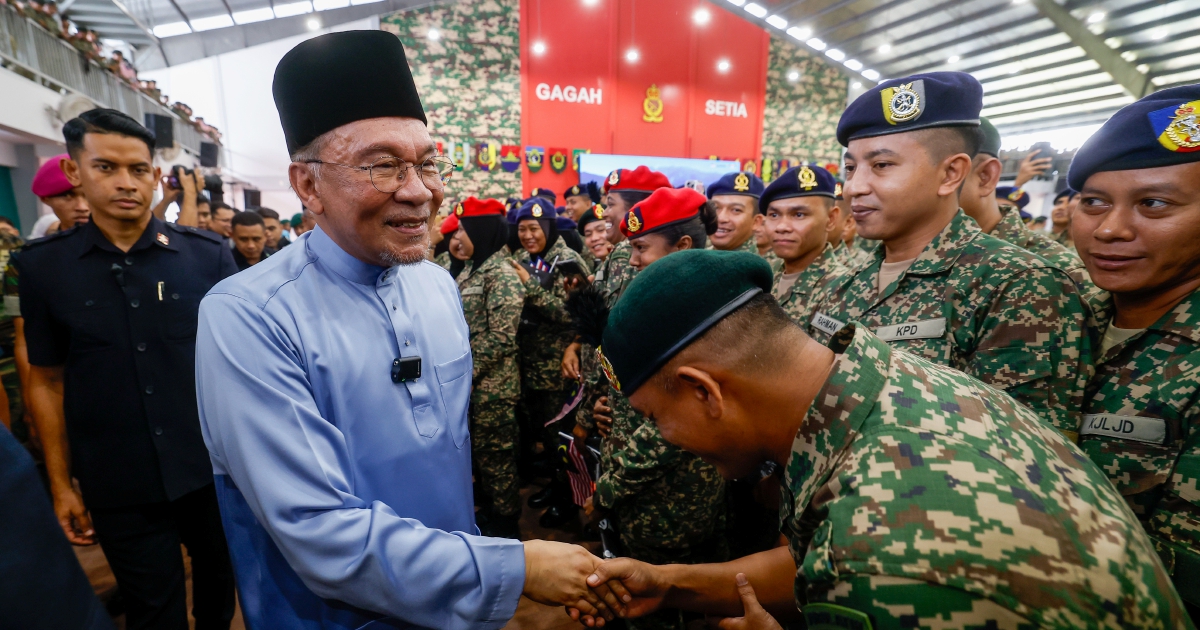
Prime Minister Datuk Seri Anwar Ibrahim made a deliberate distinction between Malaysia's political opposition to Israeli government actions and any form of prejudice against Jewish people, during remarks in Port Dickson. The clarification underscores Malaysia's effort to articulate a nuanced position on Middle Eastern conflicts that distinguishes between criticism of state policies and hostility toward religious or ethnic groups—a distinction increasingly important as global discourse around Israeli-Palestinian tensions grows more polarised.
Anwar's statement addresses recurring international scrutiny regarding Malaysia's vocal criticism of Israeli policies. Western commentators and advocacy groups have occasionally conflated Malaysia's support for Palestinian causes with broader allegations of antisemitism, a characterisation the government has consistently rejected. By explicitly separating opposition to what he characterised as Zionist actions from any animus toward Jewish people as a whole, the Prime Minister attempted to establish a framework for Malaysia's Middle East engagement that remains principled without straying into religious discrimination.
This distinction carries particular significance for Malaysia as a multicultural nation with its own Jewish minority, though small in numbers. The country's constitutional framework protects freedom of religion and recognises multiple faith communities. Malaysia's position on Israel has historically been shaped by its role within the Non-Aligned Movement and its solidarity with the Organisation of Islamic Cooperation, rather than by domestic religious dynamics. Anwar's clarification therefore serves both a domestic and international audience—reassuring Malaysian citizens of different faiths that the government does not conflate political disagreements with religious intolerance, while also communicating to the international community that Malaysia's foreign policy positions rest on geopolitical and humanitarian grounds.
The timing of such clarifications reflects broader regional and global tensions. Southeast Asia has become an increasingly important arena for Middle Eastern diplomatic efforts, with both Israeli and Palestinian representatives seeking regional support and engagement. Malaysia, as the current chair of the Non-Aligned Movement, faces particular pressure to articulate coherent positions that resonate with member states while avoiding accusations of religious extremism that could complicate bilateral relationships with Western nations and other trading partners.
Anwar's remarks also coincide with Malaysia's efforts to position itself as a moderate Muslim-majority nation capable of sophisticated foreign policy reasoning. The government has worked to distance itself from characterisations of religious extremism, emphasising instead Malaysia's commitment to moderate Islam and interfaith dialogue. Distinguishing between opposition to Israeli government policies and prejudice against Jewish people aligns with this broader strategic narrative. It allows Malaysia to maintain strong positions on Palestinian rights and oppose what it views as occupation and settlement expansion without being portrayed internationally as intolerant or religiously motivated.
The Palestinian cause remains deeply embedded in Malaysian political discourse, supported across the political spectrum and among diverse segments of society. Public opinion in Malaysia strongly favours Palestinian statehood and opposes what many view as Israeli aggression. However, this widespread support does not necessarily reflect antisemitic sentiment among the Malaysian public. Rather, it represents alignment with broader Non-Aligned Movement principles, Islamic solidarity, and humanitarian concerns about civilian casualties and displacement. Anwar's articulation of this distinction helps clarify that Malaysia's activism on Palestinian issues does not extend to hostility toward Jewish communities globally or domestically.
The statement also reflects Malaysia's awareness of how statements on Israel and Palestine circulate internationally and affect the country's broader diplomatic standing. Malaysia maintains important economic and security relationships with Western nations, and characterisations of antisemitism or religious intolerance can complicate these partnerships. By explicitly rejecting any prejudice against Jewish people while maintaining firm positions on Israeli government policies, Malaysia attempts to inoculate itself against accusations that its Middle East stance crosses ethical lines.
Furthermore, Anwar's clarification demonstrates recognition that criticism of Israel need not and should not involve dehumanisation or prejudice against any religious or ethnic group. This represents an important articulation in a regional context where such distinctions are sometimes blurred in political rhetoric. The Prime Minister's approach models how nations can maintain principled opposition to specific governments' policies while respecting the dignity and rights of all peoples, including Jewish communities worldwide.
The distinction Anwar drew will likely continue to feature in Malaysia's international communications around Middle Eastern issues. As global polarisation increases and international pressure intensifies on nations to take sides in Israeli-Palestinian disputes, Malaysia's strategy of maintaining clear criticism of government actions while rejecting prejudice offers a template for principled foreign policy engagement. This approach allows the country to advocate for Palestinian rights and oppose what it perceives as violations of international law while simultaneously affirming universal principles of religious tolerance and human dignity that underpin Malaysia's multicultural identity and international reputation.

