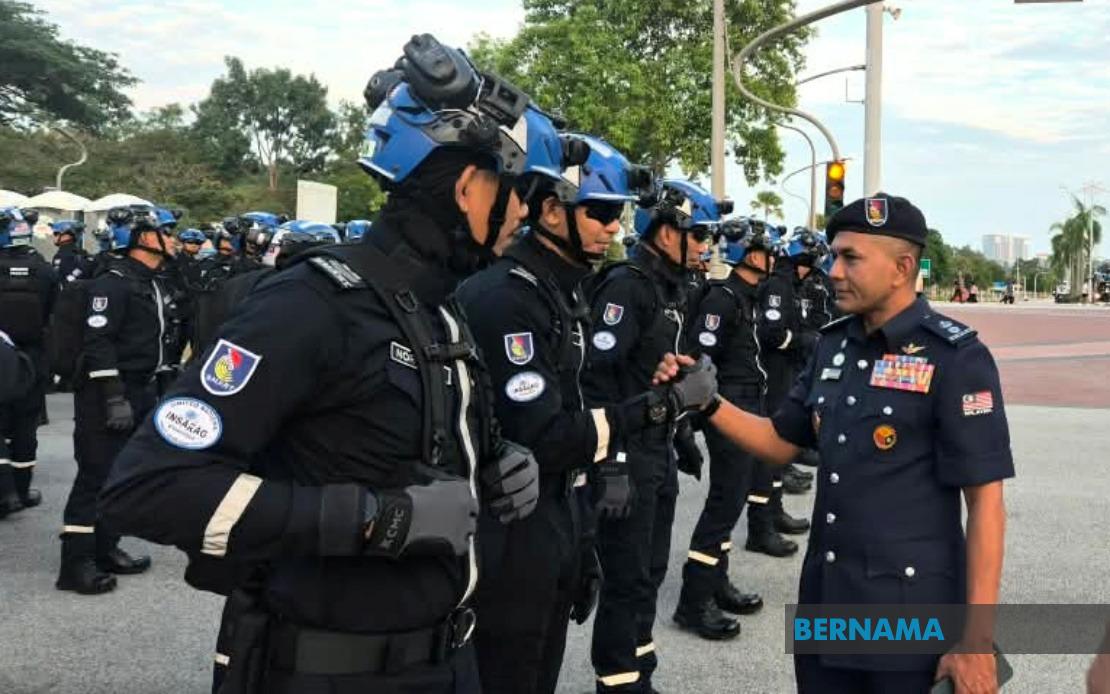
Malaysia's search and rescue capabilities are positioned at full readiness as the nation awaits clearance from Nepal's government to deploy its specialized disaster response team. The Special Malaysia Disaster Assistance and Rescue Team (SMART) has completed preparations for a potential mission to assist with recovery efforts following devastating floods that swept through Nepal and China's Tibet region this week. Senior Fire and Rescue Officer 1 (PgKB 1) Abdul Manaf Che Isa confirmed the team's operational status during National Day 2026 celebrations at Dataran Putrajaya on Saturday, noting that Malaysia remains in communication with Nepalese authorities regarding their capacity and willingness to receive international assistance.
The decision to mobilize SMART follows Prime Minister Datuk Seri Anwar Ibrahim's announcement that the Malaysian government has committed to supporting Nepal's disaster response. The humanitarian response extends beyond search and rescue operations, with Malaysia pledging USD1 million in financial assistance to support affected communities and facilitate post-disaster recovery initiatives. Beyond immediate relief, the SMART deployment carries a secondary objective of locating and assisting Malaysians who have been impacted by the natural disaster, while simultaneously coordinating broader aid efforts through Malaysia's diplomatic mission in Kathmandu.
The August 26 calamity struck Nepal's Rasuwa District with particular severity, triggering both flash floods and landslides across a mountainous region with limited infrastructure for emergency response. Current casualty figures reflect the disaster's unprecedented scale within the region—the Anadolu Agency reported a combined death toll of 804 across Nepal and the Tibetan border areas, with nearly 3,300 individuals still listed as missing. These numbers underscore the challenge facing rescue teams working in terrain complicated by ongoing monsoon conditions and damaged transportation networks that impede access to affected communities.
Regarding Malaysian citizens caught in the disaster zone, Wisma Putra reported on August 29 that 55 Malaysian nationals remained uncontactable in Nepal, with an additional 36 individuals with similar status in China. The precise circumstances of these individuals—whether they are trekkers, residents, or business travelers—remain unclear, though Nepal's Rasuwa District is a popular trekking destination attracting significant numbers of international visitors annually. The Malaysian government has prioritized locating these citizens as a core component of its response strategy, recognizing both diplomatic and humanitarian imperatives to account for their welfare.
Deployment coordination requires navigating multiple governmental channels within Malaysia's emergency management structure. The Foreign Ministry, National Security Council, and National Disaster Management Agency must synchronize their activities to clear administrative pathways for SMART's international deployment. Such coordination reflects Malaysia's established protocols for overseas disaster response, balancing rapid action with proper authorization from host governments. Captain Plaveanus Bernard will lead the SMART contingent comprising 112 personnel, individuals trained specifically for complex search and rescue environments including collapsed structures, water-related incidents, and high-altitude terrain operations.
Malaysia's willingness to rapidly mobilize disaster assistance reflects its established role as a regional humanitarian actor and its broader strategic interests in strengthening South Asian partnerships. Nepal, a landlocked nation with limited disaster response infrastructure relative to its population density and geographic vulnerabilities, faces particular challenges during monsoon season when geological instability peaks. International assistance from countries like Malaysia—which has developed sophisticated disaster response capabilities through experience with earthquakes, floods, and industrial accidents—can meaningfully improve survival outcomes and accelerate recovery timelines in the critical hours and days following major natural disasters.
The delay in obtaining Nepal's formal clearance highlights administrative complexities inherent in international disaster response. Host governments must assess their capacity to accommodate foreign teams, arrange security clearances, coordinate logistics, and integrate external resources into existing command structures. While such deliberation may appear bureaucratic to observers outside the emergency management field, it serves essential functions in ensuring that rescue teams can operate efficiently without duplicating efforts or creating additional security concerns in already chaotic environments. Malaysia's patience with this process reflects diplomatic protocol while maintaining operational readiness.
From a Southeast Asian perspective, this deployment reinforces mutual aid mechanisms that have strengthened over recent decades. The region has collectively developed greater capacity for managing natural disasters through shared experience and institutional frameworks, though gaps remain particularly in mountain terrain that characterizes parts of Nepal and Southeast Asia. Malaysia's specialist teams bring technological capabilities, training methodologies, and field experience that transcend national borders when applied to universal humanitarian challenges. This mutual assistance also builds diplomatic relationships that extend beyond crisis response, creating goodwill that facilitates cooperation on broader economic and security matters.
The timing of SMART's potential deployment comes amid intense global attention to climate-change-induced natural disasters. Monsoon-related flooding in South Asia has intensified in frequency and severity over recent years, creating predictable humanitarian emergencies that international organizations and sympathetic governments increasingly view as requiring coordinated response. Nepal's particular vulnerability stems from its position astride major river systems flowing from the Himalayas, its reliance on monsoon rains for agriculture, and its concentration of population in river valleys where flash flooding poses acute risks. Malaysia's preemptive positioning of disaster assistance reflects this evolving context of climate-related natural disasters as chronic transnational challenges.

