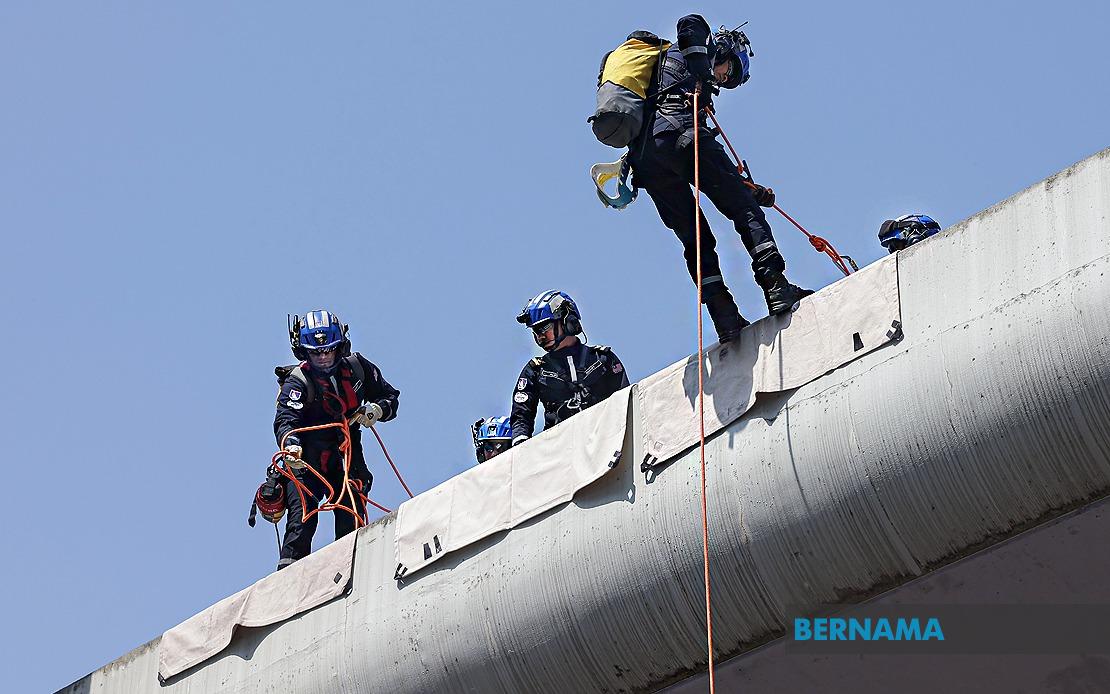
Malaysia has positioned its elite Special Search and Rescue Team (SMART) on high alert for potential deployment to Nepal in the wake of devastating floods that have swept across the South Asian nation. The readiness posture was confirmed by the National Disaster Management Agency (NADMA) on Friday, as the country waits for official clearance from the Nepali Government to proceed with deployment. This conditional stance reflects the diplomatic protocols that govern international disaster assistance, where host nations must formally request and approve foreign intervention before teams can cross borders.
The deployment framework depends on two critical factors working in tandem. First, Nepal's government must formally accept Malaysia's offer of humanitarian assistance and explicitly invite SMART operatives onto its soil. Second, the scale of on-ground needs must justify dispatching the specialized unit, which typically comprises highly trained personnel equipped for complex rescue operations. NADMA emphasised that these conditions remain paramount, even as the team maintains peak readiness. Coordination with Malaysia's Foreign Ministry has been continuous and streamlined to ensure rapid response once approval materialises, according to the agency's statement.
SMART's mission brief would extend beyond conventional search and rescue operations. The team has been tasked with locating and assisting Malaysian nationals affected by the flooding, providing essential consular support to their compatriots in a crisis situation. Additionally, SMART operatives would coordinate with the Malaysian Embassy in Kathmandu to amplify humanitarian efforts and safeguard the welfare of Malaysian citizens stranded or impacted by the disaster. This dual mandate—simultaneous rescue expertise and consular support—reflects how Malaysia structures its disaster response to serve both international humanitarian objectives and its citizens abroad.
Snr Fire Supt I Abdul Manaf Che Isa, the SMART team commander, underscored the unit's unwavering availability despite competing demands. Remarkably, the contingent is scheduled to march in Malaysia's 69th National Day parade on Saturday, yet remains operationally poised to pivot toward Nepal deployment within hours if authorisation arrives. This balancing act demonstrates the institutional flexibility embedded within SMART operations, where ceremonial commitments do not impede emergency preparedness. "In principle, the team is always ready to be deployed at a moment's notice," Che Isa told media in Putrajaya, signalling the mindset permeating the unit.
Prime Minister Anwar Ibrahim announced separately that Malaysia has committed to a comprehensive support package for Nepal. Beyond dispatching SMART personnel, the government pledged US$1 million—equivalent to approximately RM4.03 million—toward immediate relief efforts and post-disaster reconstruction. This financial contribution signals Malaysia's broader commitment to international disaster solidarity, a principle that has historically guided the nation's humanitarian foreign policy. The combination of technical expertise via SMART and financial resources creates a multifaceted response strategy.
Nepal's recent flooding has highlighted the region's vulnerability to extreme weather, a concern increasingly relevant throughout South and Southeast Asia as climate patterns shift. Malaysia's preparedness to assist reflects recognition that disaster response capacity benefits from international cooperation and resource-sharing. SMART itself has built considerable reputation through previous regional deployments, with expertise validated through operations in various Asian contexts. The team's composition includes specialists trained in technical rescue, medical response, and logistics coordination essential for large-scale emergency interventions.
The standby posture also carries implications for Malaysia's broader regional diplomacy. Positioning assistance promptly signals responsiveness to neighbouring crises and reinforces Malaysia's role as a reliable regional partner. This stance becomes particularly significant in a neighbourhood where geopolitical relationships benefit from demonstrated mutual support during emergencies. Nepal's receptiveness to Malaysian assistance would serve multilateral relationship-building beyond the immediate crisis context.
From an institutional perspective, NADMA's coordination role ensures coherence between multiple government agencies. The Foreign Ministry's involvement ensures diplomatic proprieties are observed and that approaches align with Nepal's broader bilateral relationship with Malaysia. This interagency synergy, while sometimes ponderous in bureaucratic systems, ultimately strengthens response credibility and effectiveness. NADMA's public confirmation of readiness also provides reassurance to Malaysians with connections to Nepal regarding their government's commitment to their safety.
The decision to await formal Nepali approval, rather than proceeding unilaterally, reflects international norms governing humanitarian intervention. While such protocols can occasionally delay response, they fundamentally respect national sovereignty and ensure assistance targets genuine needs rather than imposing external priorities. This measured approach, though potentially frustrating when urgency looms, ultimately builds trust and ensures deployed resources address actual requirements rather than perceived ones.

