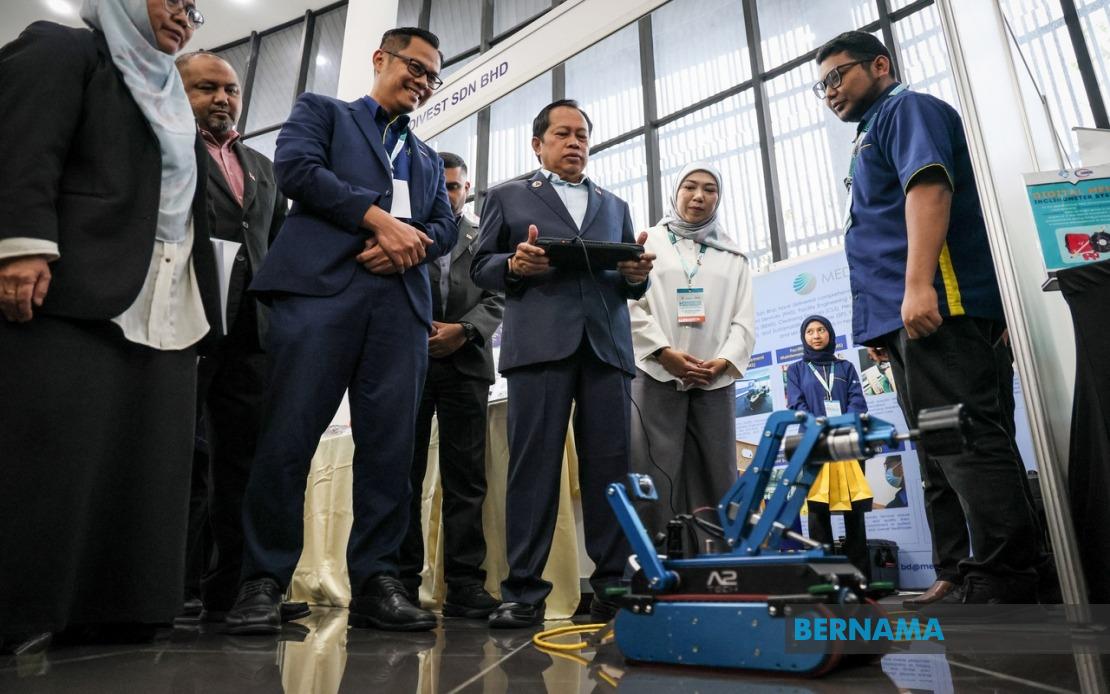
Malaysia's facility management sector represents an untapped goldmine for construction contractors willing to pivot toward maintenance and asset preservation, according to the Works Ministry. With RM39.59 billion in projects executed between 2023 and 2025, the subsector remains chronically understaffed, presenting a compelling business case for companies seeking revenue diversification beyond traditional construction contracts. Deputy Works Minister Datuk Seri Dr Ahmad Maslan articulated this vision while launching the Contractors Convention 2026: NexGen Builders in Butterworth, emphasising that the industry's historical fixation on building new infrastructure has created a dangerous vacuum in maintenance expertise.
Data compiled by the Construction Industry Development Board reveals the scale of this opportunity with striking clarity. Over the three-year period, contractors undertook 1,541 facility management and maintenance projects, yet only 468 companies held active registration under the F01 and F02 facility management specialisations. This disparity—over three projects for every registered specialist—illustrates a market fundamentally constrained by supply-side limitations rather than demand. The structural mismatch suggests that many maintenance contracts either go unfulfilled or are handled by firms lacking formal FM credentials, a situation that compromises service quality and asset longevity across Malaysia's infrastructure portfolio.
The underlying philosophy driving this ministerial initiative reflects a philosophical reorientation in how Malaysia approaches public asset stewardship. Traditionally, government and private sector attention concentrated on construction phases, with maintenance relegated to a secondary afterthought despite consuming considerable resources throughout an asset's operational life. Roads, bridges, government buildings, and critical infrastructure all experience degradation requiring systematic, professional intervention to preserve functionality and extend lifespan. Ahmad Maslan's remarks underscore that this maintenance-first mindset represents not merely bureaucratic housekeeping but a sophisticated economic calculus: preventive facility management extends asset utility, reduces catastrophic failure costs, and ultimately delivers superior public value than deferred maintenance followed by expensive rehabilitation.
To institutionalise this sector maturation, CIDB developed CIS 33:2026, a comprehensive Facility Management Good Practice Guide intended to standardise and systematise FM approaches across Malaysia's construction ecosystem. This framework establishes common reference standards for asset owners, facility managers, contractors, and industry stakeholders, addressing a critical gap in Malaysia's regulatory architecture. By codifying best practices into a binding standard, the guideline elevates facility management from ad hoc maintenance into a professional discipline with measurable performance metrics, transparent protocols, and accountable outcomes. For contractors, adoption of CIS 33:2026 represents both a compliance obligation and a competitive differentiation opportunity in an expanding market.
The business case for FM contractor registration appears particularly compelling given Malaysia's infrastructure expansion trajectory. Public sector investments in transportation networks, healthcare facilities, educational institutions, and commercial developments create an expanding installed base requiring systematic maintenance. Additionally, the government's emphasis on asset lifecycle management creates procurement advantages for contractors holding formal FM credentials, effectively creating preferential treatment for registered specialists in competitive bidding processes. This regulatory incentivisation mechanisms channelled through CIDB registration requirements effectively converts ministry policy into market opportunity.
Regional context amplifies this opportunity's significance for Malaysian contractors eyeing expansion across Southeast Asia. Singapore, Thailand, and Indonesia all demonstrate mature facility management markets where specialised contractors command premium service fees and sustained revenue streams. Malaysian firms establishing domestic expertise and CIS 33:2026 certification can leverage these credentials for regional expansion, potentially establishing regional service networks serving multinational corporations and institutional investors. The facility management sector's labour-intensive nature also creates employment opportunities particularly suited to Malaysian workforce capabilities in supervisory and technical roles.
However, the sector faces structural challenges beyond simple contractor recruitment. Facility management traditionally generates lower profit margins than construction, requiring contractors to optimise operational efficiency and achieve scale to remain viable. This margin compression necessitates technological adoption, including building management systems, predictive maintenance analytics, and IoT-enabled asset monitoring. Contractors entering the FM market must therefore view registration merely as initial qualification; competitive sustainability demands continuous investment in digital capabilities and workforce training. The 468 currently registered firms collectively possess institutional knowledge and customer relationships representing significant barriers to new entrants lacking established reputations.
The demographic composition of Malaysia's contractor base also merits consideration. Small and medium enterprises dominate CIDB's registry, yet many lack the capital reserves and operational sophistication required for systematic FM service delivery. Larger construction conglomerates, conversely, often view FM as strategically subordinate to headline-generating development projects. This sector positioning challenge suggests that successful FM market expansion may require targeted financial support mechanisms—government-backed credit facilities, technical assistance programmes, or strategic joint ventures—helping qualified contractors transition from construction-centric business models toward integrated construction-plus-maintenance service offerings.
The timing of this ministerial initiative coincides with growing recognition globally that infrastructure maintenance represents a critical economic frontier. The International Monetary Fund and World Bank increasingly emphasise that neglected asset maintenance creates multiplicative costs through accelerated deterioration and emergency interventions. By positioning Malaysia's contractor base to professionalise facility management, the Works Ministry demonstrates strategic alignment with international best practices while addressing demonstrable domestic needs. For contractors willing to embrace this transition, the RM39.59 billion market offers sustainable, countercyclical revenue streams less vulnerable to construction cycle fluctuations.
Ultimately, Ahmad Maslan's advocacy for FM sector expansion reflects sophisticated infrastructure governance thinking that extends beyond traditional construction completion metrics. Buildings, roads, and bridges deliver public value only throughout their operational lives, requiring competent maintenance stewardship every single day. Malaysia's competitive advantage in regional infrastructure markets depends substantially on demonstrating superior asset management capabilities. By encouraging contractor specialisation in facility management and establishing regulatory frameworks supporting professionalisation, the Works Ministry effectively invests in Malaysia's long-term infrastructure reputation while creating legitimate business opportunities for registration-seeking contractors navigating the evolving construction industry landscape.

