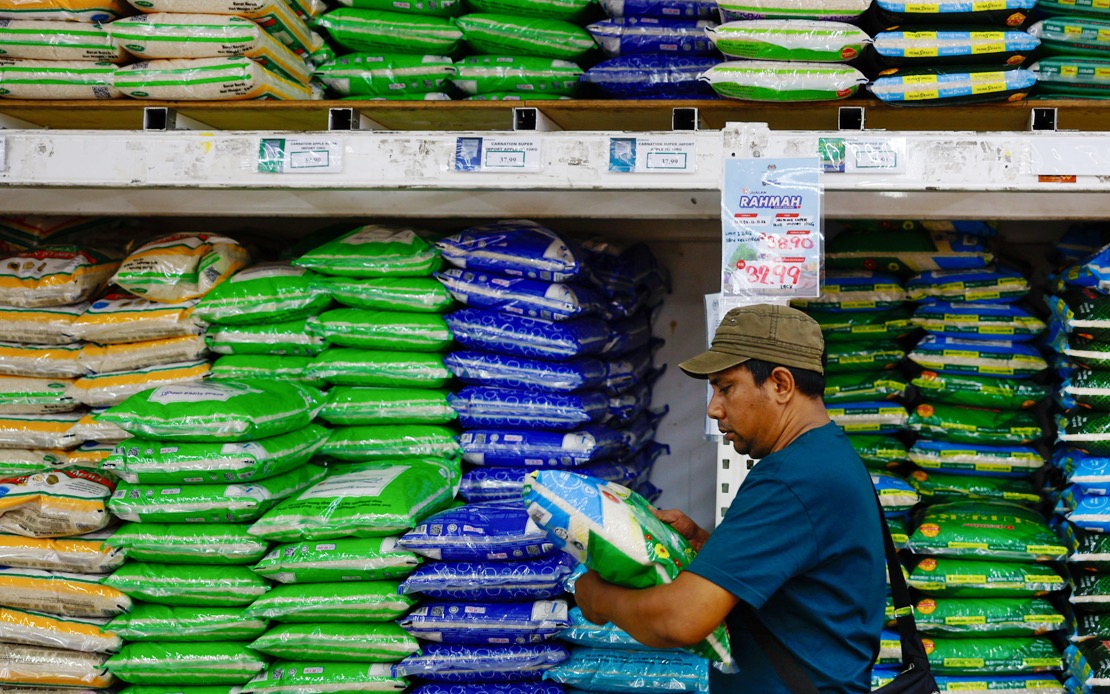
Malaysia's rice security infrastructure remains resilient in the face of mounting geopolitical instability in West Asia, according to Datuk Chan Foong Hin, the Deputy Minister of Agriculture and Food Security, who outlined the country's preparedness measures in parliament this week. Speaking during a question-and-answer session in the Dewan Negara, Chan disclosed that the nation maintains physical rice stocks totalling 1.237 million tonnes, a figure sufficient to sustain domestic consumption for a minimum of six months should international supply chains face disruption from regional tensions.
The composition of these reserves reflects a dual-pronged storage strategy designed to balance strategic resilience with market efficiency. Of the total reserve, 200,000 tonnes constitute the national rice buffer stock managed by state-owned entity Padiberas Nasional Berhad, commonly known as BERNAS, while the remaining 1.037 million tonnes represent commercial stockpiles maintained by the private sector. This separation ensures that Malaysia possesses both a government-controlled emergency supply and market-responsive inventory that can respond to fluctuations in domestic and international demand patterns. The configuration allows policymakers to maintain a cushion against sudden global supply disruptions whilst enabling market mechanisms to function during periods of relative stability.
Beyond physical stockpiles, the government has implemented price stabilisation measures that further enhance food security resilience. Chan emphasised that domestically-produced white rice benefits from government subsidies that maintain price stability even when international rice markets experience volatility. This subsidy framework provides Malaysian consumers with a predictable, affordable staple food price—a critical advantage when competing commodities face steep global price increases. For consumers already managing household budgets in an inflationary environment, this protection against rice price shocks represents a meaningful safeguard against erosion of purchasing power, particularly for lower-income households for whom rice constitutes a substantial portion of food expenditure.
Despite current adequacy, Malaysia confronts structural challenges in long-term rice self-sufficiency that demand sustained policy attention. The government has established an ambitious target of achieving 80 per cent self-sufficiency ratio by 2030, a goal complicated by declining domestic production trends and the unpredictable impacts of climate phenomena such as El Niño. These headwinds underscore the vulnerability inherent in relying partially on imports for a staple commodity, particularly during periods of geopolitical turbulence that can disrupt shipping routes and international markets. The 80 per cent target represents a calibrated middle ground—sufficient to reduce import dependency without requiring the massive agricultural investment and land conversion that approaching complete self-sufficiency would entail.
To narrow the gap between current production and the 2030 target, the Ministry of Agriculture and Food Security has initiated a multifaceted programme centred on climate adaptation and cultivation innovation. The introduction of drought-resistant padi varieties, including the MR 380, MR 381, and MR 382 strains, directly addresses the threat posed by El Niño-induced dry spells that have previously constrained yields. Complementing varietal improvements, the ministry is promoting water management techniques such as Alternate Wetting and Drying and the System of Rice Intensification, both of which enhance efficiency in irrigation usage—a critical factor in a region where water availability increasingly constrains agricultural expansion.
Infrastructure development represents another pillar of the government's production expansion strategy. A five-season rice cultivation project spanning two years is being rolled out across areas falling under the jurisdiction of the Muda Agricultural Development Authority, one of the nation's most productive rice-growing regions. Concurrently, upgrades to agricultural irrigation systems are underway, addressing the technological deficits that have limited productivity gains in recent years. These capital investments reflect recognition that yield increases must ultimately stem from improved farming infrastructure and resource management rather than mere expansion of cultivated area, which faces constraints from urbanisation and competing land uses.
Administrative measures targeting production cost pressures complement longer-term infrastructure and technological initiatives. The government has announced a temporary exemption from Sales and Service Tax on agricultural fertilisers including rock phosphate and magnesium sulphate, extending from January 1, 2026, to December 31, 2027. This two-year window provides padi farmers with measurable relief from input cost inflation, addressing a persistent grievance within farming communities as global commodity prices remain elevated. The fiscal burden of agricultural support reflects policymakers' recognition that farmer viability directly influences production decisions and therefore shapes domestic supply levels.
Farmer incentive schemes have been substantially enhanced to encourage participation in upcoming planting seasons. The ploughing incentive for farmers participating in the 2026 season has nearly doubled from RM160 to RM300 per hectare, representing a 87.5 per cent increase that will distribute approximately RM40 million in additional support across nearly 200,000 farming households. This expansion of direct support addresses the profitability challenge that has prompted some farmers to abandon rice cultivation in favour of alternative crops or activities, a trend that has contributed to the production shortfalls necessitating higher import reliance.
For Malaysia and the broader Southeast Asian region, the convergence of geopolitical volatility, climate uncertainty, and global supply chain vulnerabilities underscores the strategic imperative of food security autonomy. Rice, as the dietary staple for hundreds of millions across Southeast Asia, occupies particular significance—disruptions to rice supply carry not only economic consequences but social and political ramifications that governments cannot afford to ignore. Malaysia's current approach, combining strategic reserves, subsidy frameworks, and targeted productivity enhancement, represents a pragmatic interim strategy whilst longer-term self-sufficiency objectives are pursued.
The six-month reserve adequacy provides breathing room to respond to supply shocks, but the government's articulated commitment to reaching 80 per cent self-sufficiency by the end of the decade signals recognition that current import dependence requires gradual reduction. Whether the constellation of policies outlined—drought-resistant varieties, irrigation improvements, farmer incentives, and cultivation innovations—will prove sufficient to achieve this target amid climate variability and ongoing global uncertainty remains a question whose answer will materially affect regional food security trajectories in the years ahead.

